By Chuks Oyema-Aziken
Executive Director of the Health of Mother Earth Foundation (HOMEF), Nnimmo Bassey, has called on political leaders to prioritise environmental justice, accountability and ecological restoration in the Niger Delta.
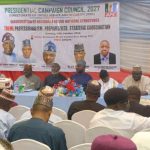
Bassey made the call while delivering the guest lecture at the 8th Graduation Ceremony and Annual Leadership Lecture of the Kebetkache/Centre-LSD Leadership School for the 2025/2026 session in Port Harcourt.
Speaking on “Leadership for Environmental Justice in the Niger Delta,” he described the region’s environmental crisis as a question of justice, power, accountability and development.
He said decades of oil exploration had left communities battling polluted waters, damaged farmlands, declining fisheries, gas flaring and lost livelihoods despite the region’s natural wealth.
“The wealth extracted from the region has not translated into a life of dignity for many of its people,” Bassey said, noting that communities bear the costs of extraction while others reap the benefits.
He described the extractive economic model as colonial and neocolonial, urging leaders to challenge systems that prioritise corporate profits over human wellbeing and environmental protection.
Bassey urged voters to demand concrete environmental protection and remediation plans from presidential and governorship candidates before giving them their support.
“Any candidate that does not have concrete plans for the remediation and restoration of the deeply damaged environment should not be given a single vote by the electorate,” he declared.
He cited persistent oil-well fires, gas eruptions in Bille and crude oil fires in Okrika as examples of environmental emergencies requiring urgent government action.
The HOMEF director said leadership extends beyond public office to citizens who organise communities, document oil spills, defend water sources and demand accountability.
“True leadership listens before it speaks,” he said, stressing that communities must participate in decisions affecting their territories and livelihoods.
He highlighted the disproportionate impact of environmental degradation on women, particularly those engaged in farming, fishing, water collection and household care.
Bassey called for greater inclusion of women, young people and marginalised groups in decisions concerning land, energy, natural resources and development.
He warned that Nigeria’s pursuit of critical minerals for the global energy transition could reproduce the environmental destruction associated with oil extraction.
Citing lead poisoning linked to artisanal mining in Zamfara and fatal mining incidents in Plateau State, he said weak oversight and inadequate leadership endangered vulnerable communities.
“Changing the energy source without changing this underlying logic will not deliver justice,” Bassey warned, urging protection of communities from displacement and environmental harm.
He also raised concerns about the reported $700 billion Nigeria–United States critical minerals agreement, calling for strong environmental safeguards and meaningful community participation.
On the Petroleum Industry Act, Bassey questioned the management of Host Communities Development Trusts, including oil companies’ influence over their boards and the use of community funds to repair damaged company infrastructure.
He urged governments and corporations to ensure that environmental policies deliver real improvements, including ecosystem restoration, livelihood recovery and community involvement.
“The Niger Delta does not need leaders who merely manage the consequences of injustice. It needs leaders who will work with communities to dismantle the conditions that produce it,” he said, urging graduands to lead with integrity, courage and commitment to environmental justice.