By Felix Khanoba
The Corporate Affairs Commission (CAC) has called for the integration of Nigeria’s various beneficial ownership databases into a single coordinated system, saying fragmented information could undermine efforts to expose those hiding behind companies and other corporate structures.
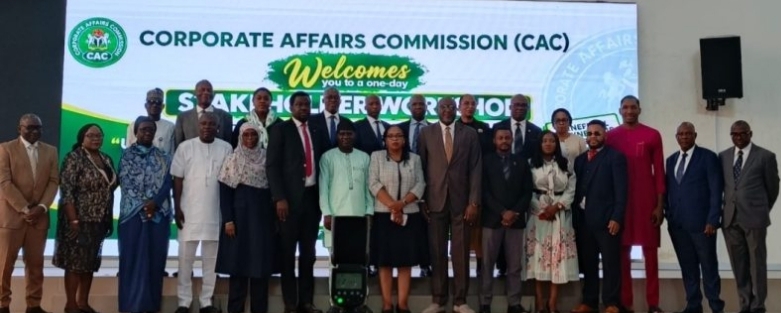
The Registrar-General/Chief Executive of the CAC, Hussaini Ishaq Magaji, made the call in Abuja while speaking at a training programme on the Beneficial Ownership Register organised for journalists and Civil Society Organisations.
Magaji said bringing the existing systems together would enable government agencies and other authorised users to establish the individuals who ultimately own, control or benefit from corporate entities, thereby strengthening the fight against corruption, money laundering, terrorism financing and illicit financial flows.
Nigeria currently operates three beneficial ownership transparency registers under different institutional arrangements.
They are the register maintained by the CAC, information on companies operating within Free Trade Zones under the Nigeria Export Processing Zones Authority (NEPZA), and beneficial ownership information concerning the extractive sector maintained under the Nigeria Extractive Industries Transparency Initiative (NEITI).
Although the Registrar-General acknowledged the legal basis for the separate arrangements, he noted that the databases were essentially designed to provide answers to similar questions concerning corporate ownership and control.
“My position is clear: Nigeria should work towards harmonising and centralising beneficial ownership information within a coordinated national framework, with the CAC corporate registry serving as the central corporate data backbone,” the Registrar-General said.
He explained that the proposal was not aimed at taking away the statutory responsibilities of NEPZA, NEITI or other relevant agencies, but at linking the different systems to reduce information silos.
According to him, a harmonised framework would give regulatory and law-enforcement institutions a clearer picture of ownership structures, particularly in cases involving businesses operating across multiple sectors and regulatory jurisdictions.
Magaji described Nigeria’s progress in establishing and operating a Beneficial Ownership Register as a major achievement, saying the country’s experience had generated international interest, peer reviews and opportunities for knowledge sharing.
He said the CAC’s priority was to ensure that beneficial ownership transparency became more than a policy requirement by making it an effective instrument for accountability and preventing the misuse of corporate structures.
The Registrar-General also rejected the notion that greater corporate transparency should be viewed as a threat to legitimate businesses, arguing that it would instead protect genuine entrepreneurs, boost investor confidence, assist law-enforcement agencies and improve Nigeria’s standing internationally.
He urged journalists to make greater use of the Beneficial Ownership Register in investigative reporting, particularly when examining companies, procurement deals, transactions and business relationships.
Magaji said journalists should go beyond identifying the registered owners of companies by investigating who ultimately controls the entities and who benefits from their operations.
He disclosed that law-enforcement agencies, including the Independent Corrupt Practices and Other Related Offences Commission (ICPC), Economic and Financial Crimes Commission (EFCC) and National Drug Law Enforcement Agency (NDLEA), had used beneficial ownership information during investigations.
According to him, the information had assisted investigators in tracing corporate ownership structures and establishing links between individuals, assets and transactions under investigation.
However, the CAC boss warned journalists and other users of the register against automatically associating a person’s appearance in a corporate record with criminal conduct.
“Information must be properly understood, independently verified and reported fairly and responsibly,” the official said.
The commission also disclosed that access to its beneficial ownership information is free, urging journalists and Civil Society Organisations to familiarise themselves with the platform and ensure that information obtained from it is used responsibly.
Magaji stressed that closer cooperation among the CAC, media organisations, Civil Society Organisations, regulators and law-enforcement agencies would be essential to maximising the value of beneficial ownership transparency.
He further announced that the CAC would convene a Global Conference on Beneficial Ownership in Lagos on November 8, 2026.
The conference is expected to attract about 200 delegates from 43 countries and will provide a platform for Nigeria to share its experience while examining the next stage of beneficial ownership transparency.
Key issues at the conference, he said, would include greater harmonisation and interoperability among the country’s existing beneficial ownership systems.
The Registrar-General urged participants at the training to use the knowledge gained to improve public understanding of beneficial ownership and support efforts to strengthen Nigeria’s transparency framework.
He said the ultimate goal should be to move beyond simply collecting corporate data to effectively connecting, analysing and using the information to promote transparency, accountability and public trust.
“The question is not only where the information is, but whether we connect the information, understand the ownership structure and establish who is really behind the entity?” the Registrar-General said.