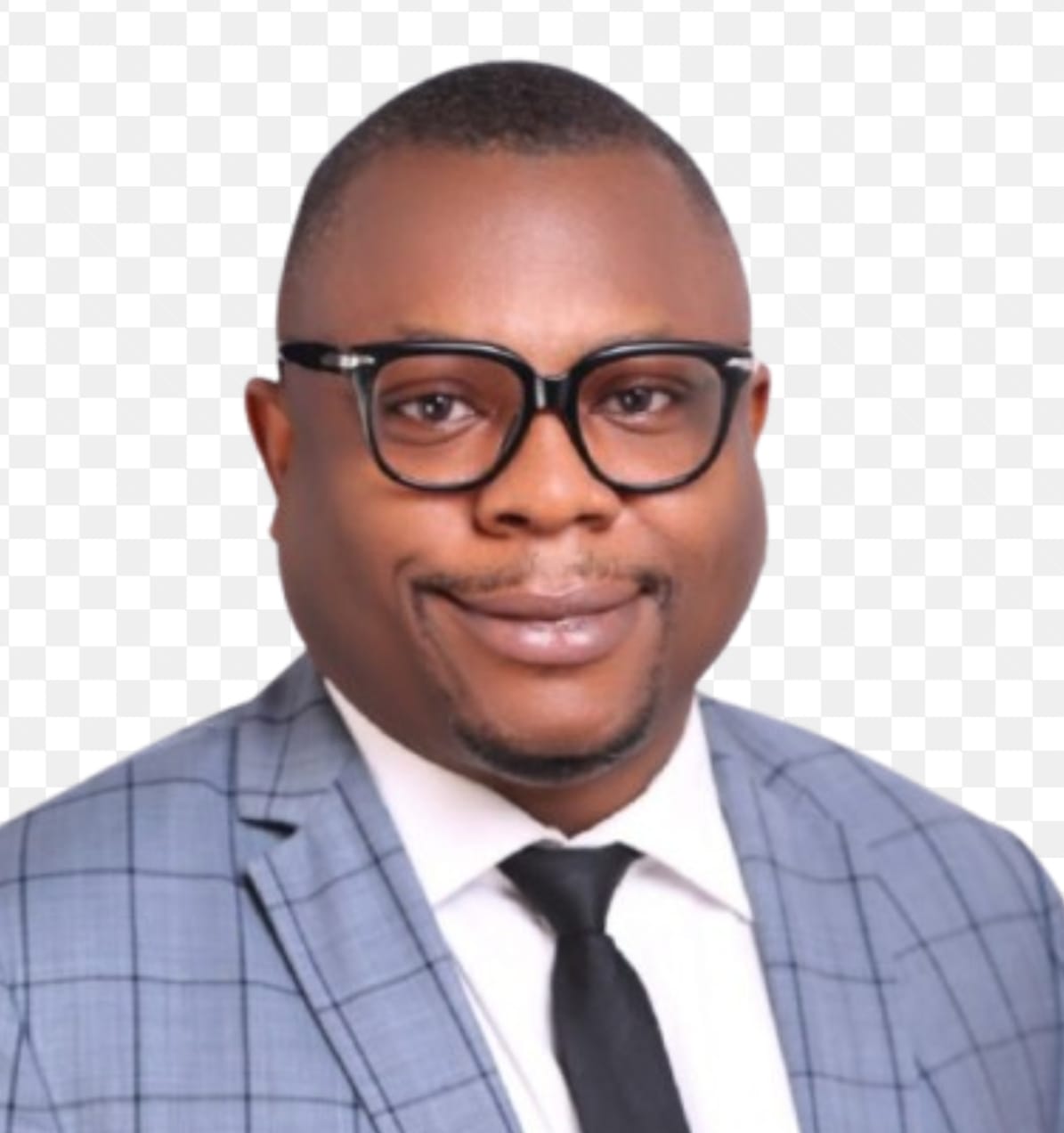
By Lemmy Ughegbe, Ph.D
There is perhaps no greater indictment of a nation’s priorities than children denied the chance to learn while money meant for their education lies unused.
Nigeria has long explained its education crisis through inadequate funding, overstretched infrastructure, poorly paid teachers and competing demands on limited resources.
These explanations have merit. But when money already provided for basic education fails to become functioning classrooms, trained teachers and children who can read, the problem is no longer scarcity. It is governance.
The Universal Basic Education Commission (UBEC) recently disclosed figures that should trouble every Nigerian. At a government workshop in Abuja on 12 October 2026, it emerged that about ₦267 billion in released basic education intervention funds remained unutilised as of August. A further ₦65 billion in counterpart funding had yet to be accessed by states.
These are distinct categories of funds. Together, however, they expose a disturbing failure to turn available resources into learning.
The contradiction becomes more painful alongside another UBEC disclosure: about 70 per cent of Nigerian children of primary school age cannot read and understand a simple text.
Consider what this means for a country whose leaders routinely describe its youthful population as its greatest economic advantage. Millions of children are growing up without the foundational literacy needed for meaningful participation in modern society. A child who cannot read is disadvantaged not only in the classroom but for life: in employment, in civic participation and in the struggle to escape poverty.
Education is not just another budget line. It underpins virtually every development ambition. Nigeria cannot seriously aspire to be a technologically competitive economy, an industrial powerhouse or a society of informed citizens while neglecting basic education.
The distinction between the two categories of funds matters. Released funds that remain unutilised demand scrutiny of planning, procurement and implementation. Counterpart funds that states have not accessed raise questions about whether those states met the conditions to unlock them.
Neither automatically establishes theft or diversion. But the absence of proven corruption does not absolve officials of administrative failures that deny children essential services.
Public money does not fulfil its purpose because it has been appropriated, released or deposited in an account. Its value lies in the benefit it produces. An unbuilt classroom, an untrained teacher and a child unable to read all show that allocations mean nothing until they improve lives.
This is why state governors must be central to the accountability conversation. Nigeria’s federal structure places substantial responsibility for basic education on state and local authorities, with UBEC providing coordination and financial support. States cannot keep complaining about inadequate resources without showing that available funds have been responsibly accessed and deployed.
Nigerians deserve to know which states account for the outstanding sums, why the delays persist and when they will end.
The legal dimension sharpens the matter. On 13 October, human rights lawyer Femi Falana, SAN, drew attention to a Federal High Court judgment of 28 November 2025 which, he said, affirmed the obligation of the Federal Government, the 36 states and the Federal Capital Territory to provide free, compulsory and universal basic education.
The judgment reinforces a principle that should never have required a court: educating Nigerian children is a legal duty, not a charitable favour dependent on political goodwill.
Yet, accountability must go beyond releasing and spending money. Nigeria has seen too many cases where impressive expenditure figures coexist with poor public services. What matters is whether investment improves literacy, numeracy, teacher competence, attendance and learning conditions.
Classrooms without qualified teachers are not enough. Instructional materials without effective learning are not enough. The country must move from celebrating education spending to demanding education outcomes.
To its credit, UBEC has acknowledged this. Its Executive Secretary, Aisha Garba, has stressed linking expenditure to measurable learning gains, while the World Bank-assisted HOPE-GOV programme seeks to strengthen state budgeting, planning and implementation.
These initiatives deserve support. But their success must be shown in classrooms, not conference halls. Nigerians have heard enough declarations of reform to know that implementation is the decisive test.
Behind every statistic is a child. It may be the daughter of a subsistence farmer whose parents cannot afford private schooling, the son of a displaced family rebuilding his life, or a child in an underserved urban community attending a school without basic teaching materials. For them, educational failure is not an abstract policy problem. It is a daily experience that slowly closes doors which should remain open.
As political actors prepare for the 2027 elections, Nigerians should demand more than familiar promises to prioritise education. Governors, parties and officials must explain how available resources will be used, how learning outcomes will be measured and what consequences will follow persistent failure. Serious education policy requires verifiable targets, transparent expenditure records and credible public scrutiny.
The National Assembly and state legislatures must also establish why these funds remain outstanding and demand practical remedies. Civil society, professional associations, parents and the media should keep education financing on the accountability agenda long after the news cycle moves on.
Nigeria’s children cannot wait indefinitely for institutions to overcome administrative difficulties. Childhood is not a budget cycle that can be postponed until officials complete another round of consultations. Every year of lost learning is an opportunity that may never be fully recovered.
The real tragedy, therefore, is not simply that ₦267 billion lies idle or that another ₦65 billion awaits access. It is that these failures persist while millions of children struggle to acquire the most elementary tools of learning.
A nation unable to turn available resources into learning is not merely mismanaging its education budget. It is compromising its future.
And when that future arrives, Nigeria may discover that the greatest cost of today’s failures was never the money left idle, but the human potential allowed to perish alongside it.
Lemmy Ughegbe, Ph.D, FIMC, CMC
Email: lemmyughegbeofficial@gmail.com
WhatsApp ONLY: +2348069716645