By Peters Omoragbon
As we conclude this year’s National Diaspora Day celebrations, I feel a profound obligation to offer a reflection rooted not in sentimentality, but in institutional memory. I speak as someone who has been privileged to witness the evolution of this engagement from its inception. To truly honour the Diaspora, we must pay homage to the foundational vision—a vision indelibly shaped by former President Olusegun Obasanjo, the originator of the Nigerians in Diaspora Organisation (NIDO).
It is imperative to state with clarity that the government must restore its posture of genuine respect for the Diaspora community. The current framework, administered through the Nigerians in Diaspora Commission (NIDCOM), has regrettably drifted into a dynamic that appears transactional, as if the government is granting a favour rather than engaging a strategic national asset. We urgently need a return to the ethos and operational standards of the early years.
I recall with precision the standard set during the Obasanjo administration. The Diaspora Week was a rigorous, seven-day event. Hospitality was a statement of national honour: accommodation and full board—breakfast, lunch, and dinner buffets—were provided for every single delegate who could demonstrate proof of Diaspora residency, without requiring affiliation to any specific organisation. The standard was not merely adequate; it was exemplary, lodging delegates in 4- to 5-star establishments such as the NICON Hilton or Sheraton.
The intellectual rigour matched the hospitality. Delegates were classified by professional background—Health, Science & Technology, and other sectors—for structured breakout sessions featuring leading experts. Diaspora professionals were given the platform to make substantive presentations. This was a merit-based system devoid of the favouritism and nepotism that have unfortunately crept into current practice. It was through this meticulous and inclusive approach that exceptional Nigerians—Dr. Ngozi Okonjo-Iweala, Dr. Oby Ezekwesili, and Dr. Barth Nnaji, to name a few—were identified and integrated into national service. Crucially, these were Nigerians identified purely by merit, transcending ethnic considerations.
The administration of these activities was entrusted to seasoned, professional diplomats under the Ministry of Foreign Affairs, not political appointees lacking diplomatic finesse. At the week’s conclusion, State Liaison Officers would physically come to our residence to identify their indigenes and facilitate their transfer as state guests, seamlessly extending the engagement from the federal to the state level. The Diaspora was celebrated as a respected constituency.
The current inversion of this protocol is deeply troubling. Today, the Diaspora appears to be assembled to celebrate the head of NIDCOM and her staff, with front-row seats reserved for officials while delegates are seated behind them. The symbolic and substantive message is damaging: scenarios where ten professionals are relegated to sharing a single bottle of juice, while catered meals are consumed by staff and their associates, constitute an unacceptable breach of hospitality and dignity. The office of the NIDCOM Chairman must not be allowed to function as an imperial court to which the Diaspora must pay homage.
Furthermore, institutional accountability demands we ask difficult questions. During the early years, significant state resources were committed to the Diaspora—funds were provided to the then NIDOE leadership to procure a secretariat building in London, and land allocations were reportedly made for Diaspora use. A day of financial reckoning is approaching. Any future occupant of a NIDOE leadership role will be compelled to demand a full accounting of these assets. It is likely that a review of past years will uncover significant mismanagement. We must proactively commit to cleaning up NIDOE’s legacy issues to protect the integrity of the collective.
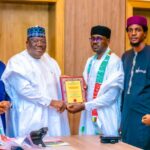
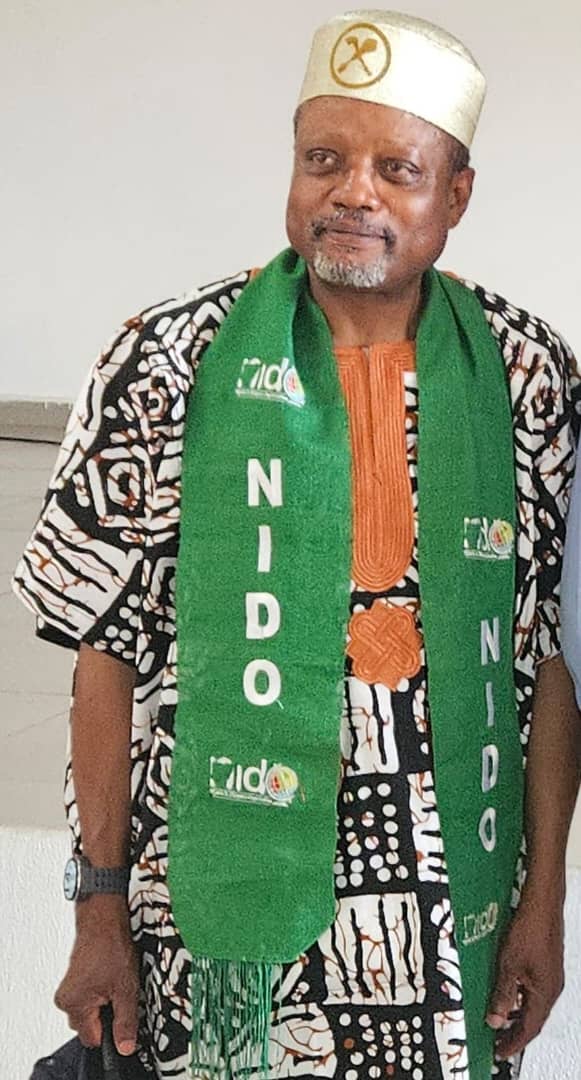
In conclusion, I extend my sincere appreciation to the current Continental Chairman of NIDOE -Hon Cllr Harold Ogunfemi and the other NIDO leaders who recently visited former President Obasanjo—a symbolic act of reconnecting with our roots. The current leadership of NIDCOM and their supporters may attempt to diminish his foundational role, but the historical reality remains incontrovertible. I speak with the conviction of an institutional witness, and I am certain that one day, the National Diaspora Week will be restored to its old glory, reflecting the true honour and respect that the Nigerian Diaspora deserves.
*Pastor Peters Omoragbon is the
Executive President Nurses Across the Borders International.