By Mercy Aikoye
The House of Representatives Committee on Capital Market and Institutions has proposed a 20 per cent cap on investments in a single issuer as part of efforts to prevent excessive concentration of trust assets and strengthen protection for beneficiaries.
The proposal is contained in the Trustee Investment Bill, 2026 (HB 2762), which seeks to repeal and re-enact the Trustee Investment Act of 1957 to reflect developments in Nigeria’s financial markets and introduce stronger safeguards for trust investments.
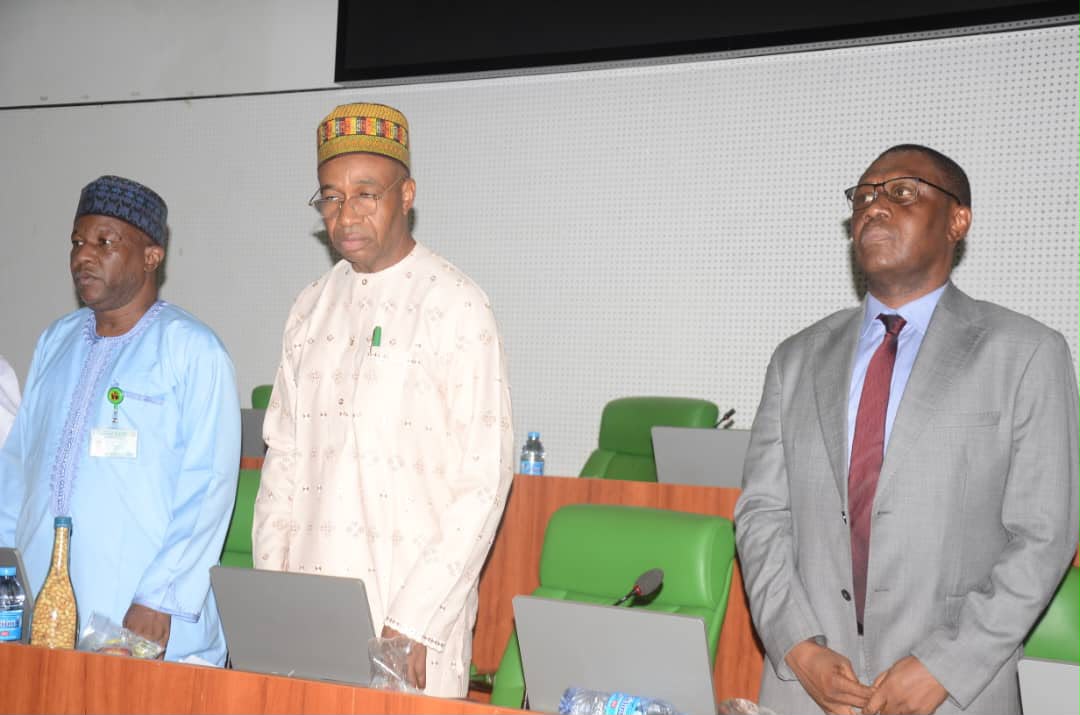
Speaking at a public hearing on the bill at the National Assembly, Abuja, on Monday, the committee chairman, Hon. Solomon T. Bob, said the proposed limit would help reduce exposure to the financial difficulties of a single institution and promote portfolio diversification.
Bob said the existing law had become inadequate following the expansion of Nigeria’s capital market, now valued at over N80 trillion, pension assets exceeding N30 trillion and the emergence of new investment opportunities.
“The world has moved. Our law has not. This hearing is to correct that,” he said.
Under Clause 3 of the proposed legislation, trustees would be permitted to invest in a broader range of assets, including corporate bonds, equities, exchange-traded funds, Real Estate Investment Trusts, infrastructure funds, real property, foreign investments through licensed custodians, private equity, regulated virtual assets and ESG-compliant bonds.
However, the proposed expansion of investment options would be accompanied by stricter controls. Clause 4 seeks to limit investments in a single issuer to 20 per cent, while Clause 5 would expressly require trustees to uphold the principles of loyalty, prudence, care and impartiality.
The bill also provides for the delegation of certain investment functions to professionals, including fund managers and custodians, while retaining trustees’ responsibility for their selection, supervision and performance.
Other provisions seek to strengthen transparency through fair valuation of trust assets and annual reporting to beneficiaries, while prohibiting speculative dealings, futures contracts and investments in unregulated schemes.
Bob said the proposed framework was designed to balance investment flexibility with accountability, ensuring that trustees could access professional expertise without compromising the interests of beneficiaries.
The Speaker of the House, Hon. Abbas Tajudeen, who was represented by Hon. Dahiru Abubakar Sarki, said the reform was necessary to protect trust assets while allowing beneficiaries to benefit from legitimate investment opportunities.
Abbas warned that an overly restrictive framework could limit wealth creation, while weak regulation could expose trust funds to imprudent decisions and avoidable losses.
“Trustees hold assets for the benefit of others, not for their personal advantage,” he said, stressing that modernisation must not become a licence for speculation.
He added that a credible trust investment framework could help mobilise long-term domestic capital for infrastructure development, enterprise growth and deeper capital markets, provided beneficiaries’ rights remained protected.
The public hearing, however, was marked by poor attendance from invited institutions. Bob expressed disappointment that only three of the approximately 12 institutions invited were present.
The Securities and Exchange Commission, Debt Management Office and Association of Corporate Trustees attended and made submissions on the proposed legislation.
The committee chairman said the absence of several key institutions was regrettable, given their roles in regulating, managing and safeguarding financial assets.
He urged stakeholders to provide recommendations on the proposed investment categories, the 20 per cent diversification threshold, fiduciary obligations and whether stricter limits should apply to higher-risk assets.
The committee also sought views on the need for explicit environmental, social and governance duties, the protection of small family trusts and possible conflicts between the bill and existing SEC and National Pension Commission regulations.
Bob said the committee had received eight memoranda ahead of the hearing and assured stakeholders that all submissions would be considered objectively.
He stressed that the proposed law must protect ordinary beneficiaries as effectively as institutional investors, noting that even a widow with a modest inheritance deserved adequate legal protection.
The committee is expected to use the submissions to refine the bill before further legislative consideration.