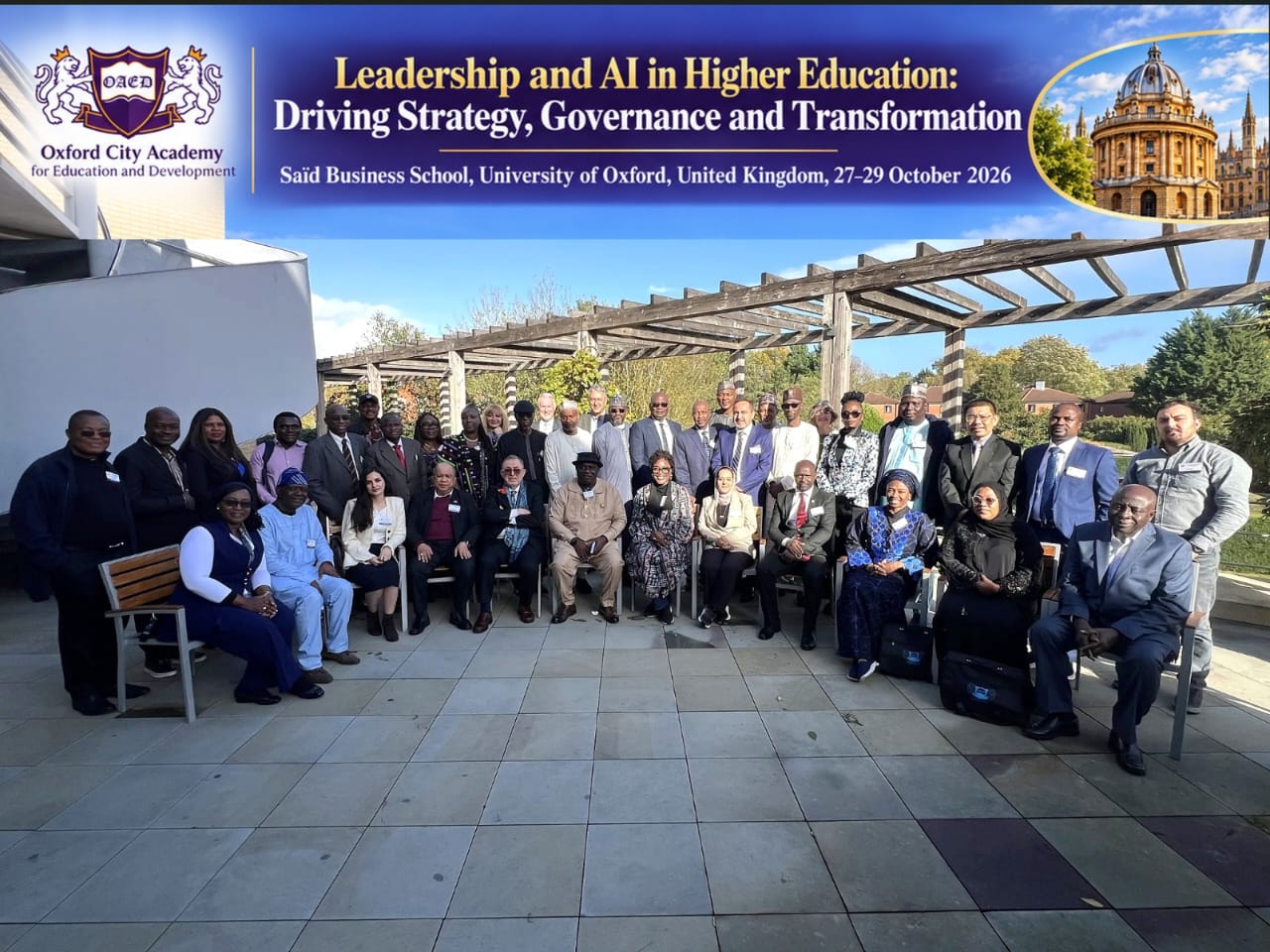
PAMO University of Medical Sciences, Rivers State, has been formally admitted into the Oxonia University Network, an international alliance of higher education institutions, at a ceremony held at the Saïd Business School, University of Oxford, United Kingdom.
The ceremony took place during a high-level programme on Leadership and Artificial Intelligence (AI) in Higher Education, bringing together academic leaders and representatives of universities from different parts of the world.
Professor Adaeze Chidinma Oreh represented PAMO University of Medical Sciences at the event on behalf of the institution’s Board of Trustees.
With its admission, PAMO University joins a growing international network comprising more than 153 universities across 41 countries, including institutions in Africa, Asia, Europe, the Middle East and the Americas.
Established in 2013, the Oxonia University Network began with 16 member institutions across 14 countries. It has since expanded into a global academic alliance focused on international cooperation, academic entrepreneurship, research development and the practical application of innovation to societal challenges.
The inclusion of PAMO University is expected to strengthen the network’s expertise in medical education, healthcare research and health sciences training, while creating opportunities for international academic partnerships and knowledge exchange.
The Oxford gathering also witnessed a leadership transition within the network, as Professor Abdullahi Yusufu Ribadu, Executive Secretary of the National Universities Commission (NUC), formally assumed the presidency from the outgoing president, Professor Abubakar Rasheed.
In his inaugural address, Professor Ribadu outlined his vision for the network’s next decade, highlighting the need to integrate artificial intelligence into university teaching, administration and medical research.
He stressed the importance of strengthening international research partnerships and promoting the responsible adoption of emerging technologies in higher education.
Professor Ribadu described the admission of specialised institutions such as PAMO University of Medical Sciences as an indication of the growing relevance of international academic collaboration.
He noted that as universities respond to rapid technological developments and emerging healthcare challenges, expanding research capacity and adopting responsible AI-driven solutions would remain critical to the future of higher education.
Discussions at the Saïd Business School also focused on the use of specialised digital platforms to promote joint research initiatives, faculty exchange programmes and the development of effective AI policy frameworks across member institutions.
PAMO University’s admission is expected to open new opportunities for collaborative medical research, healthcare training and international knowledge-sharing among academics and researchers within the network.
The development comes as the Oxonia University Network considers a review of its governance structure following more than a decade of expansion.
The admission of PAMO University further strengthens the network’s commitment to building inclusive international partnerships that advance higher education, innovation and global health development.