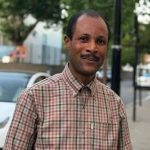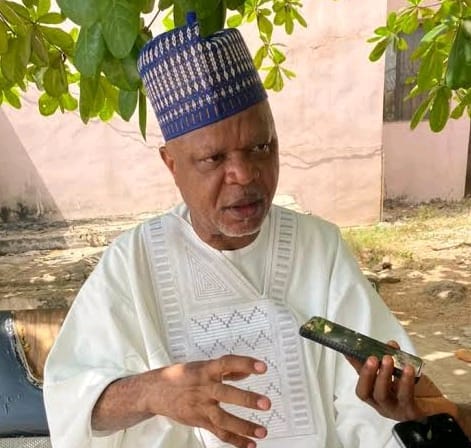
The Coalition for Better Kogi State (CBKS) has intensified calls for the rotation of political power to Kogi West Senatorial District in the 2027 governorship election, describing the zone’s continued exclusion from the state’s leadership as an injustice that threatens equity, fairness and political unity.
The coalition, led by former Kogi State Commissioner for Information, Dr Tom Ohikere, said Kogi West had never produced an elected civilian governor since the creation of the state in 1991, despite the fact that Kogi East and Central had collectively governed for several years.
In a position paper made available to journalists, Ohikere argued that Kogi East had governed for approximately 17 years through former governors Abubakar Audu, Ibrahim Idris and Idris Wada, while Kogi Central had produced Yahaya Bello and incumbent Governor Ahmed Usman Ododo for about 12 years by 2027.
He identified the 51-day acting tenure of former Speaker, Rt. Hon. Clarence Olafemi, as the only period Kogi West had occupied the governorship.
According to him, “the imbalance had generated agitation among several socio-political groups, including De Group Kogi West O’Clock, the Okun Youth Development Association (OYDA), the Okun Development Association, CBKS and Kogi Equity Alliance, all of which have called for the zone to produce the next governor.
Ohikere recalled that OYDA, at its fifth Political and Security Summit held in Kabba on October 24, 2026, reaffirmed the demand for power shift to Kogi West and appealed to the member representing Ikeja Federal Constituency, Hon. James Abiodun Faleke, to consider contesting the governorship election.
He also cited the extraordinary meeting of CBKS held in Abuja on October 26, where the coalition declared that power shift to Kogi West in 2028 remained an irreversible objective to be pursued through the ballot box and across political party lines. The Kogi Equity Alliance, led by Hon. Adams Yusuf, subsequently endorsed the coalition’s position.
The former commissioner, however, faulted the outcome of the maiden Kogi State Power Rotation Summit organised by Kogi Unity Accord at Kay Galaxy Event Centre, Lokoja, between September 30 and October 1, 2026, where delegates reportedly endorsed the principle of rotation but favoured 2032 as the commencement date to allow Ododo complete two terms.
He described the 2032 proposal as an attempt to prolong the exclusion of Kogi West, insisting that the zone should not be asked to wait longer after more than three decades without producing an elected governor. He also dismissed arguments that rotation required fresh legislation, maintaining that political parties could achieve it through zoning arrangements and a binding political covenant.
Ohikere proposed a Kogi Charter of Equity under which Kogi West would produce the governor from 2028 to 2036, Kogi East from 2036 to 2044 and Kogi Central from 2044 to 2052, before the arrangement returns to the beginning of the cycle. He cited similar political power-sharing practices in Enugu, Anambra, Akwa Ibom and Cross River states.
The coalition identified historical exclusion, unpaid percentage salaries between 2016 and 2024, and unresolved missing-persons cases as issues requiring attention, arguing that a government emerging from a power-sharing arrangement would provide an opportunity to address grievances and promote accountability.
It also criticised those advocating the retention of power in Kogi Central, accusing them of defending political interests rather than genuine concerns about stability and constitutional provisions. Ohikere questioned why similar arguments were not raised during the prolonged tenures of previous administrations in the state.
On the political outlook ahead of 2027, the CBKS convener acknowledged that Governor Ododo had a constitutional right to seek re-election and that his control of the APC structure could complicate the quest for a Kogi West candidate.
He, however, identified Faleke, Senator Sunday Karimi and Dr Ibrahim Bisimillahi among names featuring in discussions about possible candidates, while noting the political divisions within the APC in the district.
The coalition maintained that “postponing the power shift would amount to further political marginalisation of the seven local government areas in Kogi West” insisting that equity and justice should take precedence over political expediency.
Ohikere, who hails from Okene in Kogi Central, said “my conscience would not allow me to defend the existing imbalance, adding that moving from the 17-12-0 arrangement to 17-12-8 would promote healing and unity.
He declared that Kogi West would organise and pursue its governorship ambition through the ballot box in 2027, insisting that the demand for power shift should not be deferred until 2032.