By Felix Khanoba
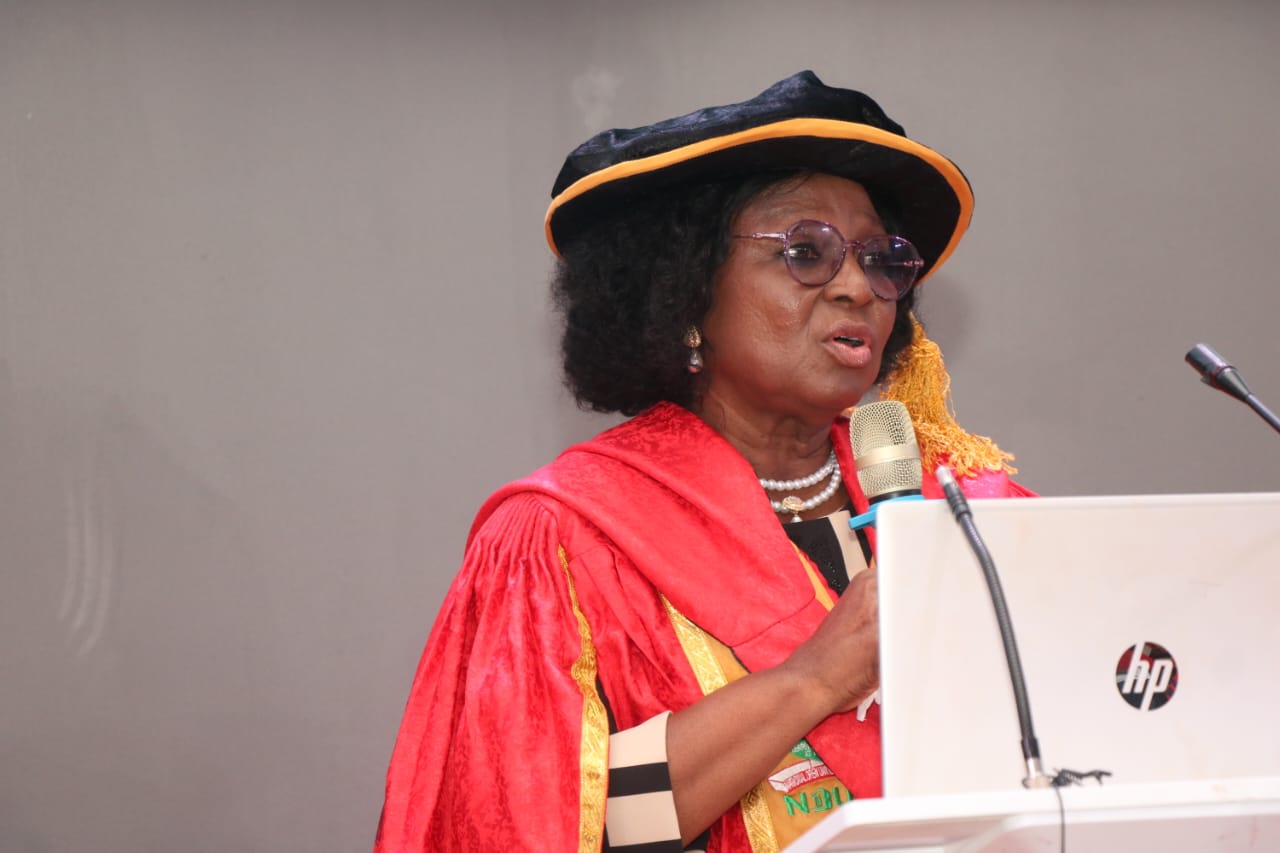
A professor at the National Open University of Nigeria (NOUN), Yemisi Ibiwunmi Ogunlela, has urged the government to reform public policies and institutional practices that perpetuate gender inequality, warning that supposedly neutral policies could deepen disparities in access to education, healthcare, employment and leadership.
Ogunlela, of the Department of Public Administration, Faculty of Management Sciences, made the call on Thursday while delivering NOUN’s 44th Inaugural Lecture in Abuja.
The lecture, titled “She Is a Beautiful Baby Girl, He Is a Bouncing Baby Boy: Implications for Public Policy and Development Administration,” examined how societal expectations and institutional arrangements influence opportunities available to men and women.
According to a statement signed by the university’s Acting Director of Media and Publicity, Omotola Ojudu, the professor argued that gender inequality was not merely a product of cultural beliefs or individual prejudice but was also embedded in the policies, procedures and operations of public institutions.
She explained that perceptions formed from birth could shape people’s expectations of girls and boys, with girls often associated with beauty and domestic responsibilities, while boys were linked to strength and achievement.
Ogunlela noted that when such perceptions become established social expectations, they could influence children’s educational choices, career paths, professional advancement and eventual access to leadership positions.
She identified maternal mortality, women’s limited involvement in decisions concerning their reproductive health and their underrepresentation in political leadership as major gender-related challenges requiring urgent policy attention in Nigeria.
The professor maintained that addressing these concerns required more than cultural and healthcare interventions, stressing the importance of effective public administration, institutional reforms and respect for human rights.
She cautioned that policies designed without considering the different circumstances of men and women could unintentionally reinforce existing inequalities.
As an example, Ogunlela cited workplace promotion systems that place a premium on uninterrupted career progression, explaining that such arrangements could put women at a disadvantage because they often shoulder a disproportionate share of unpaid caregiving responsibilities.
To tackle the problem, she called on governments and public institutions to strengthen the collection and application of gender-disaggregated data to identify disparities and develop policies that respond to the specific circumstances of different population groups.
She also advocated a transition from what she described as “reproductive administration,” which sustains existing practices, to “transformative administration,” which questions established systems and pursues fairer and more effective outcomes.
Her proposed measures included incorporating gender considerations into development plans, investing in the girl child, expanding access to maternal and reproductive healthcare, and promoting collaboration among ministries responsible for health, education, infrastructure and finance.
Ogunlela further urged policymakers to recognise that equitable governance does not necessarily mean treating everyone identically, but ensuring that differences in circumstances do not become barriers to opportunity.
“The goal,” she explained, “is not to make men and women identical but to ensure that a child’s sex does not determine the quality of opportunities available to them.”
In his remarks, the Deputy Vice-Chancellor (Academic), Prof. Chiedu Mafiana, who represented the Vice-Chancellor, Prof. Uduma Oji Uduma, described inaugural lectures as important avenues for disseminating scholarly knowledge, examining societal challenges and generating ideas for policy development.
He said the lectures enable academics to present their research findings and recommend practical solutions to problems confronting the country.
Mafiana commended Ogunlela for examining the connections between gender relations, public policy and national development, noting that the issues she raised were relevant to Nigeria’s development priorities.
He emphasised the need for research findings to inform practical interventions capable of improving governance and institutional performance.
The deputy vice-chancellor also thanked the inaugural lecturer, participants and members of the university community for their contributions, urging continued engagement with research and ideas that promote inclusive development and strengthen public administration in Nigeria.