By Chuks Oyema-Aziken
Nigeria’s proposed $2.5 billion investment by global meat-processing giant JBS has raised environmental concerns over potential land loss, pollution, public health risks and threats to smallholder farmers’ livelihoods.
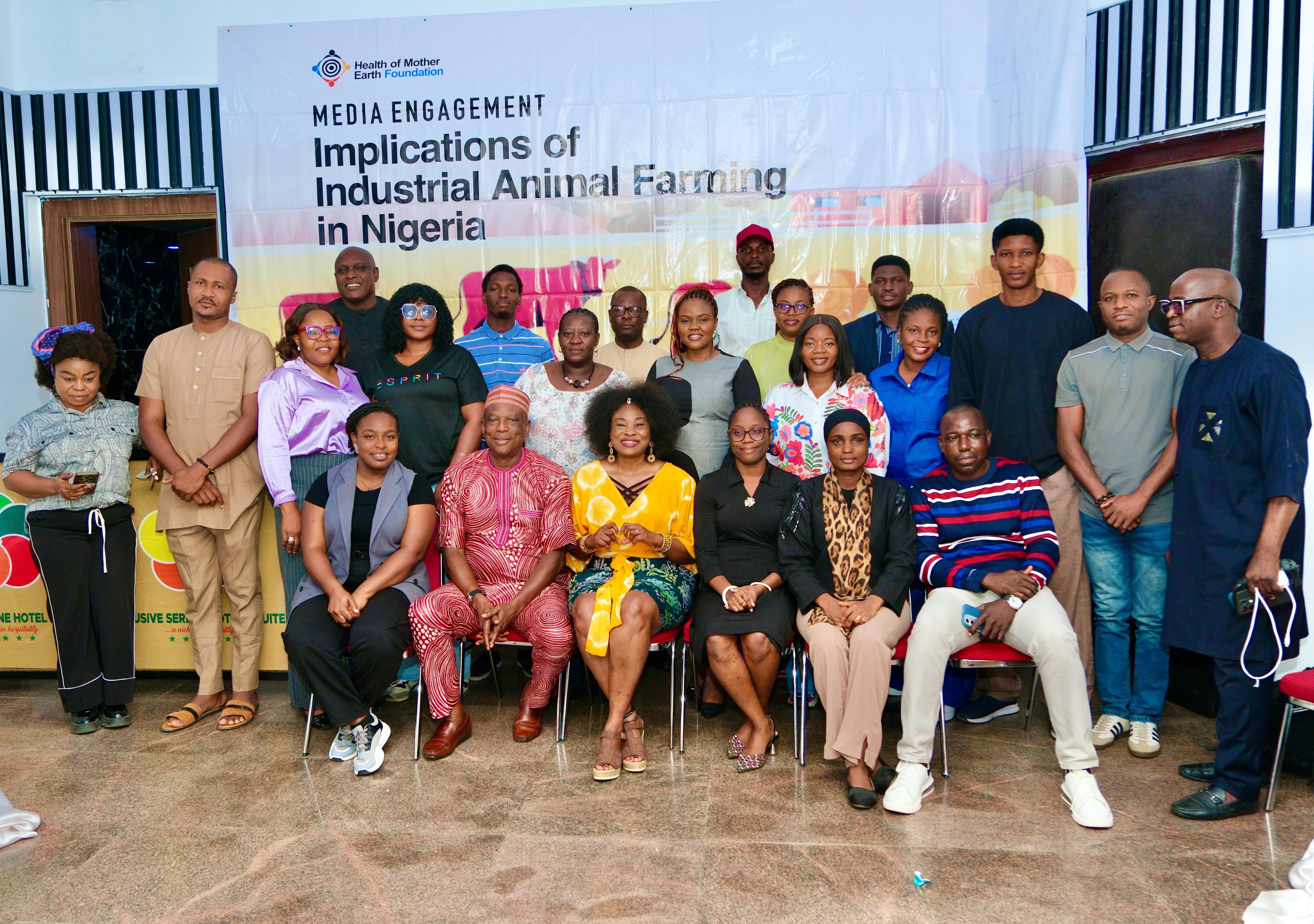
The concerns emerged at a media training organised in Abuja by the Health of Mother Earth Foundation (HOMEF), in collaboration with Youth in Agroecology and Restoration Network (YARN) and HEDA Resource Centre, to examine the implications of industrial animal farming.
The JBS investment agreement, signed with the Federal Government in November 2024, reportedly covers six facilities, including three poultry plants, two beef processing plants and a port facility. Ogun State is a proposed operational hub, while Niger State has reportedly committed 1.2 million hectares of land.
Speaking at the event, HOMEF Executive Director, Mariann Bassey-Olsson, called for public disclosure of the agreement, stressing the need for transparency and protection of communities and Nigeria’s food systems.
“We must move from ‘investment opportunity’ to ‘what are the terms, safeguards and outcomes’ of the $2.5 billion Memorandum of Understanding (MOU),” she said, urging Nigeria to establish clear regulations governing foreign investments.
In her presentation, Adesuwa James Jang, Founder and Team Lead of Youth for Environmental Sustainability and Development (YESD), highlighted the environmental consequences of industrial farming. Citing a HEDA Resource Centre study, she said 60 per cent of respondents reported farmland losses, 76.7 per cent experienced air pollution and 63.3 per cent reported contaminated water sources.
Jang also highlighted pollution around Kara abattoir, where studies reportedly found untreated slaughterhouse waste entering the Ogun River. She cited similar concerns in Lagos, Abia and Benue states, calling for stronger environmental monitoring and waste management.
On farmers’ livelihoods, Jang warned that industrial expansion could threaten smallholder farmers, who account for over 60 per cent of poultry farming in Nigeria, despite the projected creation of more than 50,000 direct and indirect jobs by JBS.
She further raised concerns about methane emissions, poultry waste pollution and potential public health risks associated with intensive livestock production, stressing the need for scientific assessments and environmental safeguards.
Proposing alternatives, YARN Programme Manager, Oluwaseyi Olawuyi, advocated agroecology, regenerative agriculture, integrated crop-livestock farming and diversified food production to promote sustainable agriculture and protect farmers’ livelihoods.
“Agroecology is a farming practice that is friendly with nature,” Olawuyi said, calling for supportive government policies, accessible financing and locally appropriate agricultural innovations.
The organisers said the training was aimed at strengthening journalists’ capacity to report on industrial animal farming, food security and environmental protection, particularly around three questions: who pays, who benefits and what happens to existing farmers?
Environmental campaigners are demanding independent environmental and social impact assessments, public disclosure of the JBS agreement, consultation with host communities and enforceable safeguards against pollution, land degradation and displacement.
They maintained that although Nigeria needs investment and modern livestock infrastructure to achieve its 2030 economic targets, development must protect farmlands, water resources, biodiversity and the livelihoods of millions of smallholder farmers.