By Bernard Basason & Jamilu Musa

Nigeria’s Middle Belt region spanning Benue, Plateau, Nasarawa, Kaduna, Kogi, Kwara, the Federal Capital Territory, and parts of Niger sits at a critical cultural and geographic crossroads. It bridges the Hausa-Fulani-dominated North and the mostly Christian South, encompassing over 230 ethno-linguistic groups. Yet this diversity has increasingly become a fault line. In recent years the region has seen waves of mass-casualty raids on villages, large-scale communal displacement, and the collapse of local markets and farms. Farmers are routinely threatened by armed groups, undermining both rural livelihoods and national food security. The violence has now become a defining security challenge of Nigeria’s internal stability, demanding urgent policy attention. This article unweaves the complex fabric of insecurity by examining its historical roots, contemporary drivers, and the interconnections between seemingly disparate factors.
Historically, tensions in the Middle Belt region have deep roots in land, identity, and governance. Colonial rulers institutionalised ethnicity and indigeneity as the basis for citizenship and land rights. British “indirect rule” in the 20th century deliberately accentuated ethnic identities, imposing separate administrative systems on different groups. These policies helped invent new, rigid notions of belonging. In the post-colonial era, many states still grant official “indigene” status to families deemed original settlers with access to land titles, political office, and social services – while anyone labeled a “settler” is effectively marginalized (Kraxberger, 2005). This created a zero-sum dynamic over land rights. Farming communities see themselves as defending ancestral territory, whereas pastoralists invoke centuries-old grazing routes that often cross state lines.
Before these divides hardened, farmer and herder relations in the Middle Belt region were mostly cooperative. Seasonal transhumance was governed by customary arrangements: herders fertilised fields with manure and provided meat, farmers offered grazing after harvest (Olumba, 2024). These ties weakened with the advent of colonial borders and land reforms. Gradually, mobility became securitised; once-shared pasturelands were fenced off, and indigeneship laws tied life opportunities to birthplace. Historical memories also feed suspicion. Many communities recall the early 19th-century Sokoto Caliphate campaigns under Usman dan Fodio remembered as jihads as an existential struggle against Fulani conquest. While these distant events do not directly cause today’s clashes, they contribute to deep mutual distrust and narrative framing: some view current attacks through the lens of historical fear.
Drivers of Contemporary Insecurity
No single factor drives today’s Middle Belt crisis. Instead, multiple stressors have converged over the past decade. Ecological and climate pressures are an important multiplier. Northern Nigeria and the Lake Chad Basin have warmed faster than the global average, and rainfall patterns are highly erratic. Lake Chad itself has shrunk from over 22,000 km² in the 1960s to under 1,500 km² today. As pasture and water dried up, many herders were forced into central Nigeria in search of grazing. This “forced southern migration” escalated competition over increasingly scarce farmland and wells. In the Middle Beltregion, delayed rains, flooding of grazing routes, and prolonged droughts have intensified disputes in a context of weak regulation[9]. When shifting weather causes harvests to fail, pressure on communal pastures rises.
Governance failures compound the problem. Many rural communities effectively live in a security vacuum. Nigeria’s police and civil service are far overstretched. An EU asylum report recently noted the police force is about 371,800 officersfor a population of some 237 million far below the UN-recommended ratio of one officer per 450 people. The shortfall is even worse in rural areas, where most stations are undermanned or inactive. State response times to village attacks are often measured in days, not hours. Security analyst Bulama Bukarti describes North Central violence as symptomatic of “state failure”: intelligence gathering is reactive, deployments come only after media outcry, and courts rarely prosecute perpetrators. Communities frequently report seeing armed groups gather, but police do not act on those early warnings. In many cases, villagers must rely on ad hoc vigilantes or bring machetes to defend themselves.
Elite manipulation and politics further inflame conflicts. Politicians routinely mobilise armed youth to bolster votes along ethnic or religious lines The case of Terwase “Gana” Agwaza in Benue illustrates this: a self-styled vigilante who once protected villages became an armed kingpin after being co-opted by powerful patrons. Such networks allow fighters to survive crackdowns by simply going underground until needed again.
Economic criminalisation of conflict is now pervasive. What started as resource disputes is entangled with lucrative illegal economies. Kidnapping for ransom, cattle rustling syndicates, illicit gold mining, and timber poaching finance armed groups across the Middle Belt region. Reports from conflict-affected states describe cattle raiders selling stolen livestock across borders, while farmgate extortion has become routine for villages. Artisanal gold mining in Plateau and Nasarawa, once a subsistence activity, is now taxed by militias who offer “protection.” These revenue streams make militias self-fundingas they recruit youth by offering money instead of ideology. Thus, even when herders and farmers might be induced to a truce, separatist spoils holders have a vested interest in continuing chaos.
Ethno-religious framing often accompanies the violence, especially in Plateau. Attacks on churches or mosques reinforce narratives of Christianity vs. Islam. But these labels can obscure the real drivers. Both Muslim and Christian communities appear as victims and perpetrators in different incidents. Outsiders may view the conflict through a religious lens, but many local observers stress economic motives. Still, religious identity cannot be ignored; some militant groups explicitly use sectarian rhetoric to recruit. The result is a dangerous blend: every local murder risks being seen as communal, which feeds revenge tit-for-tat cycles.
Case Studies: Benue and Plateau
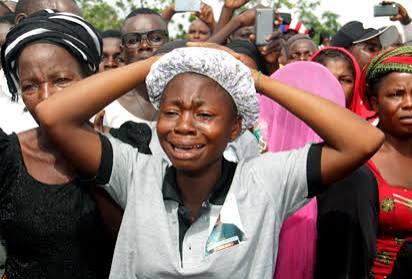
On the ground, the consequences are stark. Benue State has suffered some of the worst carnage. The 2017 Open Grazing Prohibition Law, intended to curb conflict, had mixed effects: it stalled cattle movements but also provoked resentment among herders lacking alternatives. Attacks now show a disturbing pattern. In June 2025, simultaneous raids on five villages in Guma LGA (Yelewata) killed about 200 people overnight.According to Nextier’s Nigeria Violent Conflicts Database(NNVCD), 930 people have been killed in farmer-herder violence in Benue since 2021. By late 2024, the IOM counted over half a million registered IDPs from Benue alone communities living in crowded camps or with host families, unable to return home.
In Plateau State, violence follows a similar script of revenge and displacement. In April 2025, gunmen attacked communities in Plateau’s Mwaghavul Chiefdom, killing at least 52 people and sending nearly 2,000 residents fleeing. This was one of several offensives along ethnic fault lines in the Jos region. According to NNVCD, 1146 people have been killed in Plateau state between 2021 and 2026. Victims’ groups insist the state response is always tardy. Plateau farmers describe rounds of tit-for-tat raids on unresolved land disputes that quickly spiral out of control. In one repeatedly attacked village, a traditional leader complained, “We know the attackers. They come in trucks. We report, but nobody comes till we fight back.” These incidents disrupt harvests: maize, yams, and vegetables rotted unharvested while guards set ambushes.
Strategic Responses: Pathways to Peace
Breaking the Middle Belt region’s cycles of violence demands shifting from reactive force to structural prevention. Peace efforts must be multifaceted, addressing governance, security, economic, and social dimensions simultaneously.
i. There is a need to fortify early warning and rapid response: Communities often sense danger hours before an attack – spotting armed groups on the move or intercepted threats but these warnings rarely trigger an effective reaction. To fix this, state governments should build unified, state-level crisis centres linking villages, vigilante groups, and security agencies. For example, an integrated Early Warning/Early Response (EWER) network in Benue and Plateau could incorporate SMS alert lines and community monitors, feeding into a central Operations Centre. This centre must be empowered with clear protocols and quick reaction forces.
ii. Nigeria must focus on land and resource governance reform: Nigeria needs to squarely address the land tenure ambiguities that fuel resentment. State and federal authorities should launch processes to digitise and harmonise land records. This means surveying farmlands, mapping cattle corridors, and updating land titles transparently. States should also equip local dispute tribunals with technical staff (surveyors, legal experts) so farm-herder conflicts can be resolved with facts, not force. Existing grazing laws must be reviewed: instead of outright bans or open seasonal roaming, states could license regulated transhumance and support actual ranch development. Meanwhile, the controversial indigene/settler system needs urgent reform.
iii. There is a need to rebuild rural security architecture:The current police deployment is skewed to cities and VIPs, leaving farming communities undefended. The Tinubu government’s recent redeployment of ~100,000 officers from politician bodyguards back to field duty is a step forward, but more is needed. Priority should be given to creating mobile rapid-reaction units for border and forest areas, as well as community policing posts in vulnerable towns. Rural police outposts should be staffed 24/7 and linked by radio to barracks. The state firearms agency can help track stolen small arms that proliferate across the belt.
iv. Authorities must disrupt the economy of violence: This means targeting the money. Government agencies – police, immigration, finance – should cooperate to interdict key revenue streams. For example, tax and property records in known gold mining areas could be audited to spot illicit operators. Border forces and customs need support to reduce small arms inflow; tracing who finances ransom payments may also uncover kingpins. Much as financial sanctions can cripple terrorism networks, cutting off the militants’ cash flow will limit their incentive to kill. Without profit, many young fighters may abandon militias.
v. There is a need for in Inclusive peacebuilding: Allconflicts must involve negotiated politics, not just policing. States should establish formal inter-communal peace committees that include farmers and herders, Christian and Muslim leaders, women’s groups, and youth representatives. These councils need legal backing and a direct link to governors’ offices, so they can adjudicate local land-use plans and mediate flare-ups before they explode. Women must be at the table: in many villages they act as mediators and caregivers, and have a stake in peace (keeping fields safe for food and children). Programs to rehabilitate ex-combatants are also needed; these could offer job training, cash grants, or community service duties to those willing to disarm. Some states have begun pilot projects (for instance, Northern Kaduna has “peace huts” for dialogue), and these should be scaled up across the Middle Belt region.
Policy Recommendations
i. There is a need to establish unified state-level early warning centres with clear protocols and rapid response units to act on community intelligence.
ii. The Nigerian government must digitise land records, reform indigene–settler policies, and regulate transhumance to resolve land disputes legally rather than violently.
iii. There is a need to strengthen rural security through mobile rapid-response units, expanded community policing, and reduced VIP-focused police deployments.
iv. Authorities must disrupt militant financing by regulating illicit mining, tightening border controls, and tracing ransom and arms trafficking networks.
v. There is a need to institutionalise inclusive peace committees with legal backing, ensuring women, youth, and pastoralists shape mediation and reintegration efforts.
Insecurity in Nigeria’s Middle Belt region is woven from many threads: climate change, weak governance, historical grievances, identity politics, and criminal enterprise. Each thread feeds the others. There is no simple military fix; patrols and arrests can at best suppress violence temporarily. What is required is structural prevention. That means reinforcing the state: better intelligence, law enforcement, justice, and political accountability in the rural areas of Benue, Plateau, Nasarawa and beyond. It means giving people legal avenues to share land and water, rather than resorting to bullets. It means recognising the complex motives of each attack not dismissing them as “herder vs farmer”, nor attributing them only to religion or climate, but addressing all factors together.
(Bernard Basason is an Associate Programme Manager at Nextier and consults for several national and international organisations; while Jamilu Musa is a development practitioner and research professional at Nextier)