By Felix Khanoba
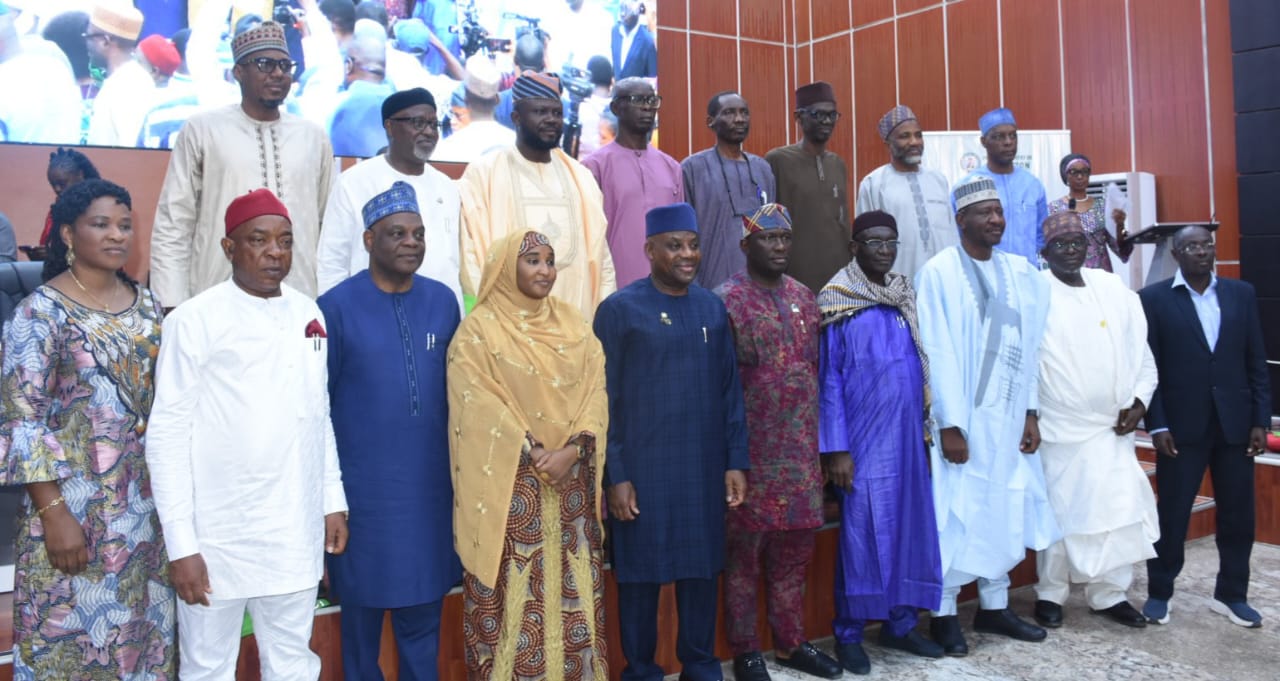
The Federal Government has initiated a fresh move to strengthen engineering and technology education with the inauguration of a Ministerial Monitoring, Evaluation and Implementation Committee to oversee a special high-impact intervention project.

The initiative, being executed in partnership with the Tertiary Education Trust Fund, is aimed at transforming universities into hubs of practical training, applied research, innovation and problem-solving, moving them beyond predominantly theoretical instruction.
The committee is chaired by the President of the Nigerian Society of Engineers, Engr. Ali Rabiu, alongside other academics and professionals.
Speaking during the inauguration in Abuja on Tuesday, the Minister of Education, Tunji Alausa, described the development as a significant step in the government’s strategic plan to reposition engineering and technology education as a catalyst for industrialisation, innovation and sustainable national growth.
Alausa observed that a longstanding disconnect between theoretical instruction and practical expertise among graduates had undermined employability, reduced industrial confidence and weakened Nigeria’s competitiveness in the global technology landscape.
“For too long, concerns have been raised about the gap between theoretical knowledge and practical competence among engineering and technology graduates.
“These gaps have limited graduate employability, weakened industrial confidence, and constrained Nigeria’s ability to compete in a fast-evolving global technology landscape.
“This TETFund Special Impact Intervention Project has therefore been deliberately designed to address these gaps through modern workshops, advanced laboratories, cutting-edge equipment, and industrial-relevant training environments capable of producing graduates who can design, fabricate, test, innovate, and industrialize solutions,” he said.
According to the minister, the intervention will tackle these deficiencies through the provision of upgraded workshops, advanced laboratories, state-of-the-art equipment and industry-focused training facilities that can produce graduates skilled in design, fabrication, testing, innovation and industrialisation.
He clarified that the project is distinct from other allocations contained in TETFund’s 2026 disbursement framework, which earmarks approximately N20 billion for the upgrade of engineering workshops in selected universities.
Institutions selected for the first phase include Federal Universities of Technology across the geopolitical zones — including those in Akure, Owerri and Minna — as well as some conventional federal and state universities. He added that additional institutions would be incorporated later in the year, while some others are benefiting from separate medical and science-oriented interventions.
Outlining the committee’s responsibilities, Alausa said it would supervise the rehabilitation and equipping of engineering and technology workshops, ensure compliance with approved standards, propose new workshop construction where required, and monitor fund utilisation in accordance with procurement regulations and transparency standards.
The panel is also expected to maintain digital records of projects, provide periodic reports and recommend sanctions where non-compliance is detected.
Earlier, the Minister of State for Education, Suwaiba Said Ahmad, said the initiative aligns with Nigeria’s broader ambitions for industrialisation, innovation and sustainable economic development.
She emphasised that funding alone would not deliver results, stressing the importance of strict implementation, adherence to standards, transparency and accountability.
Also speaking, the Executive Secretary of TETFund, Sonny Echono, praised the initiative and recognised the contributions of the President and the National Assembly in mandating deliberate measures to restore Nigerian universities to global competitiveness.
“I have no doubt that this committee made up of eminent Nigerians, professionals and technocrats in their own rights will help us in identifying the needs, specify what needs to be done, monitoring the process of implementing these programs and ensuring that the funds allocated for this purpose are prudently and judiciously utilised.”
He expressed optimism that the panel, comprising experienced professionals and technocrats, would effectively identify institutional needs, set priorities, track implementation and ensure responsible use of allocated resources.