By Jane Okeke
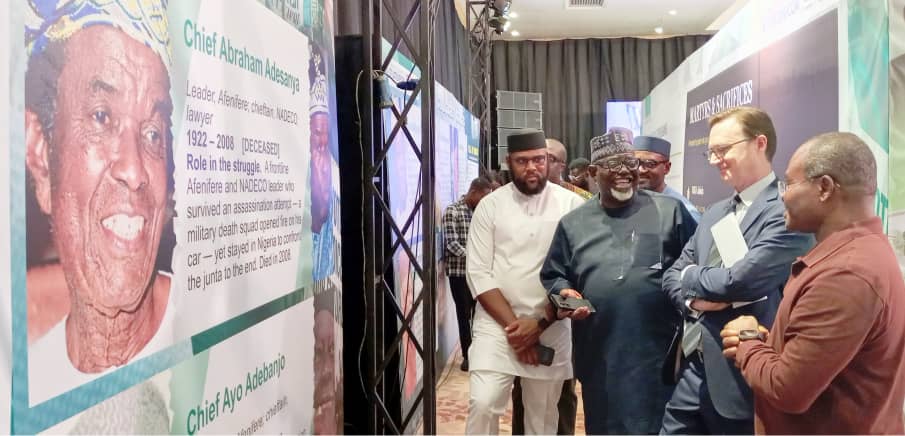
Nigeria’s foremost democracy advocates, civil society leaders, diplomats and pro-democracy veterans converged in Abuja on Thursday for the Democracy Day Dialogue and Photo Exhibition organised by the Nigeria Civil Society Situation Room.
The event, themed “June 12: From Symbolism to System Change – The Role of Civil Society in Sustaining Nigeria’s Democracy,” was held at the Intercontinental Hotel, Abuja, with support from the UK Foreign, Commonwealth and Development Office (FCDO).
Welcoming participants, Convener of the Nigeria Civil Society Situation Room and Executive Director of CISLAC, Yunusa Z. Ya’u, described June 12 as a defining moment in Nigeria’s democratic journey and a symbol of citizens’ resistance against military rule.
Ya’u recalled how Nigerians mobilised against attempts by the military to perpetuate itself in power following the annulment of the June 12, 1993 presidential election, stressing that democracy was won through sacrifice and sustained struggle.
While noting that Nigeria has enjoyed uninterrupted civilian rule since 1999, he expressed concern over what he described as declining governance standards, growing poverty, unemployment, insecurity and weak accountability mechanisms.
According to him, Democracy Day should serve as a platform for Nigerians to reflect on how to strengthen democratic institutions, demand accountability and ensure democracy delivers tangible benefits to citizens.
Also speaking, Richard Montgomery CMG, the British High Commissioner to Nigeria and UK Permanent Representative to ECOWAS, paid tribute to Nigerian civil society groups for their role in defending democratic values over the years.
Montgomery described June 12 as a powerful reminder that democracy requires courage, resilience and active citizen participation, adding that civil society remains critical to protecting human rights, promoting transparency and safeguarding civic space.
The British envoy reaffirmed the United Kingdom’s commitment to supporting democratic development in Nigeria, stressing that credible, peaceful and inclusive elections in 2027 would be vital for public confidence and national stability.
A panel discussion featuring Ene Obi, Executive Director of the Centre for Development, Abdul Oroh, former member of the House of Representatives, and other stakeholders examined the state of Nigeria’s democracy nearly three decades after the return to civilian rule.
Reflecting on the June 12 struggle, Abdul Oroh recounted the role of civil society, labour unions and pro-democracy activists in resisting military dictatorship, monitoring elections and pushing for democratic reforms despite arrests, intimidation and imprisonment.
Speakers at the dialogue expressed concern over shrinking civic space, weakened democratic institutions, insecurity, poverty and declining citizen participation, urging Nigerians to unite in defending democracy and ensuring that the ideals of June 12 translate into real governance reforms and improved living conditions for all.