By Stella Odueme
The National Agricultural Development Fund (NADF) has launched the Ginger Value Chain Recovery and Sustainability Programme (GVCRSP), a major initiative aimed at revitalising Nigeria’s ginger industry following the devastating ginger blight epidemic that severely affected production in key growing regions.
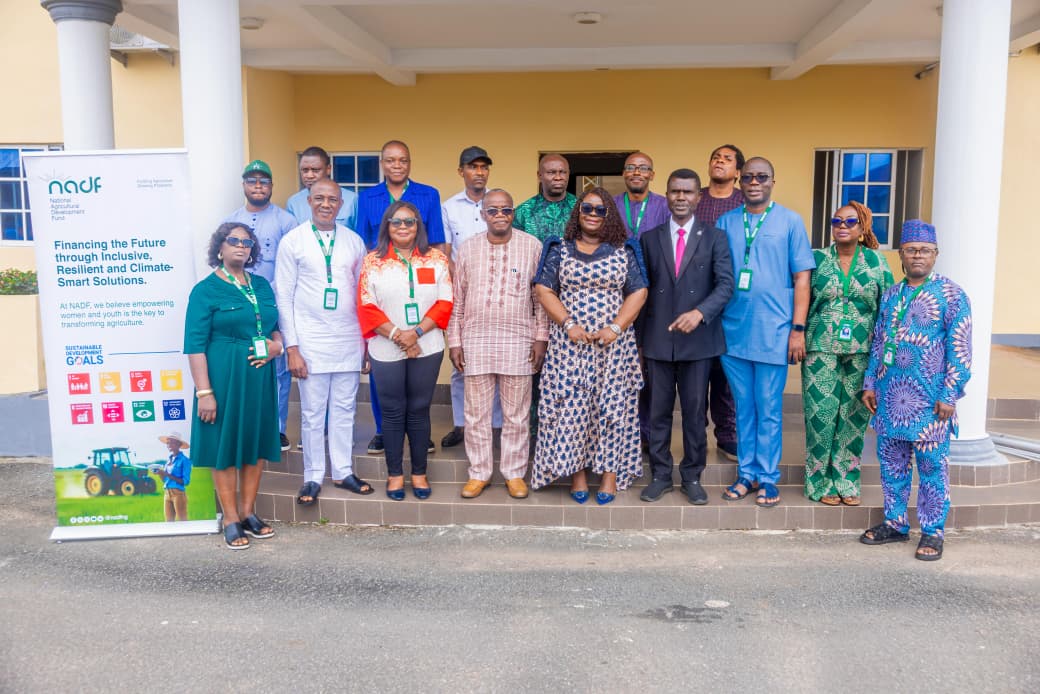
The programme was unveiled at the National Root Crops Research Institute (NRCRI), Umudike, Abia State, bringing together government officials, researchers, development partners, commodity associations, and private sector stakeholders to develop strategies for restoring and transforming the country’s ginger value chain.
Representing the Executive Secretary and Chief Executive Officer of NADF, Mohammed Ibrahim, the General Manager, Technical Services, Ernest Ihedigbo, described the initiative as a significant step towards advancing the Federal Government’s agricultural transformation agenda.
He said the programme reflects the commitment of President Bola Ahmed Tinubu’s administration to reposition agriculture as a key driver of economic diversification, food security, industrial growth, and export competitiveness.
“The unveiling of this programme and our partnership with NRCRI reaffirm NADF’s mandate as the Federal Government’s catalytic financing institution dedicated to translating agricultural policies into sustainable investments that strengthen research, innovation and national food sovereignty,” Ihedigbo stated.
According to him, sustainable agricultural transformation depends on strong research institutions, modern technologies, and strategic investments capable of linking scientific discoveries to production and markets.
Ihedigbo disclosed that NADF is implementing a flagship intervention designed to strengthen selected agricultural research institutes across the country as Centres of Excellence.
Under the initiative, investments will be made in modern laboratories, biotechnology facilities, renewable energy systems, irrigation infrastructure, digital platforms, and innovation hubs.
He announced that NRCRI had been selected as the South-East beneficiary in the first phase of the programme.
“NRCRI will receive support for energy and digital infrastructure as well as laboratory equipment installation and maintenance,” he said.
The intervention, he explained, is expected to improve research infrastructure, enhance scientists’ capacity, promote demand-driven research, facilitate technology commercialisation, and strengthen partnerships with international research organisations.
Speaking on the Ginger Value Chain Recovery and Sustainability Programme, Ihedigbo said the intervention was specifically designed to rebuild the ginger industry after the 2023 ginger blight epidemic, which disrupted production, reduced export earnings, and affected thousands of farmers.
He revealed that NADF would provide six metric tonnes of ginger rhizomes alongside critical infrastructure for germplasm conservation, disease-free seed multiplication, tissue culture propagation, adaptive field preservation, and sustainable seed system development.
“Moving beyond social impact interventions, the Ginger Value Chain Recovery and Sustainability Programme is designed to drive recovery, resilience and long-term transformation of the ginger sub-sector,” he said.
Ihedigbo further recalled NADF’s role in the Federal Government’s Ginger Blight Epidemic Control Taskforce through the Ginger Recovery Advancement and Transformation for Economic Empowerment (GRATE) Programme.
Through that intervention, approximately 6,000 farmers in Kaduna, Plateau, and the Federal Capital Territory received improved seeds, alternative crop production inputs, and integrated pest management support to contain the outbreak and restore livelihoods.
Representing the Abia State Commissioner for Agriculture and Natural Resources, Dr. Cliff Agbeze, the Permanent Secretary in the ministry, Mrs. Ijeoma Adamma Agoha, praised the collaboration between NADF and NRCRI.
She described the partnership as a demonstration of the impact strategic collaborations can have in addressing challenges across agricultural value chains.
“The response we are launching today goes beyond recovery. It is about rebuilding stronger systems, restoring farmers’ confidence, and ensuring long-term sustainability through science, technology and innovation,” Agoha said.
She noted that the ginger blight epidemic had disrupted livelihoods, reduced access to quality planting materials, and exposed weaknesses within the sector.
Agoha also commended NADF for selecting NRCRI as a beneficiary of the intervention, describing the decision as recognition of the institute’s research capabilities and Abia State’s growing role as a hub for agricultural innovation.
Stakeholders Express Optimism
Welcoming participants on behalf of the Executive Director of NRCRI, Professor Chiedozie Ngozi Egesi, the institute’s Director of Root Crops Research, Dr. Adeyemi Olojede, described the programme as a timely intervention.
He stressed the need for stakeholders to collaborate in developing practical solutions to restore production and build resilience in the ginger value chain.
“The collaboration will provide the financial and institutional support required to convert scientific ideas into practical solutions that directly benefit farmers and the wider economy,” Olojede said.
Also speaking, the representative of the Nigerian Export Promotion Council (NEPC), Morrison Udo, described ginger as one of Nigeria’s most important non-oil export commodities and expressed confidence that the initiative would address challenges relating to funding, infrastructure, disease management, and policy support.
Similarly, Professor Ikechukwu Dallas Chima, representing the National President of the National Ginger Association of Nigeria (NGAN), described the programme as a strategic national intervention with significant economic implications.
He noted that the global ginger market is projected to exceed $3 billion in the coming years and warned that Nigeria must not lose its competitive advantage in the international market.
Chima commended NADF for supporting NRCRI’s research efforts and urged all stakeholders to work together to establish a sustainable foundation for the sector’s future growth.
As part of the event, participants received presentations on NRCRI’s achievements in crop improvement, disease management, and biotechnology.
They also toured the institute’s ginger, cassava, and yam research facilities, tissue culture laboratories, and screenhouses, where ongoing innovations aimed at accelerating agricultural transformation were showcased.