By Chesa Chesa
Public policy Elexperts have called for a more integrated approach to addressing Nigeria’s farmer-herder conflicts, warning that agricultural reforms alone will not resolve the insecurity undermining food production and rural livelihoods.
In an analysis of ongoing federal agricultural initiatives, Jennifer Eburuoh and Olive Aniunoh of renown police think-tank, Nextier, argue that while the Federal Government has launched programmes to strengthen agricultural productivity and modernise livestock management, persistent violence in farming communities continues to threaten their success.
Jennifer Eburuoh is a PhD student in International Relations at American University, Washington, D.C.; while Olive Aniunoh is a Senior Legal, Policy and Research Consultant at Nextier
According to Nextier’s Nigeria Violent Conflicts Database (NNVCD), casualties from farmer-herder conflicts increased from 188 to 322 between January and December 2025. The database also identified an overlap between farmer-herder violence and other criminal activities, including kidnapping, highlighting the evolving nature of rural insecurity.
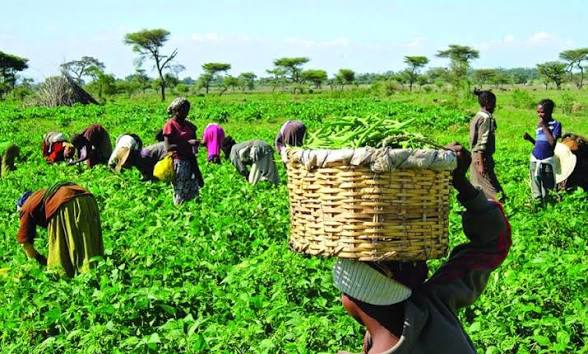
The authors noted that recent attacks, including violence in Gurfata village in the Gwagwalada Area Council of the Federal Capital Territory, demonstrate how insecurity directly disrupts agricultural production, displaces farming communities, and weakens local food supply chains.
Benue State, often referred to as Nigeria’s food basket, has witnessed the displacement of about 400,000 residents due to recurring violence, raising concerns over national food security.
The analysis highlighted several ongoing interventions designed to improve resilience in the agricultural sector.
Among them is the World Bank-supported Agro-Climatic Resilience in Semi-Arid Landscapes (ACReSAL) project, a six-year initiative operating in 19 states and the Federal Capital Territory. The project focuses on restoring degraded land, improving irrigation systems, promoting afforestation, and strengthening institutional capacity to address environmental challenges linked to conflict and climate change.
Another key intervention is the Livestock Productivity and Resilience Support (L-PRES) project, which seeks to improve livestock value chains, enhance veterinary services, regulate transhumance, and reduce conflicts associated with livestock movement. The initiative has already supported the establishment of pilot livestock service centres, including one recently inaugurated in Taraba State.
Despite these investments, the authors cautioned that both programmes rely heavily on the assumption that security conditions will remain stable enough for implementation to continue uninterrupted.
They argued that infrastructure projects such as grazing reserves, irrigation systems and livestock service centres cannot function effectively in communities where armed groups dictate access to land and movement.
According to the authors, many incidents labelled as farmer-herder conflicts are increasingly linked to banditry, organised criminal networks and militia-driven land capture, requiring security-focused interventions alongside agricultural reforms.
To strengthen the effectiveness of current programmes, the authors recommended that Agro-Ranger deployments be funded through dedicated security budgets rather than climate adaptation projects, while calling for detailed conflict assessments before establishing new grazing reserves or livestock facilities.
They also urged greater participation by traditional rulers, farmer associations and pastoralist groups in designing local security arrangements, arguing that community ownership would improve trust and programme sustainability.
Other recommendations include legally recognised transhumance corridor agreements for participating states, stronger monitoring of state-level implementation commitments, and economic incentives such as subsidised veterinary services and cost-sharing arrangements to encourage farmers and pastoralists to adopt new facilities.
The authors concluded that while investments in climate resilience and livestock development remain important, sustainable agricultural productivity in Nigeria will depend on combining technical solutions with effective security measures, stronger governance, and community trust.
They added that organisations such as Nextier Security, Peace and Development, through the Strengthening Peace and Resilience in Nigeria (SPRiNG) programme, continue to support efforts aimed at addressing the complex and overlapping drivers of farmer-herder conflicts across North Central and North West Nigeria.