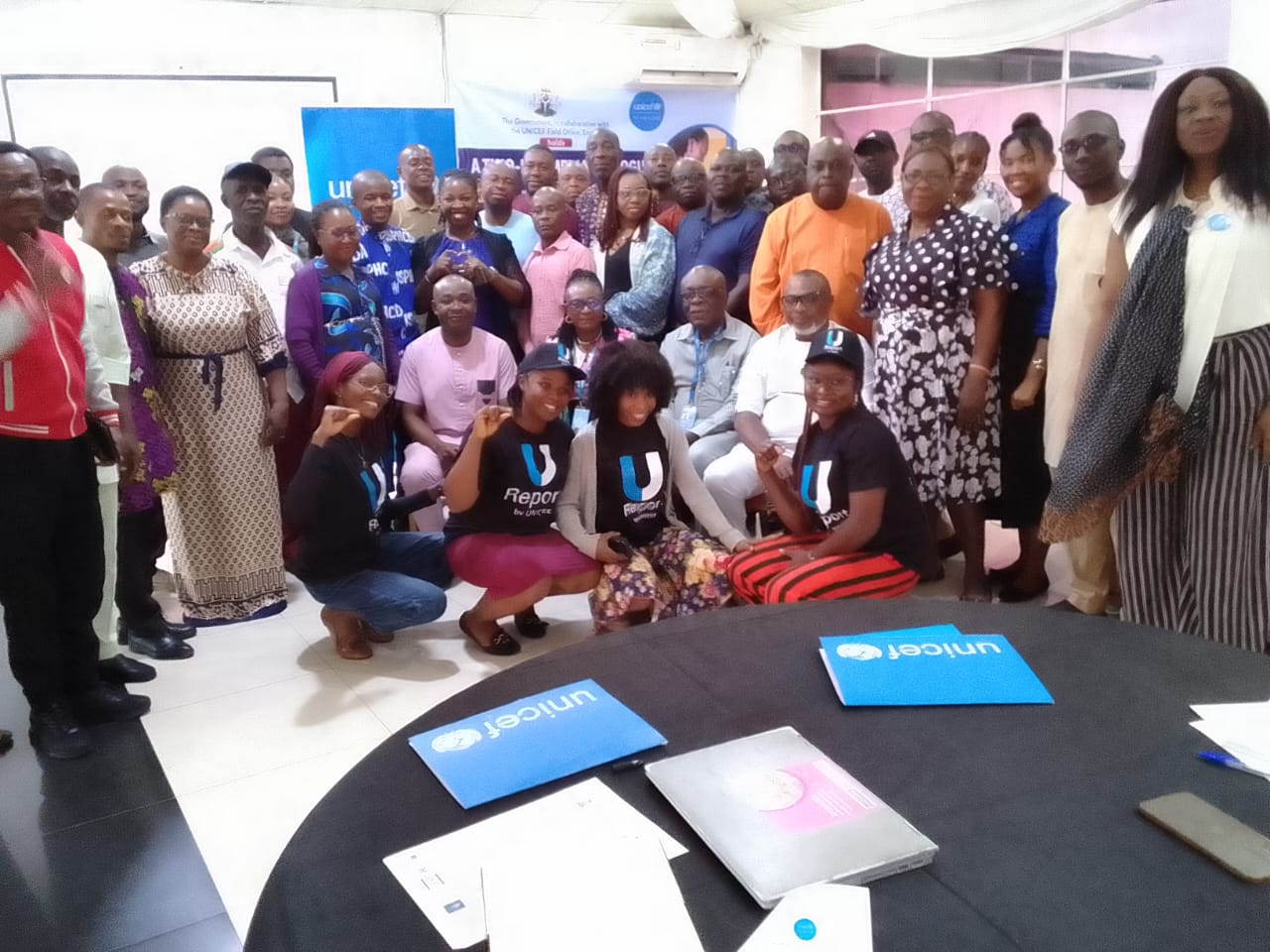
Group photograph of UNICEF officials, resource persons and journalists during the two-day media dialogue
By Maurice Okafor, Enugu
The United Nations Children’s Fund (UNICEF) has reiterated that exclusive breastfeeding remains the best form of nutrition for infants, saying it promotes healthy growth, protects children from diseases and reduces the financial burden of healthcare on families.
The organisation said exclusive breastfeeding helps parents save money that would have been spent on medical care while raising healthy and intelligent children who are better equipped to contribute to national development.
Exclusive breastfeeding involves feeding an infant only breast milk from the first hour after birth until the age of six months, without giving water or any other food or supplements.
UNICEF research findings, supported by medical experts, have shown that breast milk contains sufficient water and all the essential nutrients a newborn requires for healthy growth during the first six months of life.
The agency also advocates the introduction of complementary foods after the first six months. These foods, which can be prepared from locally available foodstuffs and vegetables, should complement breastfeeding until the child reaches two years of age and beyond, covering the critical first 1,000 days of life.
The sustained advocacy for exclusive breastfeeding informed the organisation of a two-day media dialogue with the theme, “Breastfeeding for a Sustainable Start in Life: Strengthen What Works,” organised by the UNICEF Field Office, Enugu, in collaboration with the Broadcasting Corporation of Abia State (BCA), on Thursday, July 30.
Participants at the advocacy workshop were selected from Enugu, Benue, Cross River and Imo states.
The two-day media dialogue also served as a prelude to the 2026 World Breastfeeding Week, scheduled to hold from August 1 to August 7.
In her presentation, Dr. Ngozi Onuorah, Nutrition Specialist with the UNICEF Field Office, Enugu, dismissed concerns among some women that exclusively breastfeeding a child for six months reduces breast milk production or causes the breasts to become saggy.
According to her, “The more the baby is breastfed, the more the milk comes.”
She explained that breast size reduction or sagging is a natural result of ageing, noting that it occurs whether or not a woman breastfeeds her children.
She stated: “Breastfeeding is one of the most effective ways of building healthier societies. The 2026 World Breastfeeding Week is strategic to promote, protect and support breastfeeding in every environment.”
The UNICEF nutrition specialist advised nursing mothers to embrace exclusive breastfeeding as a way of life, stressing that breast milk contains all the nutrients a baby needs for proper growth and development during the first six months after birth and requires no additional supplements.
Her words: “Breastfeeding is nature’s gold; it boosts the baby’s immunity and creates a natural bond between mother and child.”
She added that breastfeeding also benefits nursing mothers by reducing the risk of breast cancer while protecting infants against infectious diseases.
Dr. Onuorah further stated: “Let us envision a future where every child is well nourished, every child can learn effectively, every worker is productive and every nation thrives because its people are healthy.
“This future is possible, but only if nutrition is treated not as an afterthought but as a national and global priority. Breastfeeding is not only a mother’s responsibility—it is a societal responsibility. When governments invest, health workers counsel, communities support, employers protect and the media amplify evidence-based messages, every child has the opportunity to survive, thrive and contribute to sustainable national development.
“Together, let us strengthen what works for exclusive breastfeeding and secure a sustainable start in life for every child,” Dr. Onuorah stressed.
Presenting another paper on behalf of Mrs. Chiluwe, Dr. Hillary Ozoh, Social Behaviour Change Specialist, said breastfeeding plays a vital role in shaping a child’s growth and development.
He described the media as a key stakeholder in promoting exclusive breastfeeding through accurate and responsible reporting.
According to him, “Breastfeeding is one of the most effective ways of building healthier societies. The 2026 World Breastfeeding Week is strategic to promote, protect and support breastfeeding in every environment.”
Also speaking, Dr. Chikezie Obasi, Consultant Public Health Physician in the Department of Community Medicine, Enugu State University of Science and Technology (ESUT), presented a paper titled, “Leveraging Media for Advocacy on Young Child Feeding, Survival and Development.”
He said the media has a critical role in encouraging society to embrace exclusive breastfeeding as a culture.
Dr. Obasi urged journalists to serve as agents of change by informing, educating and enlightening the public on the benefits of exclusive breastfeeding.
He also advised every expectant mother to register for antenatal care immediately after confirming pregnancy and to attend antenatal clinics regularly until delivery.
In his opening remarks, the Director-General of the Broadcasting Corporation of Abia State, represented by the Corporation’s Desk Officer, Mr. Mkpa Okezie, commended the theme of the 2026 World Breastfeeding Week and assured UNICEF of the station’s continued partnership in promoting the welfare of women and children.
His words: “We are solidly in support of exclusive breastfeeding, and that is why we are here,” while reaffirming the media organisation’s commitment to promoting the practice in Abia State and beyond.
Earlier, the Communication Officer of UNICEF Enugu, Dr. Ijeoma Onuoha-Ogwe, said the dialogue was organised to equip media practitioners with the knowledge and skills required to effectively advocate for breastfeeding and report accurately on related issues.
She also delivered a presentation on ethical reporting and effective messaging strategies for child-focused advocacy and strengthening exclusive breastfeeding campaigns.
The two-day dialogue, organised by UNICEF for media practitioners from Enugu, Benue, Cross River and Imo states, was co-sponsored by the United States Government, the Child Nutrition Fund, The Church of Jesus Christ of Latter-day Saints, Cater Foundation and the U.S. Mission in Nigeria.