By Jane Okeke
Scientists, health experts, regulators and consumer advocates have called for tobacco and nicotine policies to be guided by scientific evidence, local realities and the experiences of people directly affected by such regulations.
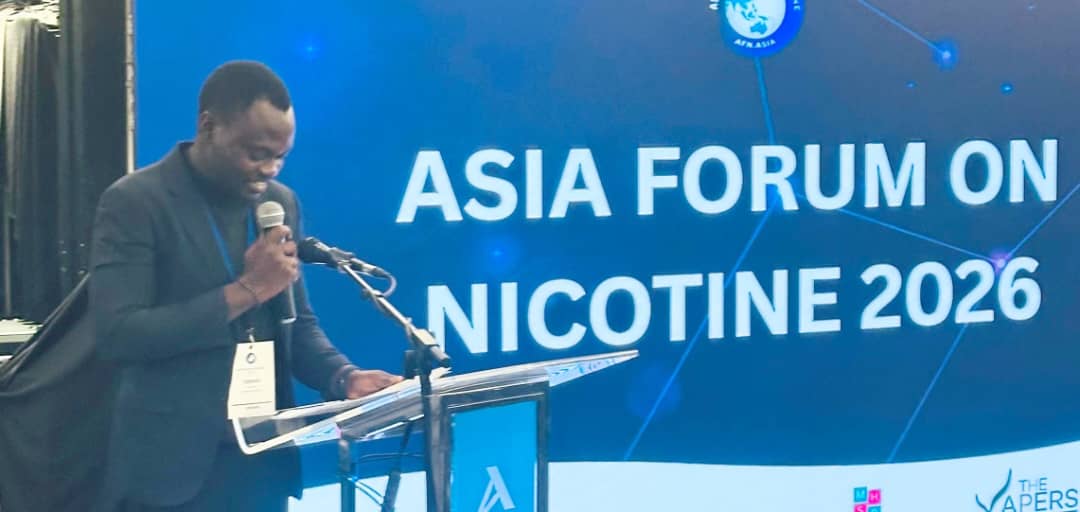
The call was made during discussions at the Asia Forum on Nicotine 2026 held in Ortigas, Pasig City, where participants examined emerging issues surrounding tobacco use, nicotine products, regulation and public health.
The moderator of the forum, Gabriel Oke, a global health researcher, said the discussions brought together scientists, clinicians, advocates, regulators and people with lived experience.
According to Oke, effective policymaking requires evidence to be considered alongside the realities and experiences of the people affected by tobacco and nicotine policies.
One of the experiences discussed at the forum was that of Shahbaz Khan from Pakistan, who spoke about years of heavy oral tobacco use and its effects on his teeth and gums.
Khan also shared his experience after switching to tobacco-free nicotine pouches.
However, participants noted that personal experiences could not replace scientific research or establish the safety of any product.
They said such accounts could nevertheless help identify important questions requiring further research, including the options available to people seeking to move away from tobacco and the support available to them.
The forum also examined the distinction between the health risks associated with smoking and the effects of nicotine.
Participants noted that cigarette smoke contains numerous toxic substances produced through the burning of tobacco, while nicotine is addictive and not without health risks.
They stressed that products that do not burn tobacco, including e-cigarettes, heated tobacco products and nicotine pouches, should be assessed individually based on available scientific evidence.
The participants cautioned that reduced exposure to certain harmful substances did not mean a product was harmless or that its long-term health effects had been fully established.
They said policymakers must balance efforts to reduce smoking-related harm with measures to prevent young people from initiating nicotine use and ensure that adults receive accurate information.
The Philippines’ Republic Act No. 11900, popularly known as the Vape Law, also featured in discussions at the forum.
The law provides a regulatory framework for vaping products, including provisions on product standards, sales and access by minors.
Participants said the effectiveness of such regulations could only be properly assessed through evidence on their real-world impact, including changes in adult smoking, quitting rates, youth use, product access and illicit trade.
Professor Tikki Pangestu and other speakers also examined experiences from Japan, New Zealand and South Korea.
Japan has recorded a decline in cigarette sales during a period of increased use of heated tobacco products, while New Zealand has experienced a reduction in daily smoking alongside changes in its tobacco and vaping policies.
South Korea was also discussed in relation to the role of taxation and product choice in tobacco consumption.
However, the speakers cautioned against concluding that a single policy or product was solely responsible for changes in smoking trends.
They noted that tobacco consumption patterns were influenced by several factors and that policies that produced results in one country might not automatically achieve similar outcomes elsewhere.
The forum also examined challenges associated with enforcing tobacco and nicotine regulations.
Officials of the Philippine Bureau of Customs discussed difficulties in tackling smuggling across the country’s thousands of islands, while other speakers considered the possible consequences of restrictions on vaping products and high cigarette taxes.
Participants said governments should monitor the effects of regulations after they are introduced to determine whether they are achieving their objectives or creating unintended consequences.
The discussions also focused on participation in tobacco and nicotine policymaking.
Consumer advocates and other stakeholders raised concerns about ensuring meaningful participation while maintaining safeguards against interference in public health policies.
Participants acknowledged the importance of Article 5.3 of the World Health Organisation Framework Convention on Tobacco Control, which seeks to protect public health policies from tobacco industry interference.
They stressed that transparency regarding funding, affiliations and conflicts of interest must remain central to policymaking.
At the end of the forum, participants signed the Asia Pacific Declaration, co-presented by Nancy Loucas and Professor Pangestu.
The declaration called for the protection of young people, regulated access to alternatives for adult smokers, assessment of policies based on their real-world outcomes and stronger collaboration among researchers, clinicians, consumers, regulators and enforcement agencies.
Oke said countries in Asia, the Pacific and Africa needed more locally relevant research, improved training for healthcare professionals and stronger systems for monitoring the outcomes of tobacco and nicotine policies.
He also called for greater involvement of people with lived experience in research and policy development.
Oke is the Secretary of the Expert Alliance for Tobacco Harm Reduction, a member of Scientific Insights in Harm Reduction in Africa and founder of THRJourno, a digest focused on tobacco and nicotine research and policy.
He is also a Fellow of the Royal Society for Public Health in the United Kingdom and has published 32 research works.