By Chuks Oyema-Aziken
Women leaders from 16 communities in Kundu Ward of Kwali Area Council, Federal Capital Territory (FCT), have commenced a grassroots campaign aimed at accelerating the attainment of Open Defecation Free (ODF) status through community-led sanitation and hygiene promotion.
The initiative is being implemented by the Resource Conservation and Development Initiative (RCDI) with support from ActionAid Nigeria under the Renewed Women’s Voice and Leadership Project, funded by Global Affairs Canada.
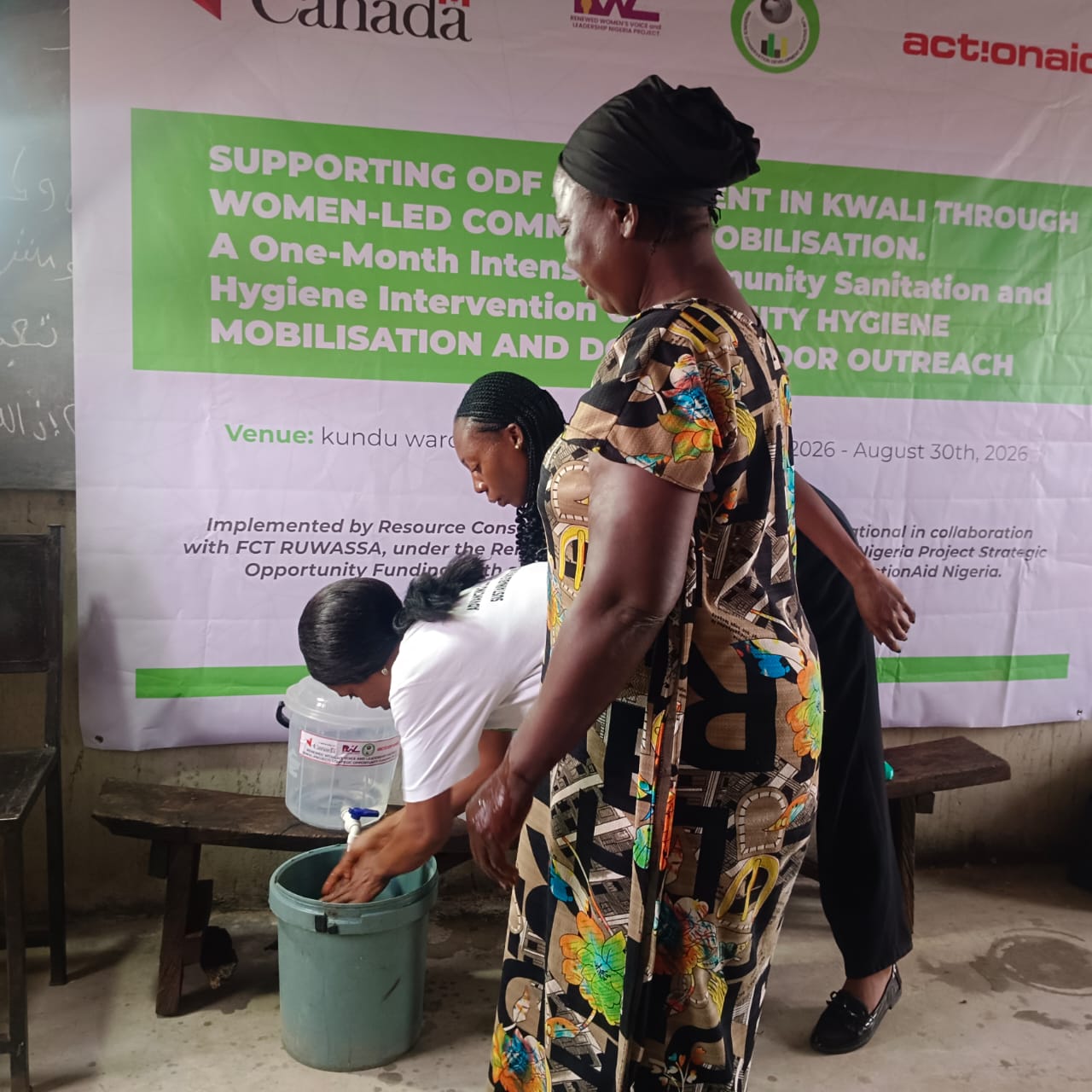
Speaking during a training programme for women community champions in Kwali, the Programme Lead and Programme Officer of RCDI, Ms. Mary Jane Ukeagbu, said the intervention was designed to empower women to take the lead in promoting sanitation awareness and positive behavioural change in their communities.
According to her, women play a critical role in maintaining cleanliness, promoting healthy living and influencing household decisions that affect family well-being, making them strategic partners in the campaign against open defecation.
She explained that the project focuses on supporting ODF attainment in Kundu Ward through women-led mobilisation, household sanitation education, menstrual hygiene awareness and community ownership of hygiene practices.
Ms. Ukeagbu disclosed that community engagement activities had already commenced with meetings involving women leaders from the 16 communities in the ward, adding that the next phase involves training 80 women who will conduct house-to-house sensitisation campaigns.
She said the trained women would serve as community champions, taking sanitation messages directly to households and encouraging residents to adopt healthy hygiene practices, use toilets consistently and eliminate open defecation.
The Programme Officer further revealed that the project would distribute reusable sanitary pads to women and adolescent girls in the participating communities as part of efforts to promote menstrual hygiene management and support healthier lifestyles. She noted that access to reusable pads would help improve personal hygiene, reduce health risks and enhance the dignity and confidence of women and girls.
The WASH Coordinator of Kwali Area Council, Mrs. Aminat Dada, commended RCDI and its partners for supporting ongoing efforts by the council to improve sanitation and hygiene across communities in the area.
She noted that the Area Council had for several years been implementing door-to-door sensitisation campaigns on the need for households to construct and use toilets, stressing that the new intervention would strengthen and expand those efforts.
According to her, Kundu Ward is one of the ten wards in Kwali Area Council, and the involvement of women as sanitation champions would significantly contribute to the council’s drive toward achieving ODF status.
Mrs. Aminat Dada expressed optimism that the project would accelerate progress, describing the intervention as timely and impactful. She added that empowering women with sanitation knowledge and access to menstrual hygiene products would create lasting behavioural change at the household and community levels.
One of the participants, Mrs. Ruth Abu, the Women Leader of Sadaba community, said the training had provided valuable lessons on personal hygiene, environmental sanitation and disease prevention.
She explained that participants were taught the importance of handwashing before and after meals, maintaining clean surroundings and encouraging healthy practices that protect families from illnesses linked to poor sanitation.
Mrs. Abu pledged to share the knowledge gained with residents in her community, saying the training had equipped women leaders with the skills needed to educate others on the importance of cleanliness, menstrual hygiene and healthy living.
The five-month intervention, which will culminate in a World Toilet Day progress review on November 19, 2026, is expected to strengthen women-led sanitation advocacy, improve household hygiene practices, enhance menstrual health management and support the overall goal of making communities in Kundu Ward open defecation free.