Adebayo Onigbanjo
By Felix Khanoba
The Federal Government has selected 16,000 Nigerians for the inaugural cohort of its Digital Training Academy, following a competitive application process that attracted 72,850 applicants nationwide.
The academy, a free government-backed programme, is designed to equip young Nigerians with globally recognised digital skills and prepare them for opportunities in the digital economy.
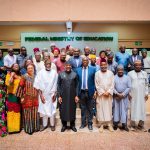
The National Coordinator, Special Projects and Innovation Unit (SPOIU), Federal Ministry of Education, Adebayo Onigbanjo, disclosed this on Wednesday in Abuja during a media briefing ahead of the national launch of the Digital Training Academy scheduled for September 14, 2026.
Onigbanjo said applications were received from all 36 states and the Federal Capital Territory during the registration period, which ran from August 17 to September 1, 2026.
He said 19,699 applicants met the qualifying benchmark, out of which 16,000 were eventually selected for the first cohort.
The Digital Training Academy is being implemented under the Nigeria Education Digital Infrastructure (NEDI) programme, a flagship intervention of the Nigeria Education Sector Renewal Initiative (NESRI).
According to the Federal Ministry of Education, the programme is part of the Federal Government’s broader efforts to develop a highly skilled workforce capable of competing effectively in the global digital economy.
Training for the pioneer cohort will be delivered through two international online learning platforms, Coursera and Pluralsight.
The ministry said the initiative is also aligned with the human capital development objectives of the Renewed Hope Agenda and the Data and Digitalisation pillar of NESRI.
Quoting the Minister of Education, Dr Tunji Alausa, Onigbanjo described the academy as “the next phase of President Tinubu’s commitment to building a highly skilled workforce capable of competing in the global digital economy.”
He explained that the selection of the first 16,000 learners was only the beginning of the Federal Government’s plans to expand the programme nationwide.
“This cohort of 16,000 is DTA’s first, not its last. It represents a significant step toward the Academy’s national ambition, and it establishes the foundation, the systems, and the delivery partnerships on which subsequent cohorts will be built,” the coordinator said.
The ministry is expected to unveil further details about the academy’s expansion and subsequent cohorts during the national launch on September 14.
It also acknowledged the participation of partner institutions and organisations, including the Ministry of Communications and Digital Economy, Yaba College of Technology, the National Open University of Nigeria, Coursera and Pluralsight.
The Federal Ministry of Education commended the thousands of Nigerians who applied for the programme and urged the media to sustain public awareness and reporting as the government works to broaden access to world-class digital skills across the country.