From Cyriacus Nnaji, Lagos
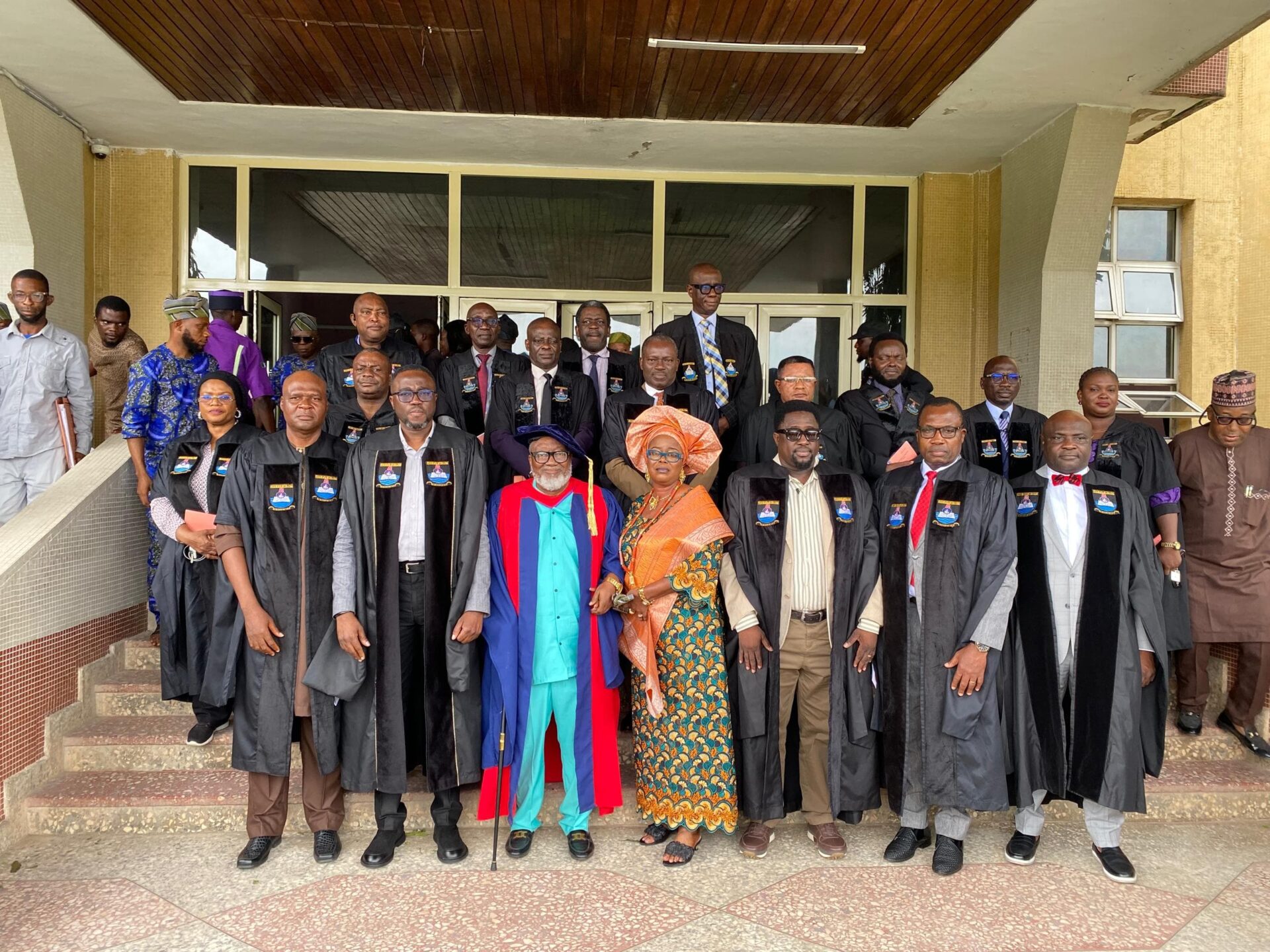
A Professor of Educational Management at the Faculty of Education, Lagos State University (LASU), Prof. Ayodeji Olasunkanmi Abari, has called for compulsory leadership education for all citizens, arguing that such training would produce better leaders and followers across society.
Abari made the recommendation on Tuesday while delivering the 126th inaugural lecture of the university at the Buba Marwa Auditorium, LASU Main Campus, Ojo. The lecture was titled, “Leadership is the Answer … But What is the Question? An Octopus Threshold Model.”
The professor said leadership should not be left to chance, stressing that every individual would occupy a leadership position at one point or another, whether in the family, workplace or society, while those not in leadership positions would inevitably serve as followers.
According to him, compulsory study of leadership, its processes, principles, characteristics and practices would equip citizens with the knowledge required to provide effective leadership and responsible followership.
“Every individual must undergo a study of leadership, its process, elements, characteristics and practices and make use of the knowledge acquired to provide and exhibit leadership,” he said.
“For one thing, everyone would attain a leadership position at one time or the other, even if it is at a lower level or in a small group such as the family or a unit of an organisation. For another thing, if one is not a leader, he or she would be a follower. Therefore, there is the need for training and retraining in leadership and even followership.”
Abari also urged those occupying leadership positions to critically reflect on the responsibilities of leadership by understanding the organisations they lead, their operating environments, the personalities of their followers and their own leadership styles.
He stressed that greater attention should be paid to how leaders are selected or elected, particularly in educational institutions and Nigeria generally, warning that poor leadership recruitment would continue to undermine national development.
“The question is, how are leaders selected and or elected from an appropriate source? This must rightly and objectively be attended to; otherwise the system would continue to falter for want of appropriate leadership,” he said.
The professor further advocated the inclusion of personality assessment in leadership selection processes, noting that psychologists could play a significant role in identifying individuals best suited for leadership responsibilities.
He also called for the creation of enabling environments that would allow effective leadership to thrive, adding that both institutions and leaders share responsibility for fostering such conditions.
According to him, leadership antecedents, competence and cultural orientation should constitute key criteria in selecting or electing leaders, as effective leadership promotes productive followership and sustainable development.
Summing up his “Octopus Threshold Model,” Abari described leadership as a complex concept requiring the simultaneous consideration of five critical factors: the source of leadership, the nature of the organisation, the operating environment, the quality of followership and the personality of the leader.
He said when these elements work together with wisdom, courage and integrity, leadership becomes capable of delivering positive outcomes and addressing society’s multidimensional challenges.