By Daniel Tyokua
The Nigerian Institute of Town Planners (NITP) has sought full enforcement of Nigeria’s urban and regional planning law, blaming its poor implementation for persistent challenges in the development and management of cities.
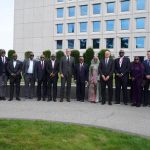
National President of the institute, Mr. Ogbonna Chime, made the call in Abuja at the NITP 60th anniversary national discourse, themed, “Ethics, Professional Obligations and National Development.”
Chime said the failure to implement the Nigerian Urban and Regional Planning Law remained one of the major impediments to effective town planning practice in the country.
He said the 1992 Urban and Regional Planning Law, which became an Act of the National Assembly in 2004, provided planning structures capable of addressing some of the challenges confronting Abuja and other cities.
According to him, the law stipulates that planning should precede development and provides professional structures to guide urban development at the federal and state levels.
He said the absence of these structures had deprived governments of the full benefits of professional advice in managing the urban environment.
Chime specifically cited the FCT, saying the law provides for an FCT Urban and Regional Planning Board comprising town planners, architects, quantity surveyors, land surveyors and engineers to advise the FCT Minister on the development and management of the territory.
He linked the absence of effective planning structures to some of Abuja’s challenges, including flooding and uncontrolled development.
While acknowledging the impact of climate change on flooding, Chime said proper planning and development control remained essential to reducing the vulnerability of cities.
He also called for the implementation of the Nigerian Urban and Regional Planning Commission provided for at the federal level, saying it would provide a framework for coordinating urban and regional planning across the country.
Chime maintained that urban development should not be driven solely by political considerations, urging government to make better use of professionals in managing the environment.
His position was supported by a former National Chairperson of the Association of Women Town Planners of Nigeria, Tpl. Morenike Babalola, who attributed some of the challenges confronting town planners to political interference in the planning process.
Babalola said town planners often provide professional advice but could be overruled by political authorities, limiting their ability to enforce planning regulations.
“The issue is not that the town planners are not willing to do their work. The issue is the pressure from the top,” she said.
She said the government had not adequately recognised the role of town planners in creating orderly and liveable cities, urging the media to highlight the challenges confronting the profession.
The Chairman of the anniversary organising committee, Moses Ogunleye, said the event was designed to examine the contribution of town planning to Nigeria’s development over the past 60 years and identify areas requiring improvement.
The FCT Chapter Chairman of the NITP, Queen Philips, said the anniversary should not only celebrate the institute’s achievements but also renew its commitment to the future of the profession.
Philips said town planning decisions affected where people lived, worked, moved, invested and interacted, making the profession critical to developing inclusive, resilient and sustainable communities.
The National Public Relations Secretary of the NITP, Dr Chiahemba Nor, also stressed the importance of professional ethics, saying town planners had an obligation to uphold high moral standards in serving the profession and society.
The town planners called for stronger enforcement of planning regulations, greater respect for professional advice and implementation of the statutory structures provided under the Nigerian Urban and Regional Planning Law.
They maintained that effective planning remained critical to addressing flooding, uncontrolled development and other challenges threatening the live ability and sustainability of Nigerian cities.