By Chuks Oyema
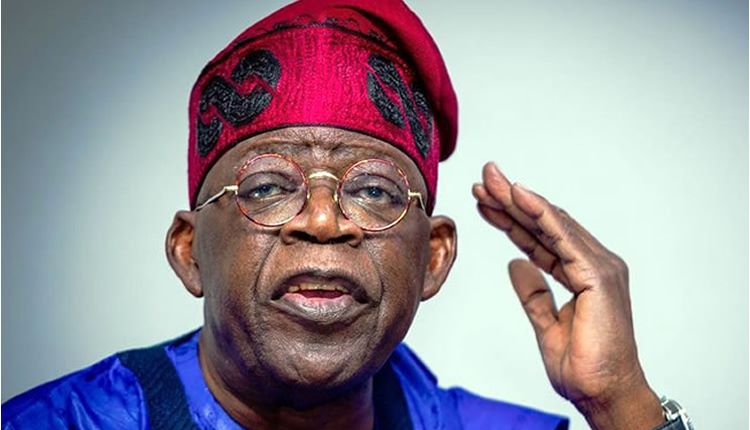
Nigeria’s long-standing debate over the creation of State Police appears to be reaching a decisive moment, and many observers believe President Bola Ahmed Tinubu deserves recognition for courageously pushing forward a reform that could fundamentally transform the country’s security architecture.
For decades, Nigeria has relied on a centralized policing structure under the Nigeria Police Force. While the system was designed to promote national cohesion and maintain uniform standards, the realities of modern security challenges have exposed its limitations. From banditry and kidnapping to communal clashes and insurgency, the threats confronting the country have become too diverse and widespread for a single, centrally controlled policing institution to effectively manage.
President Tinubu’s renewed push for State Police is therefore widely seen as a bold attempt to adapt Nigeria’s security framework to present-day realities. The idea behind State Police is simple but powerful: security works best when it is rooted in local knowledge, community trust, and rapid response.
Nigeria is a vast country with diverse cultures, languages, terrains, and social dynamics. A policing system designed entirely from the center often struggles to respond quickly and appropriately to security situations unfolding in remote communities. State Police would allow subnational governments to play a more direct role in maintaining law and order within their territories.
This reform is particularly important because governors are constitutionally described as chief security officers of their states, yet in practice they lack direct control over the police. The establishment of State Police would help bridge this gap, allowing state authorities to coordinate more effectively with local communities and security agencies.
One of the strongest advantages of State Police lies in intelligence gathering. Officers recruited from within the states they serve are more likely to understand local languages, customs, and terrain.
This familiarity can greatly enhance the ability of law enforcement agencies to gather actionable intelligence and prevent crimes before they occur.
In addition, State Police would significantly improve response time to security incidents. Under the current centralized structure, many operational decisions must pass through multiple bureaucratic layers before approval is granted. In emergencies, such delays can prove costly. A decentralized policing structure would empower states to act swiftly when threats arise.
Critics of State Police often raise concerns about possible political abuse by state governments.
These concerns are legitimate and should not be dismissed. However, they are not insurmountable. With clear constitutional provisions, strong oversight mechanisms, professional standards, and federal regulatory frameworks, the risks can be effectively minimized.
Indeed, many federal systems around the world rely on decentralized policing structures. Countries such as the United States and India operate systems in which state or regional authorities play major roles in policing. These models demonstrate that local policing can coexist with strong national security institutions.
It is also important to emphasize that the push for State Police is not aimed at punishing or marginalizing any region of the country. Rather, it is a reform designed for the collective good of all Nigerians. Security challenges affect every part of the country in different ways, and empowering states to contribute more effectively to policing will benefit every community regardless of geography or political affiliation.
In fact, State Police could strengthen national unity by allowing communities to take greater ownership of their security while still operating within a coordinated national framework.
President Tinubu’s willingness to reopen and advance this conversation demonstrates political courage. Security reforms are rarely easy because they often involve rethinking long-standing structures and confronting deeply held fears. Yet leadership requires the ability to make difficult decisions when the national interest demands it.
By championing State Police, Tinubu has signaled that Nigeria must move beyond outdated approaches and embrace solutions that reflect the country’s evolving realities. His administration appears determined to pursue reforms that can deliver lasting improvements to national security.
Very soon, Nigerians across political, regional, and ethnic divides may come to appreciate the significance of this moment. What may appear today as a contentious debate could ultimately prove to be one of the most important security reforms in the country’s history.
If properly implemented with the right safeguards, State Police could help build a safer, more responsive, and more effective policing system for Nigeria.
For this reason, many believe President Tinubu deserves to be celebrated for taking a bold step toward addressing one of the most pressing challenges facing the nation today. In time, history may well remember this initiative as a turning point in Nigeria’s journey toward sustainable security and stronger governance.