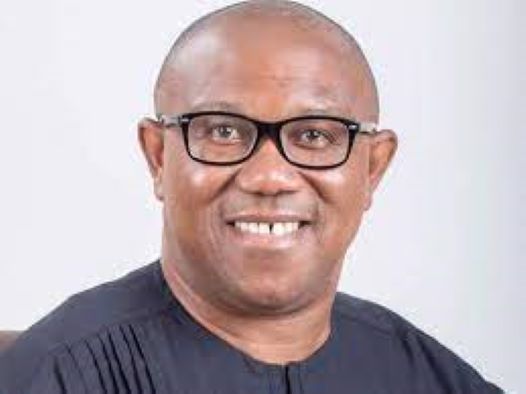
By Chesa Chesa
The Director-General of the Budget Office of the Federation, Tanimu Yakubu, has faulted former Labour Party presidential candidate, Peter Obi, over his criticism of President Bola Ahmed Tinubu’s foreign engagements, describing the remarks as a “populist simplification” of complex economic realities.
In a statement titled “Foreign Engagements and the Dangers of Populist Simplification: Peter Obi’s Ignorance,” Yakubu argued that Obi’s comments failed to appreciate the depth of the economic challenges inherited by the current administration and the role of international diplomacy in rebuilding investor confidence.
According to him, President Tinubu assumed office at a time Nigeria was grappling with severe structural economic problems, including what he described as an unsustainable fuel subsidy regime, multiple exchange-rate distortions, mounting debt-service pressures, weak fiscal buffers, and heavy reliance on Central Bank financing to sustain government operations.
Yakubu maintained that under such conditions, foreign engagements were not ceremonial trips but strategic efforts aimed at restoring sovereign credibility, rebuilding policy confidence, attracting long-term investments and strengthening diplomatic and economic ties.
He also criticised Obi’s comparison of Nigeria’s situation with that of the United States under former President Donald Trump, insisting that both countries operate under vastly different economic realities.
“The United States engages China from the position of the world’s dominant reserve currency issuer and the largest consumer market on earth, while Nigeria is a reforming emerging economy attempting to stabilise itself after years of fiscal distortion,” Yakubu stated.
The Budget Office DG further noted that the benefits of international engagements do not often materialise immediately through headline-grabbing investment announcements, explaining that major investments and financing arrangements typically emerge gradually through sustained diplomacy, policy consistency and economic reforms.
Yakubu also accused critics of the administration of opposing difficult but necessary reforms such as fuel subsidy removal and exchange-rate unification, while at the same time demanding immediate investment inflows.
He argued that Nigeria was approaching a dangerous fiscal situation before the current administration introduced stabilisation measures, warning that delaying reforms could have triggered deeper economic instability.
According to him, the Tinubu administration confronted an urgent need for economic stabilisation rather than the “luxury of ideal sequencing.”
He concluded that rebuilding the economy would require patience, institutional reforms, policy credibility and sustained international re-engagement, rather than “slogans, photo comparisons, or selective foreign analogies.”