By Daniel Tyokua_
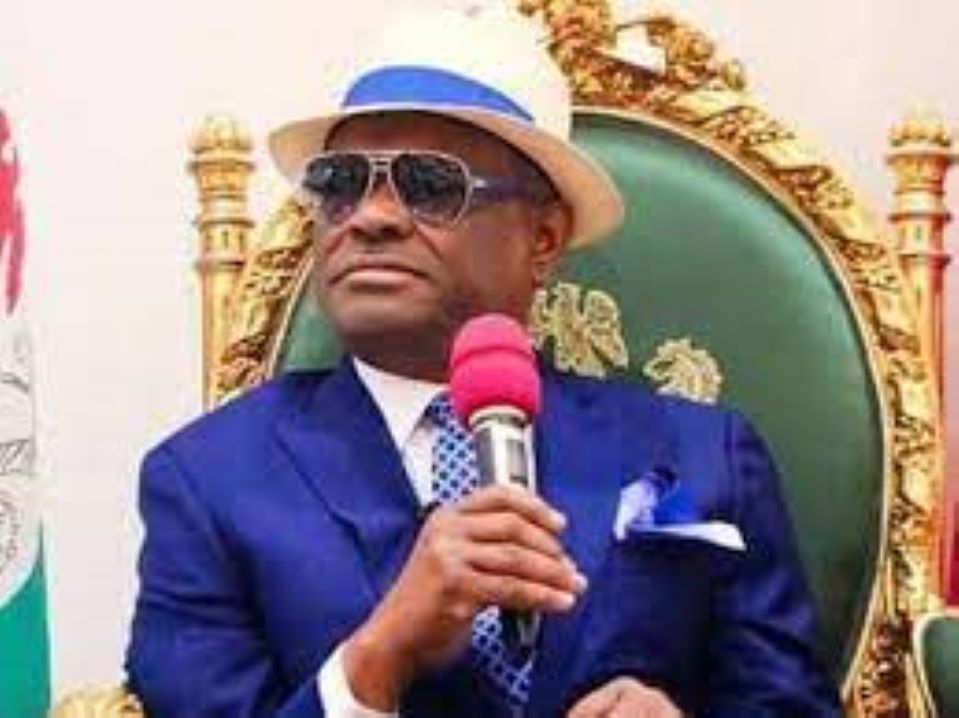
The Minister of the Federal Capital Territory, Nyesom Wike, says newly completed projects to mark President Bola Tinubu’s third anniversary are set for inauguration.
Speaking during an inspection on Monday, Wike said the President will start with the OSEX Road on Wednesday, June 10, followed by the N5 Interchange at Life Camp, and the Airport Road–Kuje Road on Thursday.
“You can see we are very set, you can see the smiles on our faces. Tomorrow, the President will start the commissioning of the OSEX Road, which was the first place we visited this morning. And where we are now is the N5, Life Camp, where the President will also commission on Wednesday, the 10th,” Wike said.
“Then, on Thursday, the President will also commission the Airport to Kuje, which we also visited this morning. Those three projects are 100% complete and ready for commissioning.”
He commended the contractors handling the roads — CGC, Arab Contractors, and Julius Berger — for keeping to their promises.
Wike also announced that the residence of the Court of Appeal, executed by a local contractor, will be commissioned on Friday, June 12. “The work is quite satisfactory,” he said.
Responding to questions on why some commissioned projects, including the bus terminal, have not been put to use nearly a year after commissioning, Wike explained that facilities handed to private operators must pass through procurement processes.
“For you to give a private individual to run government facilities, it has to pass through the procurement process, and the procurement process has been approved,” he said. “The contractor going to manage the facilities has pleaded with us that he’s assembling the buses and the taxis to take up, to make sure that it takes off.”
He urged residents to be patient with bureaucratic processes, adding that the government would not run the facilities directly.
“Why do you think the government will expend its money and then not put such a place in use? So just be patient. We don’t want to be committed to go out and do it by ourselves, to run that business. We know that it won’t work,” he said.
On whether the President will visit any of the Area Councils during the commissioning, Wike said yes, but details would not be disclosed for security reasons.
“The projects are being distributed among the key leaders in the administration,” he said. “The credit must go to Mr. President, who has given that directive and given the support for us to go this far.”
He noted that the Federal Capital Development Authority, FCDA, is working on traffic advisories ahead of the commissioning to help residents plan their movement.
[08/06, 7:45 pm] Felix: NCC applauds ministerial initiative on Girls ICT empowerment
…Hosts 185 students on industry excursion tour
From Cyriacus Nnaji, Lagos
The Nigerian Communications Commission (NCC) has commended the Hon. Minister of Communications, Innovation and Digital Economy, Dr. Bosun Tijani, for championing initiatives aimed at empowering the younger generation with digital knowledge and skills, especially the Nigerian girls.
Speaking while conducting 185 contestants of the 2026 National Girls in ICT (NG-ICT) Competition on a tour of the National Communication Museum domiciled at the Commission in Abuja recently, the Executive Vice Charman (EVC) of the NCC, Dr. Aminu Maida, said the initiative also aligns with the Commission’s digital literacy advocacy.
The contestants were selected by the Ministry across the country’s geo-political zones for competition to promote digital inclusion and inspire greater participation of girls in Information and Communication Technology (ICT) and other Science, Technology, Engineering and Mathematics (STEM) disciplines.
The visit to the Commission by the students formed part of activities organised by the Minister under the National Girls in ICT Programme, an initiative aimed at bridging the gender gap in the technology sector by equipping young girls with digital skills, mentorship opportunities and exposure to innovation.
Maida, who was represented by the Director, Research and Development Department, Babagana Digima, noted that the museum tour was designed to create a link between the old and new generations in Nigeria’s telecommunications journey, helping young people appreciate the sector’s transformation from analogue systems to the current digital revolution.
During the study tour, NCC officials guided the students through exhibits and historical artefacts that document key milestones in the Nigeria’s telecommunications history and the evolution of the communications sector to date. He emphasised that understanding the industry’s history would inspire the participants to contribute meaningfully to the future of digital innovation in Nigeria.
The EVC noted that exposing young people to the history of technological advancement and innovation is essential to building a new generation of leaders for Nigeria’s growing digital economy.
“The whole idea behind this is that we are looking at the younger generation. We want to show them what communication is all about. This place is a museum meant to preserve the history of what has gone before and to keep the artefacts, ensuring that people see the evolution from the postal system to telegraphy, from analogue systems to the digital era.
“This is essentially what we are showing them in the shortest amount of time and, of course, to excite the curiosity of the young ones. When they see what happened in the past and how it has progressed into the future, they can also take it up from here and think about what it will look like going forward. That is the whole essence of having them here,” he said.
During the tour, the participants learned about generational trends in telecommunications development, dating back to 1886 when the colonial administration established first communication facilities primarily to support administrative functions. They were also taken through the history of the country’s early telegraph services, which linked Lagos to other parts of West Africa and Europe through submarine cable connections.
The tour highlighted the state of telecommunications at Independence in 1960, when Nigeria had only 18,724 telephone lines serving an estimated population of about 40 million people. The students were also briefed on various development plans that followed Independence, the operations of the former Department of Posts and Telecommunications (P&T) and Nigerian External Telecommunications (NET) Limited, as well as the establishment of the Nigerian Telecommunications Limited (NITEL) in 1985 to coordinate the provision of internal and external telecommunications services.
A major highlight of the visit was the display of rare historical artefacts preserved at the NCC Museum. Among the exhibits were a Post Office Counter dating back to 1852, Sorting Racks introduced to Lagos in 1852, the Grand “T” Key used at the Lagos Post Office in the nineteenth century, leather mail bags dating back to 1863, Drop Bag fittings from the late 20th Century, a 511A Letter Scale from the mid-20th Century, an Improved Dynamometer Scale from the 1920, Telegram machines, Teleprinter T100, Cordless PBX, Digital Card Phone and others.