By Felix Khanoba
Nigeria has taken a prominent role in the global campaign to bridge the education financing gap, with Minister of Education, Dr Maruf Tunji Alausa, saying the country’s co-hosting of the Global Partnership for Education (GPE) 2026–2030 replenishment campaign signals a renewed commitment to shaping education priorities beyond its borders.
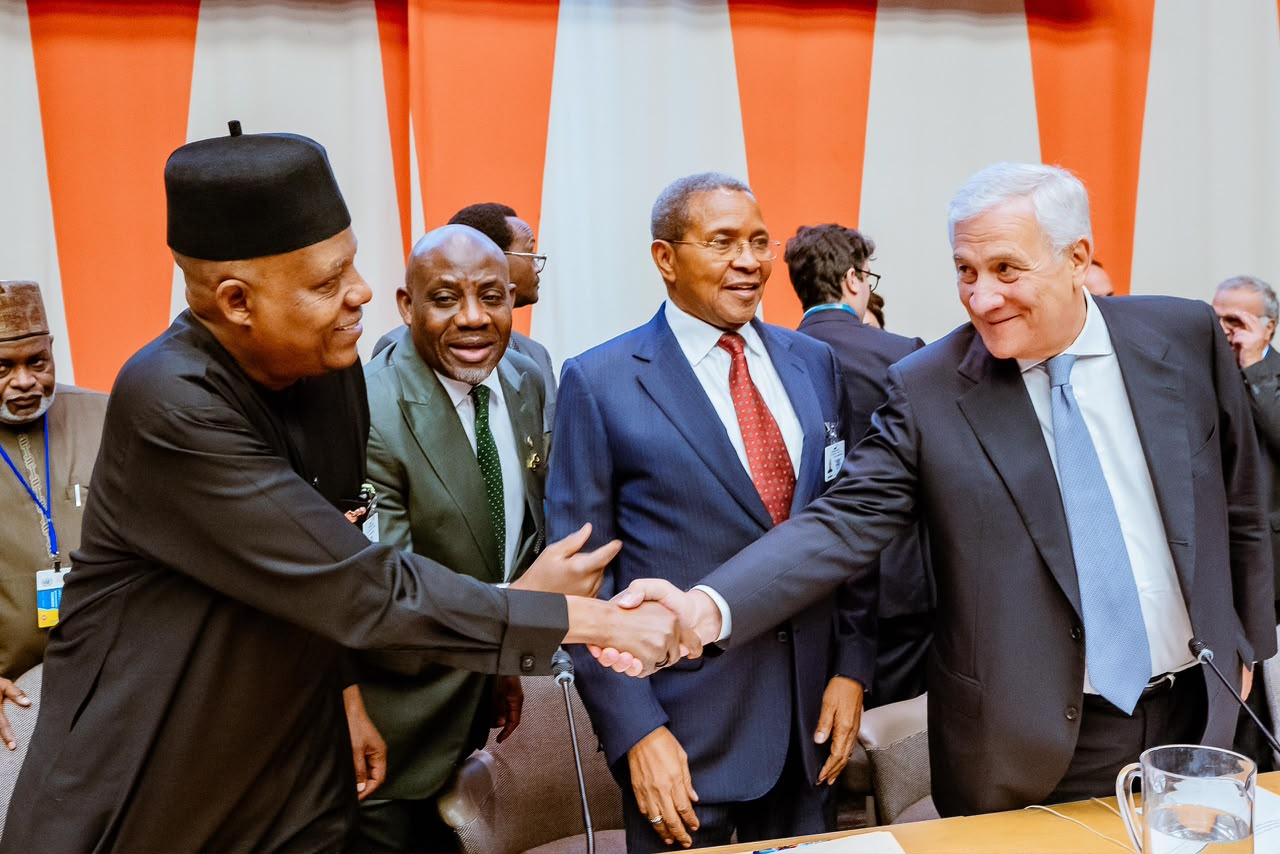
Nigeria co-hosted the high-level campaign with Italy at the “Multiply Possibility: A New Era for Education Financing” event held in New York on the margins of the 81st Session of the United Nations General Assembly.
The campaign seeks to raise US$5 billion to support education in more than 100 low-income and lower-middle-income countries between 2026 and 2030, with funding targeted at improving access to quality education, strengthening education systems and advancing foundational learning.
Speaking after the event, Alausa said Nigeria’s involvement went beyond seeking financial support from the partnership, stressing that the country had accepted the responsibility of helping expand educational opportunities globally.
A statement issued on Thursday by his Special Adviser on Media and Communications, Ikharo Attah, quoted the minister as saying, “This is a great day for education, and also a great day for our country, Nigeria,” adding that the co-hosting role demonstrated Nigeria’s willingness to support education beyond its borders.
Alausa also placed teachers at the heart of the country’s education reform efforts, saying sustainable improvements in learning could not be achieved without strengthening the capacity of educators.
“Teachers are the ones that matter most as we build our education agenda in Nigeria,” the Minister said.
He noted that Nigeria had received approximately US$800 million in GPE grants since joining the partnership, but said the decision to co-host the latest replenishment campaign was driven principally by the desire to demonstrate leadership and contribute to improving education in countries facing greater challenges.
According to him, the previous GPE replenishment cycle reached almost 750 million children globally, highlighting the scale of the impact that sustained international investment could have on education.
The minister recalled that GPE Board Chair and former Tanzanian President, Dr Jakaya Kikwete, approached President Bola Ahmed Tinubu in January 2025 to seek Nigeria’s support for co-hosting the replenishment campaign with Italian Prime Minister Giorgia Meloni.
Alausa said Tinubu accepted the request and personally committed time and political support to the initiative, which he said reflected the administration’s emphasis on education and human-capital development.
“Nigeria is back on the centre stage. President Bola Ahmed Tinubu understands what leadership is all about,” he said, stressing that the country’s engagement was not merely about what it could receive from GPE but also about contributing to education development across more than 100 countries.
The minister commended Meloni for her partnership and acknowledged the support of Vice President Kashim Shettima for Tinubu’s education agenda and the Federal Government’s transformation programme.
He also recalled Shettima’s participation in preparations for the replenishment campaign during the previous United Nations General Assembly.
The event attracted governments and development partners from Europe, North America, the Gulf region, Australia and other parts of the world, with several partners reportedly announcing commitments above the levels recorded during the previous replenishment cycle.
In a video message, President Tinubu commended GPE and its partners for advancing the global education financing agenda, emphasising the need to widen access to quality education and strengthen teacher capacity to improve learning outcomes.
Representing the President at the event, Shettima described education as an investment in Nigeria’s economic future, productivity, prosperity and stability.
The Vice President highlighted Federal Government initiatives focused on improving education financing, expanding foundational learning and widening access to tertiary and technical education, while stressing the need for domestic resources to complement international support.
Meloni, in her remarks, commended Tinubu’s leadership and Nigeria’s commitment to improving educational outcomes, while calling for stronger international backing and sustained investment in education across developing countries.
UN Deputy Secretary-General, Dr Amina Mohammed, called for stronger national commitment to education financing and urged international financial institutions to help countries create the fiscal space required to invest in education, including teacher training and capacity development.
Kikwete, the GPE Board Chair, drew attention to the urgency of expanding education financing amid declining development assistance and a widening funding gap.
He advocated sustainable financing mechanisms capable of producing measurable improvements in education outcomes.
Also speaking, education activist Malala Yousafzai called for stronger collaboration and increased investment in education, particularly efforts aimed at advancing gender equality and meeting the educational needs of girls in developing countries.
Alausa reaffirmed the Federal Government’s commitment to prioritising teachers, learners, access to quality education and improved learning outcomes under the Tinubu administration’s Renewed Hope Agenda.
He said Nigeria would continue to deepen partnerships aimed at strengthening education systems and expanding learning opportunities for children both within the country and globally.