By Mercy Aikoye
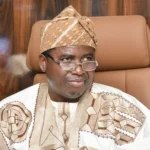
An energy governance expert, Dr Nuhu Habib, has warned that excessive government interference in the operations of the Nigerian National Petroleum Company Limited (NNPC Ltd) could undermine the corporate independence and governance reforms introduced by the Petroleum Industry Act (PIA) 2021.
Habib said proposed amendments to the legislation, particularly those seeking to concentrate strategic control of the national oil company in the Ministry of Finance Incorporated (MOFI), could weaken the authority of its board, create institutional conflicts and erode investor confidence.
He spoke during a retreat on PIA implementation, corporate governance and legislative oversight, organised by NNPC Ltd in collaboration with the Office of the Speaker of the House of Representatives in Abuja.
In a presentation titled, “Impact of PIA Reforms and Corporate Governance on NNPC Ltd Corporate Governance and Accountability,” the Chief Executive Officer of Avante Consultants and Advisors Limited identified weak board independence, revenue remittance disputes, executive control over appointments and an unclear shareholder mandate as major challenges confronting the company.
He cautioned that while the proposed amendments could improve government revenue collection and address some institutional conflicts, excessive centralisation of authority could reverse the commercial independence envisaged under the 2021 legislation.
Under the proposed changes, MOFI would become the sole nominal shareholder of NNPC Ltd and assume responsibility for determining its strategy, objectives and targets, while the Nigerian Upstream Petroleum Regulatory Commission (NUPRC) would replace the company in subsisting contracts as concessionaire.
Habib argued that transferring control between government institutions without establishing clear accountability mechanisms would not address the underlying governance challenges.
“Moving control between ministries does not by itself create accountability. Published mandates, fixed tenures and arm’s-length contracting do,” he said.
He called for stronger protection of board tenure, transparent revenue remittances and a clear separation of ownership, regulatory and commercial responsibilities to safeguard the company’s operational independence.
The expert also identified unresolved disagreements over the relationship between the Fiscal Responsibility Act and executive directives affecting NNPC Ltd as a major source of recurring revenue remittance disputes and outstanding audit queries.
To address the concerns, he recommended monthly reconciliation of the company’s remittances with the Federation Account Allocation Committee (FAAC), publication of annual statements showing dividends due and paid, disclosure of subsidiary accounts and timely responses to audit queries.
Also speaking at the retreat, the Speaker of the House of Representatives, Tajudeen Abbas, challenged NNPC Ltd to ensure that the reforms introduced by the PIA translated into increased oil production, greater investment, improved energy security and tangible economic benefits for Nigerians.
Abbas, represented by the House Majority Leader, Julius Ihonvbere, said the fifth anniversary of the legislation provided an opportunity to evaluate its implementation and determine whether its objectives had produced measurable improvements in the petroleum industry.
He said the success of the PIA should be assessed beyond institutional restructuring and corporate performance indicators to include stronger domestic refining capacity, increased government revenue, employment generation and affordable energy.
“Ultimately, the success of the PIA must be measured beyond institutional restructuring and corporate performance indicators. It must be reflected in increased production, greater investment, improved energy security, stronger domestic refining, enhanced revenue generation, employment opportunities and tangible benefits for Nigerians,” he said.
The Speaker maintained that the National Assembly would continue to exercise its constitutional oversight responsibilities to ensure that NNPC Ltd fulfilled its statutory obligations and managed the nation’s petroleum assets in the public interest.
However, he cautioned lawmakers against turning oversight into interference in the company’s daily operations, stressing that legislative scrutiny should strengthen corporate governance without compromising commercial efficiency.
“Effective oversight should promote better governance, not undermine operational efficiency,” he said.
Abbas identified crude oil theft, pipeline vandalism, production constraints, infrastructure deficiencies, investment uncertainty and regulatory bottlenecks as major obstacles to the growth of the petroleum industry.
He also emphasised the need to optimise domestic refining capacity and ensure adequate crude oil supplies to local refineries without undermining the commercial viability of upstream operations.
In a separate presentation titled, “Strengthening Legislative Oversight and Collaboration Under the Petroleum Industry Act, 2021,” a Professor of Governance and Development, Ernest Ereke, urged the National Assembly and NNPC Ltd to embrace collaborative governance rather than adversarial institutional relations.
Ereke cautioned lawmakers against using their oversight powers to obstruct the company’s commercial activities or as instruments for political witch-hunts, power struggles and the extortion of corporate entities.
He also challenged NNPC Ltd’s management to stop interpreting legitimate legislative inquiries as institutional attacks, describing parliamentary scrutiny as an essential mechanism for strengthening transparency, accountability and public confidence.
The professor called for regular information exchange, mutual institutional respect and early identification of regulatory and operational challenges to improve relations between lawmakers and the company’s management.
Earlier, the Chief Executive Officer of 3 Streams Synergy Limited, Doyin Adelabu, said the retreat was organised to assess NNPC Ltd’s transformation under the PIA and strengthen engagement between the legislature and industry stakeholders.
She said discussions would focus on corporate governance, accountability, legislative oversight and institutional cooperation, urging participants to develop practical recommendations that would improve implementation of the legislation.
The discussions highlighted the need to preserve NNPC Ltd’s commercial independence while strengthening public accountability, insisting that the effectiveness of the PIA would ultimately depend on how well its governance provisions translated into improved performance and tangible benefits for Nigerians.