…engages stakeholders towards food sovereignty
By Stella Odueme
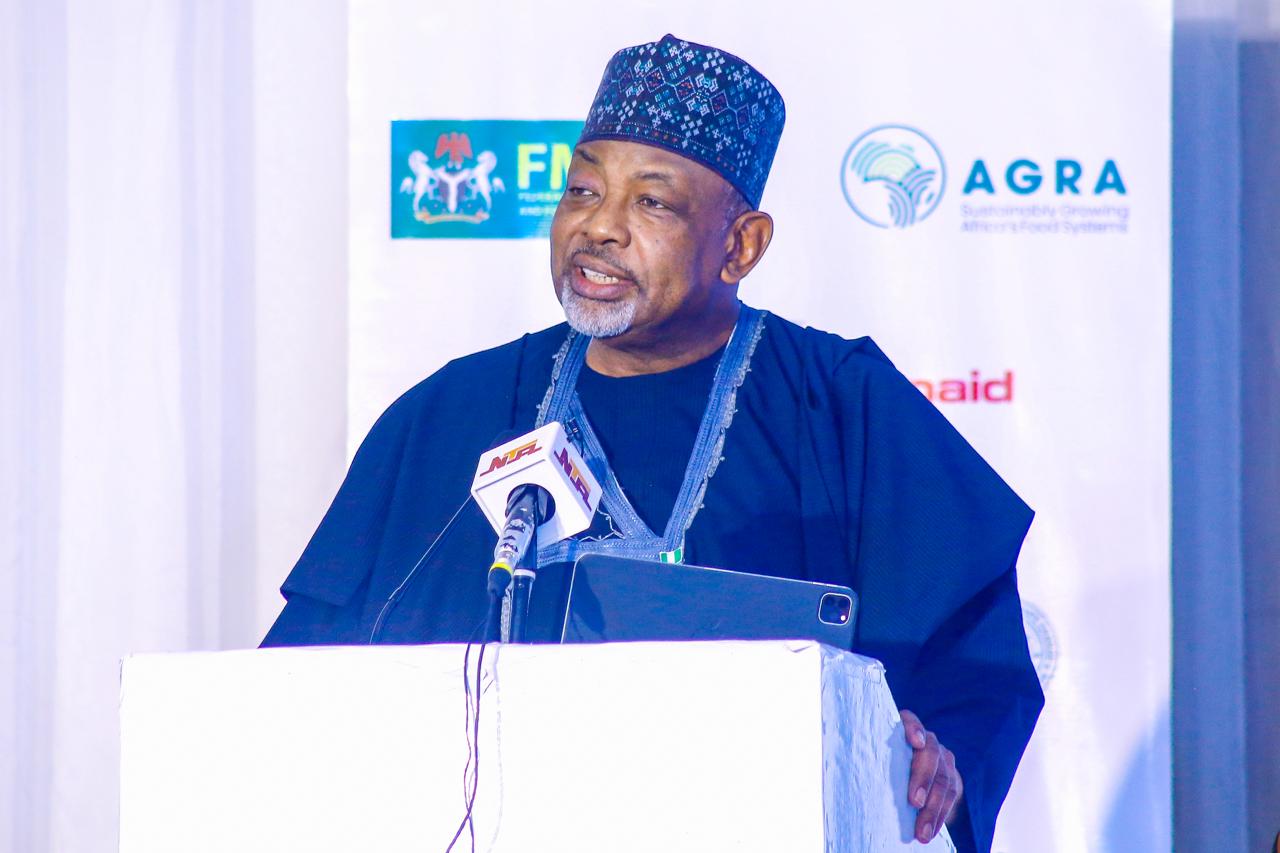
The Minister of Agriculture, Sen. Abubakar Kyari has said his ministry has remained focus on initiatives targeted at increasing local food production, improving food security with the distribution of 1.9 million bags of fertilizers to nearly one million farmers in two years, among others, towards the overall well-being of the citizenry.
Towards this, the ministry organized its Quarterly Media, Civil Society Organisations, Farmer Groups, Agro Allied Groups, Relevant Professional Bodies, Development Partners, Donor Agencies and key stakeholders engagement meeting in Abuja on Friday, to appraise its performance and fashion better ways, ideas, and initiatives to attain food sovereignty and reduce reliance on importation.
Kyari highlighted other key achievements to include; promoting sustainable soil management with 12,000 liters of organic fertilizers, and strengthening regulatory frameworks; partnerships with Russia, Turkiye, India, and Canada to enhance fertilizer production and technology transfer.
Additionally, the minister said 109 fertilizer inspectors were trained and equipped, while over 329 industry stakeholders were trained on regulatory compliance, just as efforts have been made to curb fake fertilizers from the markets through persecution of offenders.
“We have constructed a National Reference Laboratory and upgraded the National Fertilizer Management Platform to enhance fertilizer quality control, ensure regulatory compliance, and promote transparency in the fertilizer supply chain,” he said, adding that over 3,500 farmers were trained on organic fertilizers and soil management to promote sustainable agriculture practices.
Kyari equally cited the 2025 Agricultural Performance survey carried out by the National Agricultural Extension and Research Liaison Services (NAERLS) in collaboration with Federal Ministry of Agricultural and Food Security, other relevant agencies, and NGOs, which highlighted steady growth in Nigeria’s agriculture, with rice, maize, sorghum, millet, cowpea, yam, and cassava all recording higher outputs compared to 2024.
“We are focusing on boosting local production and reducing our reliance on imports, with the ultimate goal of making affordable, nutritious food accessible to all Nigerians. Our efforts are starting to pay off, with a notable impact on food prices. In fact, prices of essential food commodities have dropped by 50% nationwide.
“This is in contrast to previous years when food prices skyrocketed, way beyond what most Nigerians could afford. These efforts reflect our commitment to improving food security and the overall well-being of citizens. We are working to sustain this trend by addressing high input costs to ensure food remains accessible and affordable.
“Our strategic focus on developing key value chains is positioning Nigeria as a major player in global agricultural market. We have prioritized and developed the rice, maize, wheat, millet, sorghum, yam, cocoa, kenaf, cowpea, cassava, soybeans, cotton, onion, tomato, and oil palm value chains, thereby creating opportunities for millions of smallholder farmers and other stakeholders.
“The provision of high-quality seeds, agrochemicals, safety kits, pest and disease management packs, coupled with capacity building initiatives undertaken in years 2024 and 2025 has significantly bolstered our agricultural value chains.”
The minister noted that these interventions have empowered farmers to boost productivity, reduce losses, and improve produce quality, ultimately enhancing their livelihoods and contributing to a more robust agricultural sector.
“By enhancing their productivity, we have helped these farmers to transition from subsistence farming to thriving agribusinesses, contributing to national food security, employment generation, and economic growth,” he stressed.
Also speaking, the Minister of Information and National Orientation, Mohammed Idris, said that democracy thrives when citizens participate, when the media reports responsibly, and when leaders are accessible
“This engagement session represents a new culture of governance, one that welcomes dialogue, encourages scrutiny, and values constructive contributions.
“The Renewed Hope Agenda is not merely a slogan; it is a structured programme of economic stabilisation, institutional reform, infrastructure renewal, and human development.
“Transformation takes time, resilience, and collective effort. However, the direction is clear and the commitment unwavering.Let me assure Nigerians that this administration remains focused on delivering measurable progress across all sectors. Through transparency, partnership, and sustained reform, we will build a stronger, more secure, and more prosperous nation,” he said.
He commended the Ministers of Agriculture and Food Security for convening the important forum and advancing Nigeria’s food security objectives.
The Minister of State for Agriculture and Food Security, Sen. Aliyu Sabi Abdullahi, also reaffirmed the ministry’s commitment towards attaining food sovereignty for Nigeria.
“The agricultural sector works, as Mr. President has wished, because he said Nigeria should have
food sovereignty, which means we are producing what we eat, and we are eating what we produce. And I think you agree with us that substantially the bulk of the food we are consuming in this country are produced in Nigeria.”
Earlier in his Welcome Address, the Permanent Secretary of the ministry, Dr Marcus Ogunbiyi, said the Ministry recognises that farmers, processors, civil society, development partners, private sector actors, the media, and indeed every Nigerian citizen, are critical partners in shaping a resilient, productive, and inclusive agrifood system.
“This gathering is a crucial platform for us to share ideas, align our efforts, and drive meaningful progress in Nigeria’s agricultural and food systems. It is a testament to the fact that agricultural transformation cannot be achieved in isolation.
“Rather, it requires collaboration, openness, and sustained engagement among all stakeholders.The primary goal of this engagement is to foster strong and enduring partnerships with you—our valued stakeholders.
“This collaborative approach will enhance accountability, improve programme delivery, and lead to more effective and targeted interventions across the agricultural value chain.”
Issues of timely provisions of qualify seedlings to farmers, fertilizer cost, partnership with bakers on wheat production to reduce high cost bread, meeting the MDGs goal, inclusivity, among others were raised with the ministers giving assurance of addressing them.