
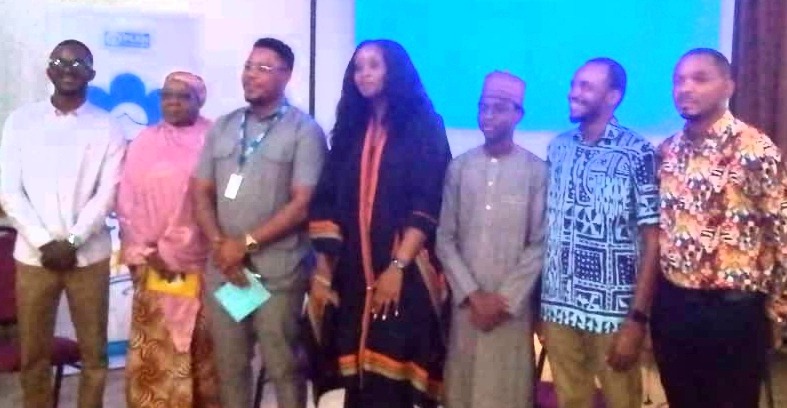
By Jane Okeke
Plan International Nigeria has launched and disseminated its research report titled “Put Us at the Center,” a major study centered on consultations with children, adolescents, and young people, particularly those affected by funding cuts in emergency contexts.
Speaking at the event, Tunde Aremu, Policy Research and Influencing Manager at Plan International Nigeria, said the study highlights the real-life impact of reduced humanitarian funding on young people in Northeast Nigeria.
According to him, the report adopts a people-centered approach that prioritizes the voices and lived experiences of young individuals over traditional expert-driven analysis.
“Unlike conventional research that is specialist-centric, this report places young people at the heart of the conversation. We engaged no fewer than 132 respondents, including adolescent boys and girls, to understand their perspectives on funding cuts and their implications,” he said.
The Put Us at the Center: Nigeria report draws from consultations with children aged 8–12, adolescents aged 13–17, and youth aged 18–24 across Borno State, Adamawa State, and Yobe State. It explores their experiences with humanitarian assistance, key priorities, persistent gaps, and expectations from decision-makers.
Conducted in collaboration with the Youth Advisory Panel in Northeast Nigeria, the study forms part of a broader global initiative also carried out in Ukraine, Mali, and Uganda.
Findings show that young people consistently prioritize safe and quality education, food security and livelihoods, child protection, and water, sanitation, and hygiene (WASH). However, the report highlights a critical accountability gap, noting that while young people are often consulted, their inputs rarely shape final decisions.
Participants also linked funding cuts to worsening conditions, including increased hunger, school dropouts, weakened protection systems, and growing uncertainty about their future.
Aremu emphasized that young people were not just respondents but active contributors, serving as enumerators who conducted interviews and facilitated discussions.
“For too long, decisions affecting young people have been made without their direct involvement. This research represents a shift toward engaging them meaningfully and placing them at the center of policy and program design,” he added.
Also speaking, Kehinde Charity Awujoola, Senior Special Assistant to the Honourable Minister of Youth and Gender Matters, stressed the importance of the initiative in identifying systemic gaps affecting Nigerian youth.
She noted that challenges such as limited access to quality education, exclusion from decision-making, and weak communication with government institutions persist.
“The essence of this engagement is to identify gaps and co-create solutions that ensure young people are heard and supported,” she said.
Awujoola outlined the Ministry’s strategic framework Support, Empowerment, and Protection (SEP) aimed at expanding opportunities, building capacity, and safeguarding young people. She highlighted the Nigerian Youth Help Desk as a key platform addressing issues such as harassment, abuse, and police misconduct.
“We are committed to an open-door policy where young people can engage directly with the ministry and feel the impact of governance in their lives,” she added.
The launch of “Put Us at the Center” marks a significant step toward inclusive policymaking in Nigeria, reinforcing the need to prioritize the voices of children, adolescents, and youth in shaping interventions that affect their future


