By Felix Khanoba
The Federal Government has reiterated its resolve to develop a future-oriented and globally competitive education system with the inauguration of the Katsina State Smart Secondary School in Radda.
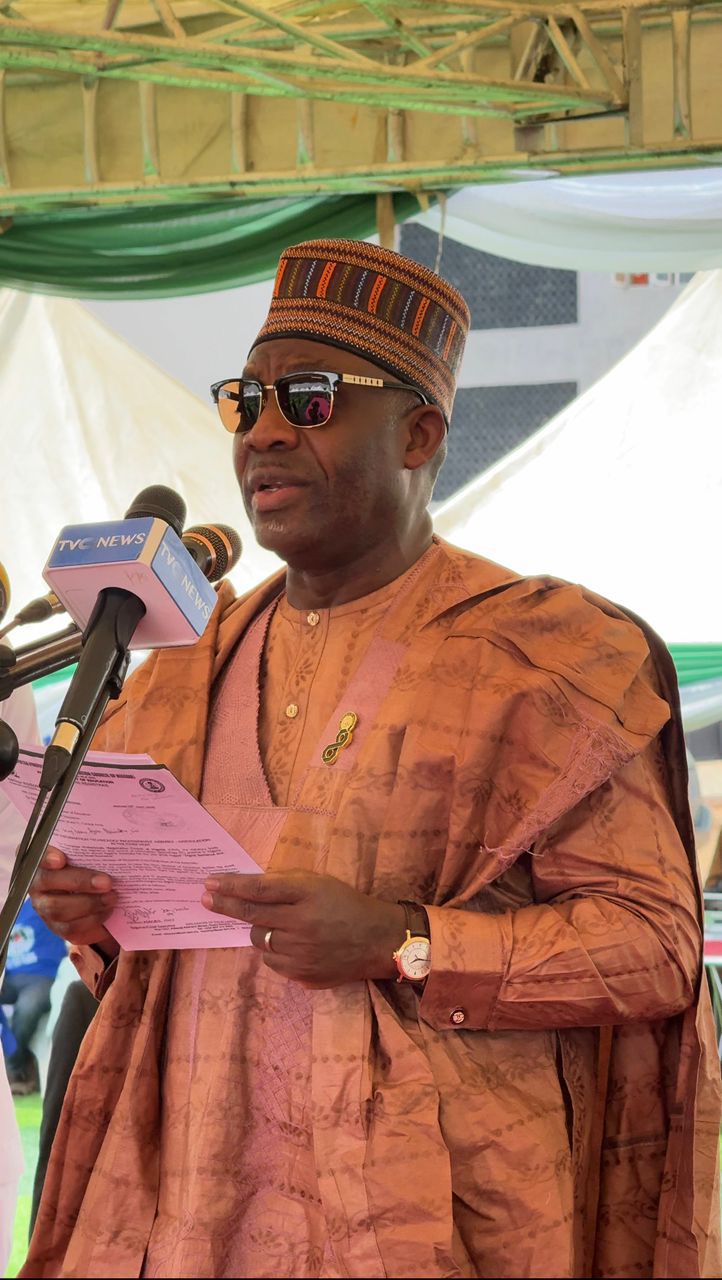
Minister of Education, Dr. Maruf Tunji Alausa, joined the Katsina State Governor, Mallam Dikko Umaru Radda, to officially commission the facility on Tuesday.
According to a statement issued by Ikharo Attah, Special Adviser (Media and Communications) to the minister, Dr. Alausa described the project as a significant achievement, noting that the Smart School goes beyond physical structures.
He said it embodies innovation, expands opportunities, and represents a deliberate investment in human capital aimed at equipping Nigerian students for a technology-driven global economy.
The minister praised Governor Radda’s leadership, particularly under the Build-Your-Future Blueprint, highlighting the state’s strides in widening access to education, upgrading infrastructure, and enhancing teacher capacity as evidence of a firm commitment to sustainable development.
He further explained that the project aligns with the Renewed Hope Agenda of President Bola Tinubu, and is part of wider reforms under the Nigerian Education Sector Renewal Initiative (NESRI).
These reforms, according to the minister, focus on improving access, strengthening STEMM and Technical and Vocational Education and Training (TVET), upgrading infrastructure, promoting inclusive education, and advancing digital governance.
Providing updates on federal interventions, Alausa revealed that states have accessed over ₦106 billion in UBEC matching grants within the last 18 months.
He added that more than ₦22 billion has been invested in teacher development, ₦2.035 billion disbursed to School-Based Management Committees, over 10,000 classrooms renovated, 978,000 teachers trained, and more than 7.8 million textbooks distributed nationwide.
He also announced that the revised Primary Education Curriculum is currently in use across the country, while a new Secondary Education Curriculum will take effect in the next academic session.
The minister disclosed that funding has been secured for the HOPE Education Programme to further strengthen access, quality, and institutional capacity in the sector.
On vocational training, he stated that over 160,000 young people are undergoing training in more than 1,200 TVET centres nationwide, with over one million applications recorded in the latest phase—an indication of growing interest in skills-based education.
Alausa highlighted ongoing digital reforms, including the introduction of a cloud-based Annual School Census and the Learner Identification Number (LIN), both aimed at improving data-driven planning, transparency, and accountability.
Reaffirming the government’s commitment to inclusive education, he said efforts are being intensified, in collaboration with states, to address the issue of out-of-school children.
He described the Katsina Smart Secondary School as a model for modern education in Nigeria and a driver of transformative change, assuring continued federal support for states in delivering quality education.
In his remarks, Governor Dikko Umaru Radda said the decision to establish the smart model secondary school was driven by a strong belief in education as a core responsibility of government, stating that “ we believe that the government that neglect the schooling of its children has failed at the most fundamental duty, regardless of whatever else it builds.”
He added that his administration Will not rest until every zone in the state has access to the same high standard of education.
The governor also noted that since assuming office in 2020, his administration has implemented far-reaching reforms in the state’s education sector.