By Chuks Oyema-Aziken
The Federal Government and the International Centre for Energy, Environment and Development (ICEED) have called for stronger financing mechanisms, improved regulatory coordination and increased investment to accelerate the adoption of clean cooking solutions across Nigeria.
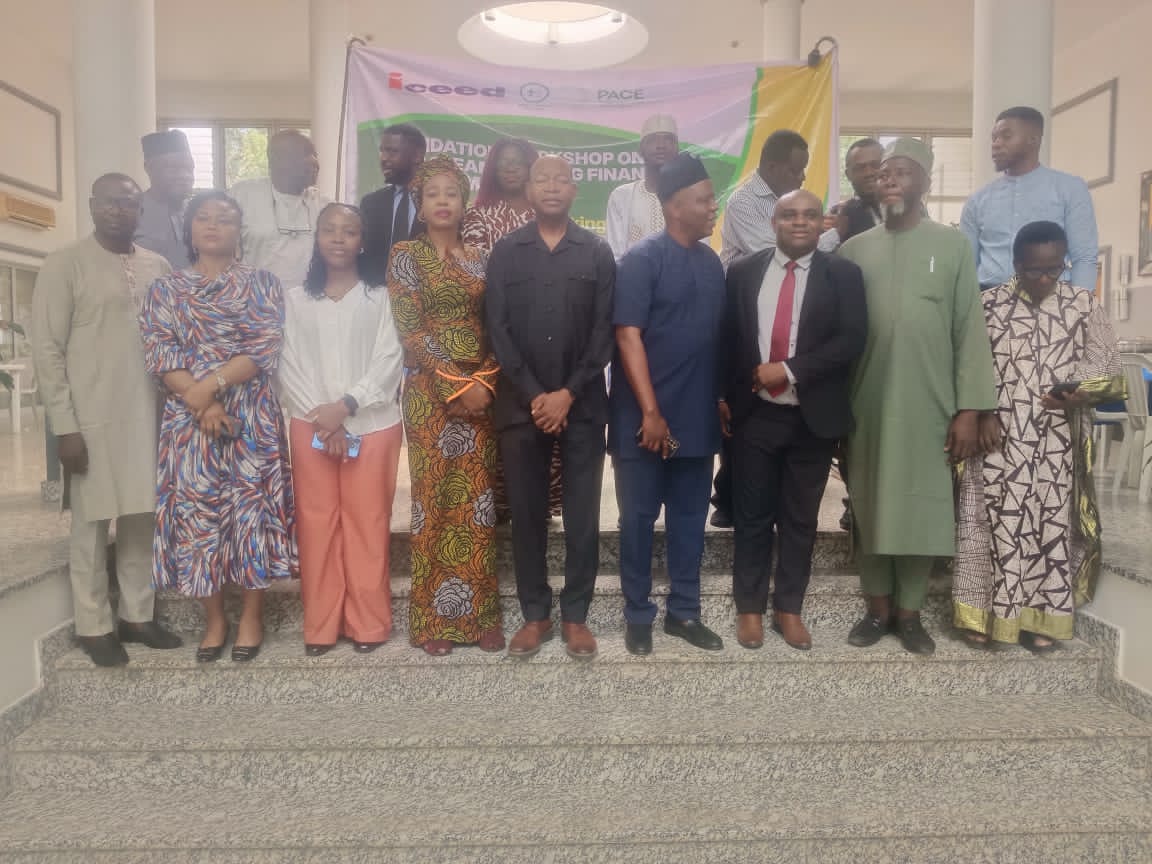
Speaking on Tuesday at the National Clean Cooking Finance Assessment Validation Workshop held at the Shehu Musa Yar’Adua Centre in Abuja, Executive Director of ICEED, Ewah Eleri, said Nigeria’s clean cooking sector holds enormous potential for advancing public health, environmental sustainability, climate action and economic development but continues to face significant financing and market barriers.
Eleri noted that a substantial proportion of Nigerian households still rely on solid biomass for cooking, a situation that contributes to household air pollution, deforestation and greenhouse gas emissions. He said the sector requires urgent intervention to unlock climate finance and scale up access to cleaner cooking technologies.
According to him, the workshop was convened under the Partnership for Accelerating Climate Transitions (PACE) programme to validate findings from a comprehensive Clean Cooking Finance Assessment designed to identify opportunities, barriers and practical pathways for mobilizing carbon finance and other investment sources for the sector.
He explained that while recent policy developments, including the National Clean Cooking Policy and the Carbon Market Activation Plan, have created new opportunities for investment, challenges such as weak compliance readiness, regulatory bottlenecks, fragmented stakeholder coordination and low investor confidence continue to limit progress.
Also speaking, the Director of the Department of Climate Change in the Federal Ministry of Environment, Dr. Iniobong Abiola-Awe, described clean cooking as more than an energy issue, saying it has become a development imperative linked to climate action, public health, gender equality, environmental protection and economic growth.
She stated that millions of Nigerians, particularly women and children, continue to rely on traditional cooking methods that expose them to harmful indoor air pollution and increase pressure on the nation’s forest resources.
Dr. Abiola-Awe noted that expanding access to clean cooking solutions presents one of the most practical opportunities for delivering multiple benefits simultaneously, including improved health outcomes, enhanced energy access, job creation, environmental protection and greenhouse gas emission reductions.
The Director said the Federal Government remains committed to implementing Nigeria’s climate obligations under the Paris Agreement and achieving the targets outlined in the country’s Nationally Determined Contributions, adding that clean cooking interventions can play a significant role in achieving those goals.
She identified limited access to affordable finance as one of the major obstacles preventing the large-scale adoption of clean cooking technologies and stressed the need for stronger partnerships among government institutions, development partners, financial institutions, private sector operators and civil society organizations.
Participants at the workshop, including representatives of the National Council on Climate Change, Federal Ministry of Environment, carbon market developers, clean cooking enterprises, financial institutions, development partners and civil society groups, reviewed the assessment findings and explored practical actions aimed at strengthening carbon market readiness, improving access to climate finance and accelerating the transition to clean cooking across Nigeria.