By Chuks Oyema-Aziken
The Nigeria Jubilee Fellows Programme (NJFP) has reaffirmed its commitment to tackling youth unemployment and bridging the gap between education and the workplace through a large-scale job fair held in Abuja.
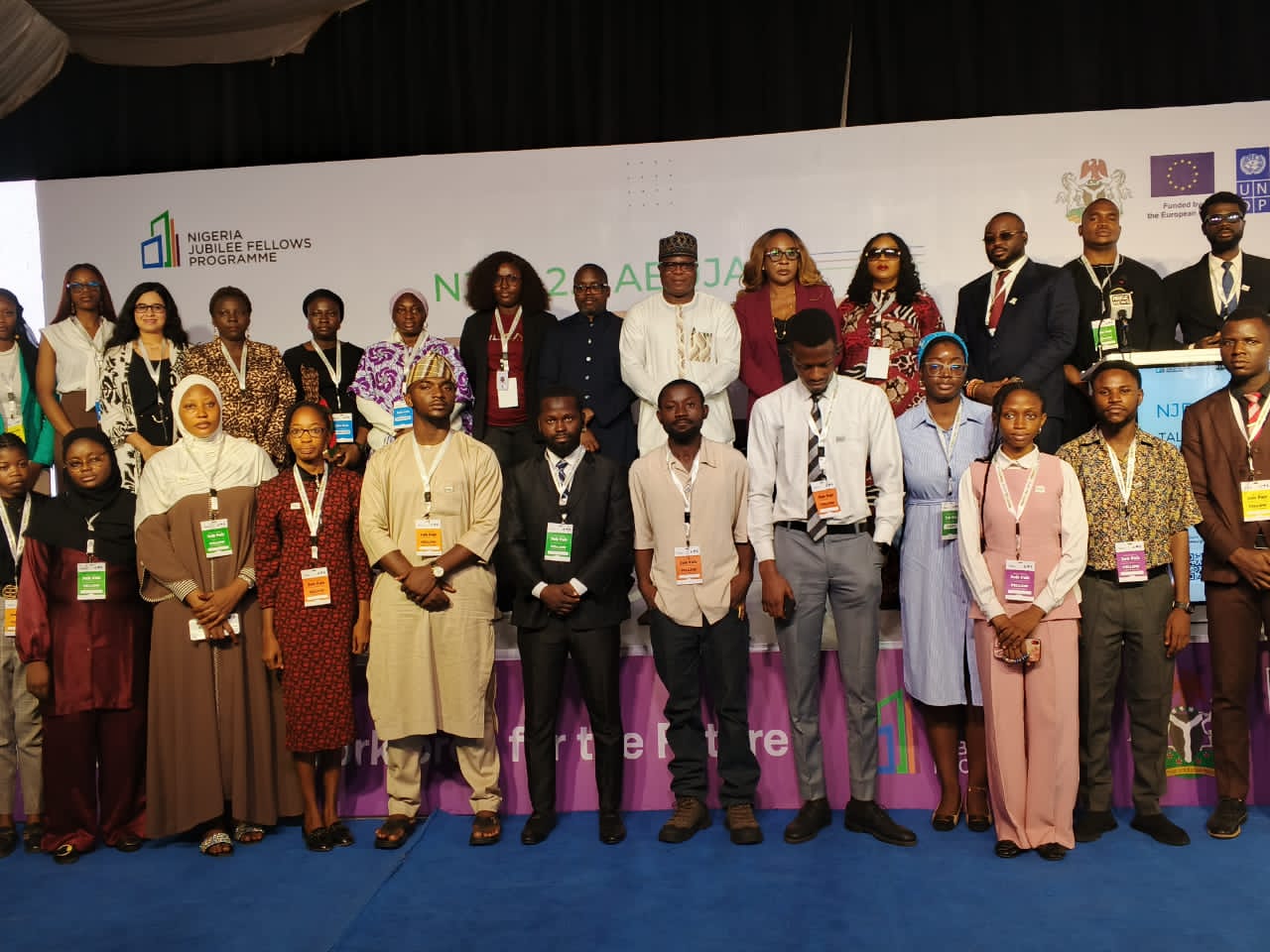
The NJFP 2.0 Abuja Job Fair, themed “Building a National Workforce for the Future,”on Thursday brought together more than 500 employers and about 1,500 young professionals at the Rainbow Event Centre, creating opportunities for direct engagement between job seekers and prospective employers.
Speaking at the event, Senior Special Assistant to the President on Delivery and Coordination in the Office of the Vice President, Akubo Adegbe, described the programme as a strategic intervention designed to equip young Nigerians with workplace skills and practical experience.
According to him, the initiative addresses one of the biggest barriers confronting graduates in the labour market—the lack of work experience. He stressed that young people should not be excluded from employment opportunities simply because they have not previously worked.
Adegbe explained that fellows selected under the programme undergo a rigorous screening process, including aptitude tests and video assessments, ensuring that only qualified and workplace-ready candidates are admitted. He disclosed that only about five per cent of applicants successfully make it into the programme, underscoring the high standards maintained by NJFP.
He noted that beyond workplace exposure, beneficiaries receive a monthly stipend of N150,000 for a period of 12 months, providing critical livelihood support while they gain professional experience.
The programme, he added, enables participants to build competencies that improve their employability, whether in their host organisations, elsewhere in the labour market, or through entrepreneurship.
Adegbe also revealed plans by the Federal Government and its partners to establish a sustainable funding mechanism for the programme through a basket fund that will attract contributions from federal and state governments as well as development partners. The objective, he said, is to ensure the continuity of the initiative beyond the current support provided by the European Union.
He linked the programme to President Bola Tinubu’s Renewed Hope Agenda, noting that workforce and human capital development form a key component of the administration’s eight-point agenda. According to him, the government’s decision to sustain the initiative reflects its commitment to creating opportunities for young Nigerians.
Also speaking, Head of Inclusive Growth at the United Nations Development Programme (UNDP) and Project Manager of the Nigeria Jubilee Fellows Programme, Claire Henshaw, said the job fair was designed to facilitate talent matching between employers and qualified graduates.
She explained that participating organisations were given the opportunity to identify and recruit fellows whose skills align with their operational needs, while beneficiaries could secure meaningful work placements and launch their careers.
Henshaw disclosed that employers participating in the programme incur no salary costs for selected fellows, as UNDP, in partnership with the European Union and the Federal Government of Nigeria, pays a monthly stipend of N150,000 to each participant throughout the one-year fellowship period.
“Our expectation is that the fellows present at this event will secure employment opportunities and begin contributing meaningfully to organisations across the country,”she said.
She added that NJFP places significant emphasis on mentorship and professional development, ensuring that beneficiaries receive the guidance and coaching needed to become productive members of Nigeria’s workforce.
To safeguard the integrity of the programme, Henshaw outlined a comprehensive accountability framework involving attendance verification, employer reporting, monitoring visits and independent oversight mechanisms. Employers are required to confirm fellows’ attendance monthly before stipends are released, while UNDP conducts routine and unannounced inspections to ensure compliance.
She further revealed that the programme leverages technology through a dedicated employer engagement platform that enables monitoring, reporting and performance tracking. The system, she noted, promotes accountability among both employers and fellows.
According to Henshaw, the programme caters to organisations of varying sizes, from micro, small and medium enterprises to large corporations. While many employers retain fellows after the programme, she said participants who move on are better equipped to secure employment elsewhere or pursue entrepreneurial ventures.
She cited examples of former fellows who, after gaining experience in leading organisations including global technology companies, had gone on to establish successful businesses of their own.
The UNDP official announced that similar job fairs and engagement activities would soon be extended to other states, including Nasarawa, Kogi and Imo, as part of efforts to close the gap between labour demand and supply across the country.
Stakeholders at the event expressed optimism that the initiative would contribute significantly to reducing youth unemployment while helping employers access a pool of pre-screened, highly qualified young professionals ready to contribute to organisational growth and national development.