The United Nations Development Programme (UNDP), under the Joint United Nations Team on HIV/AIDS and with support from the Global Fund, has called for the stronger integration of Gender-Based Violence (GBV) and Intimate Partner Violence (IPV) interventions into Nigeria’s health and development programmes as the country prepares its funding request under the Global Fund Grant Cycle 8 (GC8).
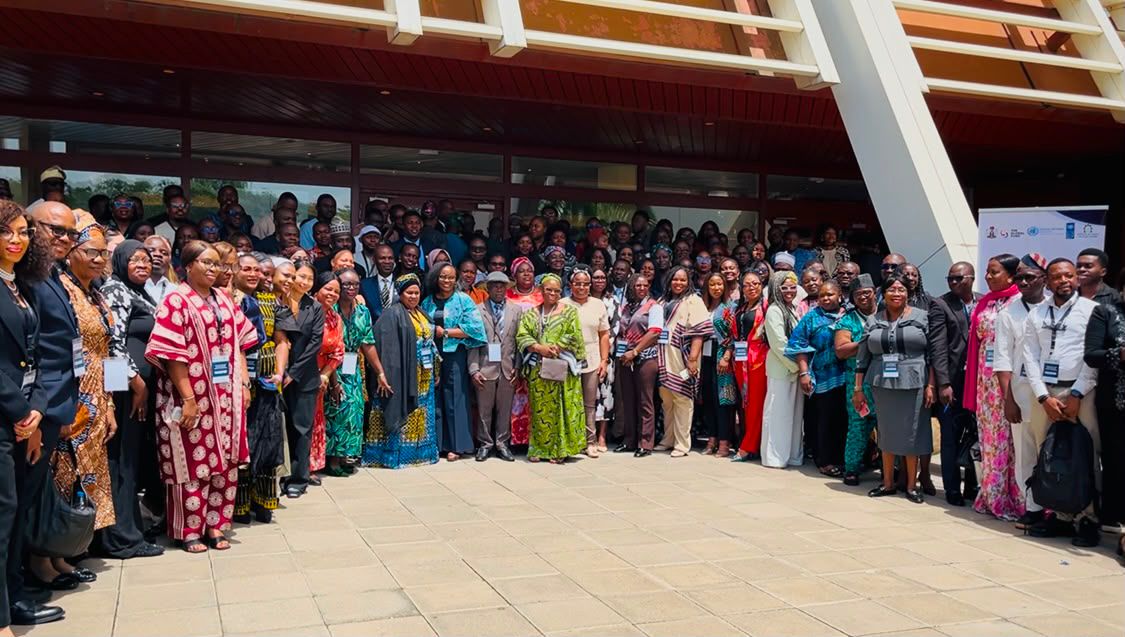
The call was made at the National Consultative Workshop on Gender Equality, Gender-Based Violence and Intimate Partner Violence Programming in Nigeria, held in Abuja on Thursday.
The workshop brought together representatives of the Federal Ministries of Health, Justice and Women Affairs, the National Human Rights Commission, development partners, civil society organisations and other stakeholders to develop coordinated responses to GBV and IPV.
Speaking at the event, UNDP Gender Lead, Onyinye Belinda Ndubuisi, said the consultation was designed to strengthen multi-sectoral collaboration and ensure that GBV interventions are adequately reflected in Nigeria’s GC8 funding proposal.
She noted that violence against women and girls continues to undermine access to critical health services, including HIV testing, treatment and care.
“This workshop is an opportunity to identify gaps, strengthen coordination mechanisms and ensure that gender-based violence interventions are adequately reflected in Nigeria’s Global Fund Grant Cycle 8 funding request,” she said.
Ndubuisi stressed the need for practical and measurable interventions that go beyond awareness creation to include survivor support services, economic empowerment, behavioural change programmes and improved access to healthcare and justice services.
In his welcome address delivered on behalf of the Attorney-General of the Federation and Minister of Justice, the Director of Public Prosecutions of the Federation, Oyedepo Iseoluwa Rotimi, highlighted the links between gender-based violence, human rights violations and public health outcomes.
He noted that although Nigeria’s HIV prevalence has declined to 1.4 per cent, key populations and their partners account for about 40 per cent of new HIV infections despite representing less than five per cent of the population.
According to him, stigma, discrimination, breaches of confidentiality and fear of arrest continue to hinder vulnerable groups from accessing healthcare services. He also expressed concern over the health conditions of persons in correctional facilities, survivors of human trafficking and victims of gender-based violence.
Rotimi called for the integration of GBV screening and support services into HIV and tuberculosis programmes, expansion of healthcare and legal services in correctional centres, stronger referral systems for trafficking survivors and increased financing for gender-responsive interventions under the GC8 framework.
Also speaking, UNAIDS Country Director in Nigeria, Krittayawan Boonto, described gender-based violence as a persistent global challenge that continues to affect millions despite existing legal protections.
While acknowledging Nigeria’s progress through legislation such as the Violence Against Persons (Prohibition) Act and the Child Rights Act, she said enforcement remains inconsistent.
Boonto expressed concern over the number of GBV cases recorded in the country between January and April 2026, noting that many incidents remain unreported. She urged stakeholders to ensure that GBV and IPV interventions are clearly defined, adequately funded and backed by measurable targets in the GC8 proposal.
“We are here to make the money work. If these interventions are not clearly programmed with indicators, targets and accountability mechanisms, they risk remaining vague aspirations,” she said.
The Global Fund’s Head of HIV, Izukanji Sikazwe, reaffirmed the organisation’s commitment to supporting Nigeria’s efforts to address the structural drivers of HIV transmission.
According to the Global Fund, GBV and IPV remain significant barriers to HIV epidemic control as they discourage individuals from accessing prevention, testing and treatment services. The organisation said it is working with the Federal Government, state institutions and community groups to identify strategic investments that will reduce violence and improve access to HIV, tuberculosis and malaria services.
The Global Fund also commended the Nigerian government for advancing legal reforms and operational frameworks to tackle gender-based violence, while expressing concern over reports that many incidents are perpetrated by family members, acquaintances and individuals within trusted institutions.
Participants at the workshop are expected to develop recommendations that will guide Nigeria’s GC8 funding request and strengthen national efforts to prevent and respond to gender-based violence and intimate partner violence.