By Chukwuma Okoli & Ndu Nwokolo
In line with the timetable and schedule of activities for Nigeria’s 2027 General Elections released by the Independent National Electoral Commission (INEC), party primaries were concludedon May 30, 2026. Incumbent Present Bola Ahmed Tinubu emerged as the flagbearer of the All Progressives Congress (APC), while Peter Obi and Atiku Abubakar emerged as flag bearers of two different opposition parties – Nigeria Democratic Congress (NDC) and the African Democratic Congress (ADC),respectively. The inability of Obi and Atiku to consolidate their political power into a single strong opposition party explains why Nigeria’s 2027 General Election has been described as a two-and-a-half-horse race. With party primaries now won and lost, in line with the Electoral Act 2026, political campaigns in public are expected to commence on August 19, 2026 (for Presidential & National Assembly elections) and on September 9 2026 (for Governorship and State Houses of Assembly elections). But what would the politicians be saying during their campaigns? Whatever issues the political elites emphasiseduring their campaigns, together with the strategies they adopt, will constitute the Nigerian elites’ political bargain for the 2027 general elections and will shape not just the electoral outcomebut also the future of Nigeria, at least in the next four years.
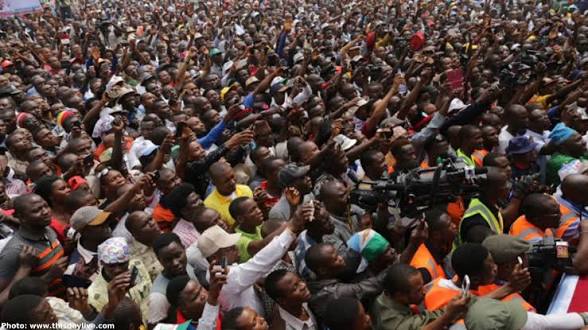
Election campaigns and the campaign period are critical to the overall success of the elections. Campaigns influence the electoral performance of political parties and also shape the security environment in which elections are conducted. The capacity of candidates and their political parties to present credible and convincing ideas, programmes and policies to voters influences to a large extent the number of voters they are able to mobilise. Also, the strategies adopted by candidates and their political parties in conducting campaigns influence the level of electoral violence experienced during and after the campaign periods. Thus, campaigns for Nigeria’s 2027 General Elections will be remarkable in many ways. First, the campaigns will be an opportunity for incumbent political officeholders seeking re-election for a second term to give an account of their stewardship over the past three years. Secondly, it will provide voters with the opportunity to interrogate candidates seeking re-election at various levels and to verify whether they have keptthe promises they made during the 2023 general elections. Thirdly, the campaigns will be conducted in the context of Nigeria’s political and economic realities, characterised by rising insecurity and poverty. How will politicians seeking re-election convince voters to re-elect them, given the realities of the Nigerian state? How will opposition political parties convince voters that they are credible alternatives, fit for purpose inaddressing the contemporary challenges in Nigeria? What key issues do Nigerian voters want to hear from politicians during election campaigns? How will politicians’ campaigns shape Nigeria’s security landscape? This Nextier SPD Policy article presents the political economy context in which Nigeria’s 2027 elections will be contested, gauges the pulse of voters ahead of the campaign, and signposts security risks to be averted during the campaigns for Nigeria’s 2027 general elections.
Nigeria’s Political Economy Context: Governance Scorecard
In his seminal book, “Gambling on Development: Why Some Countries Win, and Others Lose”, Stefan Dercon argued persuasively that the development of any society is dependent on the outcome of political and economic deals among the elites. He called this the development bargain. Simply put, the elites’ bargain shapes the political economy of any country and (in)decisions. Hence, Nigeria’s political economy reflects the deals and (in)decisions of the elite class, the very same group of persons who will be campaigning for votes in the coming days. But what is the scorecard of Nigeria’s elites, at least in the past three years?
Looking at the economy, although Nigeria’s annual Gross Domestic Product (GDP) growth rose from 2.74 per cent in 2023 to 3.89 per cent in the first quarter of 2026. Headline inflation remained high at 15.69 per cent as of April 2026, but lower compared to 22.79 per cent recorded in June 2023. Naira depreciated from $1/N770 as of June 2023 to $1/N1,366 as of June 1, 2026. Public debt (Federal government and state government debts combined) rose from N87 trillion in June 2023 to N159 trillion as of December 2025. Unemployment rategrew from 4.2 per cent in the second quarter of 2023 to 5.3 per cent as of the first quarter of 2024. The price of essential commodities, such as premium motor spirit (PMS), rose from an average of N264.29 in March 2023 to N1,300 as of May 2026. Although the government has undertaken key reforms in some sectors of the economy, macroeconomic indicators have shown modest progress; these reforms have yet to translate into improved overall well-being and livelihoods for the masses.
With regards to security, the situation has also deteriorated with banditry, kidnapping and insurgency worsening in frequency and lethality across the country. Data from Nextier Nigeria Violent Conflict Database (NNVCD) showed that between June 2023 and May 2026, Nigeria recorded at least 3,656 violent incidents,which resulted in a total of 13,718 casualties and 8,729 kidnap victims (see figure 1). A close look at the trend of the data showed that the number of incidents, casualties and kidnap victims continued to rise as the days go by. For instance, the number of kidnap victims, which was 2,562 in 2024, increased to 2,843 in 2025, and within the first five months of 2026, the country had already recorded 2,313 kidnap victims. If this trend continues, by the end of 2026, the number of kidnap victims for 2026 may be twice the number recorded in 2025. Beyond the numbers, Non-State Armed Groups (NSAGs) are rapidly expanding geographically and successfully carrying out coordinated high-profile kidnappings in parts of the country. For instance, at least 39 pupils and seven teachers were reportedly kidnapped by NSAGs during a kidnapping spree in Oyo State on 15th May, 2026. While the Oyo kidnapping was still attracting global condemnation, a retired senior military officer was kidnapped together with his wife on May 30 in Katsina State. The coordinated kidnapping that took place in different parts of the country within a short space of time demonstrates increasing failure of the state in the area of security provisioning despite the promises by the political elites to address insecurity at all levels.
Key Issues Nigerian Voters Expect Politicians to Address During Election Campaigns
As the 2027 general elections draw near and politicians prepare for their campaigns, Nigerian voters who feel the pains of poverty, unemployment, the high cost of living, and insecurity are itching to hear how politicians plan to address these issues affecting everyday life in Nigeria. In this regard, Nextier carried out an online survey to elicit the views of Nigerian voters on the issues they expect politicians to address during their campaigns.Respondents were asked to identify the top three issues they would want politicians to address during their campaign for the 2027 general elections. The survey showed that the majority of voters (33%) identified security as the top priority they would want politicians to address during their campaigns. Economic issues like youth unemployment (19%) and poverty (15%)ranked as the second- and third-highest priorities voters would expect politicians to address during the electioneering campaign ahead of the 2027 general elections. Other issues of concern to the voters include healthcare, electricity and infrastructure, fuel prices, housing, transportation and gender equality.
These views expressed by Nigerians reflect the realities ofNigeria’s political economy and governance performance. But whether the political elites will address these issues with sincerity of purpose and whether the voters themselves will vote wisely is a different ball game. Given the history of electoral campaigns and voting in Nigeria, the political elites may prefer to gloss over key governance issues and deploy a divisive primordialist strategy to mobilise votes. If the political elites adopt primordialism as the political bargain for the 2027 general elections, then the voters themselves may fall into such a trap and mobilise votes along ethnic and religious affiliations. Deploying primordialism as the political bargain for the 2027 general elections presents two dangers. First, Nigeria would again lose the opportunity to chart the path of development and improve the livelihoods of millions of Nigerians trapped by poverty. Secondly, the current insecurity may worsen as various NSAGs across the country may exploit primordial sentiments expressed during the election to escalate violence across the country.
Recommendations:
i. Civil Society Organisations (CSOs) must scale up voter education by increasing online and offline voter engagement. Increased voter education will ensure that voters gain deeper knowledge of how to vote wisely, based on their convictions about the capacity of political parties and candidates, irrespective of primordial sentiments.
ii. INEC must ensure proper sanctions for any candidate and/or political party that violates the provisions of the Electoral Act 2026, particularly regarding the use of hate speech and primordial sentiments during campaigns. To do this, INEC should put in place adequate mechanisms to monitor campaign activities of political parties and candidates. Whistleblowing channels should also be established and popularised to enable citizens to report violations of campaign regulations.
iii. Civil Society Organisations (CSOs) must work together as watchdogs to verify the credibility of the information in political parties’ campaign documents and candidates’ speeches. Hence, existing CSO networks must enhance their capacity for real-time verification of campaign information for candidates and political parties.
iv. Religious bodies must abstain from allowing candidates and political parties to use places of worship for campaigns and other political activities. To do this, national bodies such as the Christian Association of Nigeria (CAN) and the Nigerian Supreme Council of Islamic Affairs (NSCIA) should put in place mechanisms to prevent churches and mosques from being used for campaigns.
v. The media should ensure that opposition political parties are given equal opportunities and allotted fair media time for their campaigns. In this regard, the Nigerian Broadcasting Corporation should sanction media houses found to have engaged in unfair treatment of any political party.
With party primaries won and lost, politicians are preparing to commence public campaigns in the coming months. But they will be campaigning in a context shaped by rising costs of living, poverty, and insecurity. A survey conducted by Nextiershowed that the top three issues Nigerian voters would want the candidates and their political parties to address during the campaign are: security, youth unemployment, and poverty. So,what would the politicians be saying during their campaigns? Given the Nigerian context, the politicians will bargain between addressing the realities staring Nigerians and resorting to primordial sentiments to mobilise votes. Whatever issues and strategies the political elites decide to emphasise in their campaign will constitute the Nigerian elite political bargain for the 2027 general elections and will determine the fate of the Nigerian state, at least, in the next four years.
(Dr. Chukwuma Okoli is a visiting Lead, Research and Policy at Nextier and a Lecturer at the Political Science Department at Nnamdi Azikiwe University, Awka, Nigeria; while Dr. Ndu Nwokolo is a Managing Partner at Nextier and a Reader (Associate Professor) at the Institute for Peace, Security and Development Studies, Nnamdi Azikiwe University, Awka, Nigeria)