By Stella Odueme
ActionAid Nigeria has raised concerns over the implementation of the wheat component of the National Agricultural Growth Scheme–Agro Pocket (NAGS-AP), saying structural challenges, delayed input delivery, financial barriers, and weak coordination continue to limit the programme’s impact on smallholder farmers despite significant public investment.
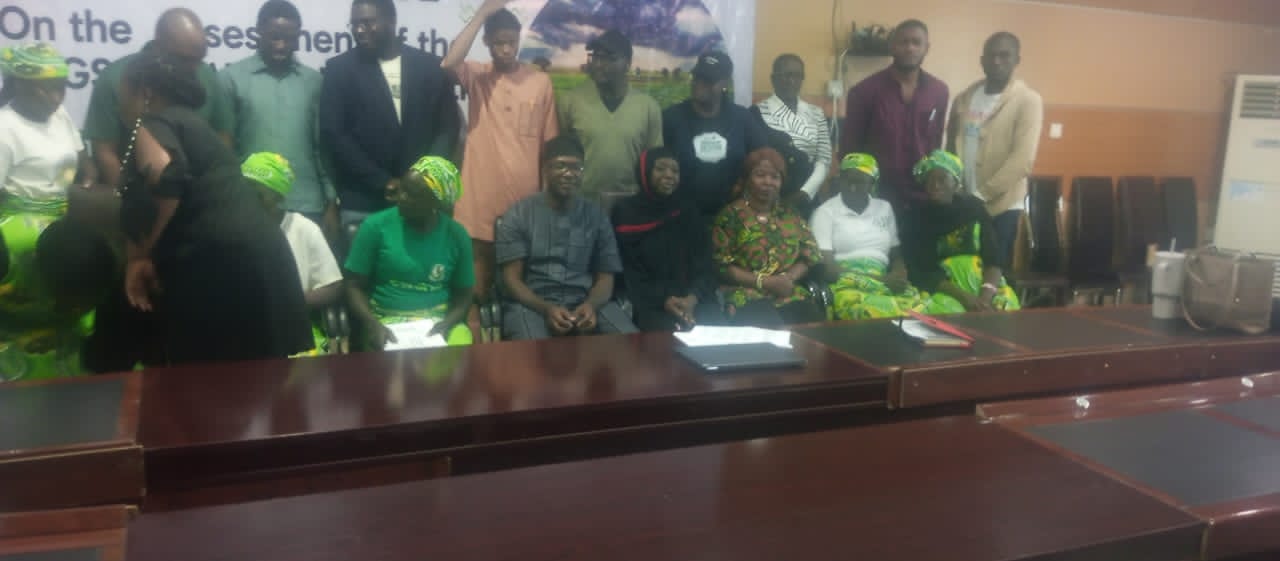
The concerns were contained in speech titled “Beyond the Official Narratives: ActionAid Nigeria Community Scorecard Report on the NAGS-AP Wheat Dry Season Farming Programme in Nigeria,” presented at a press briefing in Abuja on Wednesday by the organisation’s Deputy Country Director, Suwaiba Muhammad-Dankabo, shortly after the presentation of the Assessment report by TSJ Consult.
The report assessed the implementation of the wheat intervention under the NAGS-AP programme during the 2023/24 and 2024/25 dry season farming cycles and examined whether the initiative was achieving its objectives of increasing domestic wheat production, reducing import dependency, and improving access to subsidised agricultural inputs for smallholder farmers.
Addressing journalists, Muhammad-Dankabo said the findings highlighted a gap between the programme’s objectives and the realities experienced by farmers across participating communities.
“We have gathered today to publicly share the findings of this assessment because we believe it deserves serious national attention.
“The NAGS-AP wheat intervention was designed to get subsidised inputs into the hands of smallholder wheat farmers, expand dry-season farming, reduce our import dependency, and strengthen domestic food production. These are important and commendable goals, and ActionAid Nigeria supports them fully.”
She noted, however, that the central question driving the research was whether the intended beneficiaries were actually benefiting from the programme.
“When public funds of this scale are deployed, citizens have a right to know. Farmers have a right to know. It is the responsibility of civil society organisations like ours to ensure that the official narrative is tested against the lived experience of the people on the ground,” she stated.
According to ActionAid, Nigeria currently imports about 90 per cent of its wheat requirements, spending billions of dollars annually in foreign exchange.
The NAGS-AP wheat intervention, funded by the African Development Bank with approximately $134 million, was introduced to reverse that trend by boosting local wheat production and supporting farmers with subsidised agricultural inputs.
The organisation acknowledged the Federal Government’s commitment to reducing wheat import dependence but said findings from the field revealed several obstacles undermining the programme’s effectiveness.
“The NAGS-AP Wheat Intervention demonstrated a federal commitment toward reducing wheat import dependency. However, field findings reveal that structural bottlenecks, particularly limited productivity gains, delayed input delivery, financial barriers for smallholders, and coordination weaknesses, continue to undermine the programme’s potential,” Muhammad-Dankabo said.
She added that sustainable expansion of wheat production in Nigeria would require stronger institutions, improved seed systems, investment in irrigation infrastructure, and enhanced agricultural extension services.
As part of its recommendations, ActionAid Nigeria called on the Federal Government to develop a National Wheat Seed Multiplication Strategy, establish a zonal wheat suitability framework, and introduce gender-sensitive agricultural financing mechanisms to improve access for women and vulnerable farmers.
The organisation also urged the NAGS-AP Project Secretariat to enforce strict timelines for seed distribution before the end of October each year, improve access to redemption centres, publish verified beneficiary lists at ward level, and deploy publicly accessible digital dashboards to track programme implementation.
ActionAid further called for investigations into allegations of input diversion, distribution of adulterated agrochemicals, uncertified seeds, and other corrupt practices allegedly associated with the programme.
The organisation recommended sanctions against agro-dealers found guilty of malpractice and urged authorities to strengthen awareness campaigns through farmer groups, community leaders, religious institutions, and digital platforms.
At the state level, ActionAid advocated increased support for Agricultural Development Programme (ADP) extension agents, recruitment of additional extension personnel—including women—and greater empowerment of state ADP offices to improve service delivery.
The group also encouraged farmers and farmer-based organisations to maximise the use of inputs received under the programme and invest in basic information and communication technology (ICT) skills to improve participation in agricultural interventions.
For development partners and lenders, including the African Development Bank and other multilateral financial institutions, ActionAid recommended stronger transparency requirements, public disclosure mechanisms, anti-corruption safeguards, and increased engagement with civil society organisations in project monitoring and evaluation.
Muhammad-Dankabo urged policymakers and development partners to act on the report’s findings in the interest of food security and agricultural development.
“ActionAid Nigeria remains firmly committed to holding power accountable and amplifying the voices of the most marginalised.
“We call on the Federal Ministry of Agriculture and Food Security, the NAGS-AP Secretariat, the African Development Bank, and all relevant stakeholders to take these findings seriously and act on these recommendations without delay.”
She stressed that smallholder farmers, particularly women, deserve a system that delivers meaningful results.
“The wheat farmers of Nigeria, especially the women smallholders who feed this country and who have for too long been excluded from the resources and decisions that shape their lives, deserve a programme that works. They deserve transparency. They deserve accountability. And they deserve results.”
On his part, Team Lead of TSJ Consult, Tunde Salmon, stressed that while the
NAGS-AP wheat intervention has recorded encouraging progress, domestic wheat production remains far below Nigeria’s national demand.
Presenting findings from the assessment, Salmon noted that the intervention achieved an estimated output of 474,628 metric tonnes of wheat during the review period.
However, he noted that this production level represents only about one-fifth of the country’s total wheat demand, leaving a significant supply gap.
According to the assessment, Nigeria continues to depend heavily on wheat imports despite several intervention programmes aimed at boosting local production.
“Wheat is the second most important staple food in Nigeria after rice. It is widely consumed in households and serves as a critical raw material for many industries. The demand is enormous, yet local production remains very low,” the team leader said.
The report revealed that over the last four decades, more than ten different interventions have been introduced to support wheat production in Nigeria.
Despite these efforts, most programmes have operated on a relatively small scale, limiting their overall impact on national self-sufficiency.
While acknowledging the vital role of smallholder farmers in wheat production, the assessment recommended a significant scale-up of support and investment in the sector. It suggested that achieving at least 50 per cent domestic wheat sufficiency would represent a major milestone in reducing the country’s dependence on imports.
The assessment also examined concerns raised by some agro-dealers regarding unpaid supplies under the programme.
According to the NAGS-AP Secretariat, payment delays are linked to verification and authentication procedures designed to ensure that all supplied inputs were duly delivered before payments are processed.
Salmon noted that such explanations may be valid but stressed the need for efficient systems that ensure timely verification and settlement of obligations to stakeholders involved in the intervention programme.
The findings were presented as part of ongoing efforts to evaluate the effectiveness of the NAGS-AP Wheat Intervention and identify measures to strengthen Nigeria’s quest for greater food security and agricultural self-sufficiency.