By Chuks Oyema-Aziken
Security experts, media practitioners, academics, government officials, and civil society stakeholders have endorsed draft toolkits aimed at tackling ethnic profiling and stereotyping in security communication and media reporting, describing the initiative as a timely intervention to strengthen national cohesion and promote responsible public discourse.
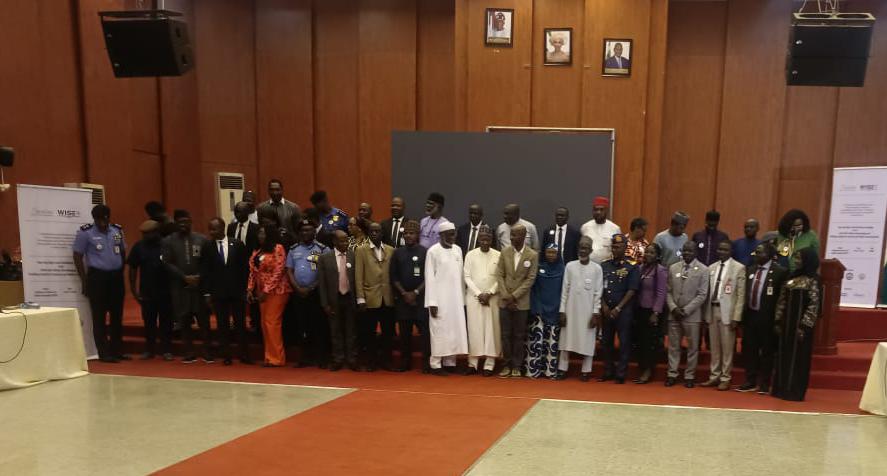
The endorsement was made at the Expert Validation Meeting on the Anti-Ethnic Stereotyping and Profiling Toolkits for Security and Media Reporting held at the headquarters of the Institute for Peace and Conflict Resolution (IPCR) in Abuja on Wednesday.
The initiative was jointly developed by Beacon Security and Intelligence Limited (BSIL) and the WhiteInk Institute for Strategy Education and Research (WISER) in partnership with the National Counter-Terrorism Centre (NCTC), the Federal Ministry of Information and National Orientation, and the IPCR, with support from the Strengthening Peace and Resilience in Nigeria (SPRiNG) Programme of the United Kingdom Foreign, Commonwealth and Development Office (FCDO).
Speaking at the event, the Director-General of IPCR, Dr. Joseph Ochogwu, represented by the Director of Internal Conflict Prevention and Resolution, Dr. Gerald Okafor, said the validation exercise represented a major step towards strengthening peace, security, and responsible communication in Nigeria.
Okafor commended BSIL and WISER for their vision and commitment in developing the practitioners’ toolkits, noting that the project was the product of extensive consultations, brainstorming sessions, and a strategic conference on contextualising definitions and terminologies to address stereotyping and ethnic profiling in security operations and public discourse.
He also praised the SPRiNG Programme and the FCDO for supporting the initiative, saying their intervention reflected a commitment to addressing identity-based conflicts, promoting peaceful coexistence, and advancing sustainable development across Nigeria and Africa.
According to him, Nigeria continues to grapple with multiple security challenges, including terrorism, banditry, kidnapping, armed robbery, farmer-herder clashes, identity-based disputes, and ethno-religious conflicts.
He warned that such challenges are often aggravated by irresponsible media reportage and the misuse of terminology in policy and security discussions, leading to ethnic profiling, mistrust, stigmatization, and heightened tensions among communities.
“The misuse of security terminology and irresponsible reporting have become catalysts for stereotyping and ineffective intelligence gathering, with consequences that include loss of lives, destruction of property, displacement of communities, and humanitarian crises,” he said.
Okafor noted that the development of the Security and Media Toolkits was informed by the need to address these challenges and provide practical guidance that would promote professionalism, accuracy, and sensitivity in communication.
Also speaking, the President and Founder of WISER, retired Brigadier General Saleh Bala, said the validation meeting brought together a unique blend of expertise from the security sector, media industry, academia, government institutions, development partners, and civil society organizations.
He stressed that language used by security institutions and media organizations can either promote understanding and peace or deepen divisions and reinforce harmful stereotypes.
According to Bala, Nigeria’s diversity remains one of its greatest strengths, but requires responsible communication, particularly in matters relating to security, conflict, ethnicity, religion, gender, and regional identities.
He observed that stereotypes and ethnic profiling now spread rapidly through both traditional and digital platforms, making it imperative to develop practical guidelines that encourage fairness, professionalism, and conflict-sensitive communication.
The WISER founder described the draft toolkit as a significant milestone that would help media practitioners, security communicators, and other stakeholders identify and avoid harmful narratives, prejudicial labels, and stereotypes capable of undermining social cohesion.
Managing Director of Beacon Security and Intelligence Limited, Kabiru Adamu, provided an overview of the development process, explaining that the project was conceived to address the impact of stereotyping, ethnic profiling, and imprecise terminology on security outcomes, public trust, and social cohesion.
He said the project was built on the recognition that language is not merely descriptive but also shapes perceptions, influences policy decisions, affects intelligence gathering, and can either reduce or escalate social tensions.
Adamu disclosed that the development process involved extensive desktop research, reviews of legal and policy frameworks, media content analysis, and consultations with security practitioners, intelligence personnel, journalists, academics, policymakers, traditional rulers, religious leaders, women leaders, civil society actors, and representatives of conflict-affected communities.
He added that the process also included a virtual stakeholder seminar held in February 2026 and a two-day national conference and expert workshop held in Abuja in April 2026.
During the validation exercise, participants reviewed the Anti-Ethnic Profiling and Stereotyping Toolkit for Security Communication alongside the corresponding Media Communication Toolkit to ensure consistency and coherence across both documents.
The experts agreed that both toolkits should maintain common definitions, conceptual frameworks, implementation approaches, and normative standards to prevent conflicting interpretations during implementation.
Participants further emphasized the need to clearly distinguish unlawful ethnic profiling from legitimate intelligence-led, evidence-based, and professional security practices, stressing that operational effectiveness and respect for human rights should be viewed as complementary objectives.
The meeting also agreed that both toolkits should consistently promote neutral, factual, and non-ethnicized language in reporting security incidents, criminal activities, conflicts, and public affairs.
Participants recommended that all examples and case studies contained in the documents be reviewed carefully to ensure they remain balanced, contextual, and do not inadvertently reinforce stereotypes or institutional bias.
The validation meeting additionally called for stronger provisions on training, institutional accountability, implementation mechanisms, monitoring and evaluation frameworks, and multi-stakeholder collaboration to ensure successful implementation of the toolkits.
Stakeholders also recommended the integration of guidance on emerging communication challenges, including misinformation, disinformation, artificial intelligence, online hate speech, information manipulation, and the growing influence of social media actors.
Other resolutions adopted included the harmonization of terminology and definitions across both documents, adoption of British English conventions, inclusion of executive summaries, accurate citation of legal and policy instruments, and the clarification of mandatory and advisory provisions through the use of terms such as “shall,” “should,” and “may.”
At the end of the meeting, participants expressed satisfaction with the overall quality and relevance of the draft toolkits and agreed that, subject to the incorporation of observations and amendments raised during the validation exercise, the documents should be finalized for implementation.