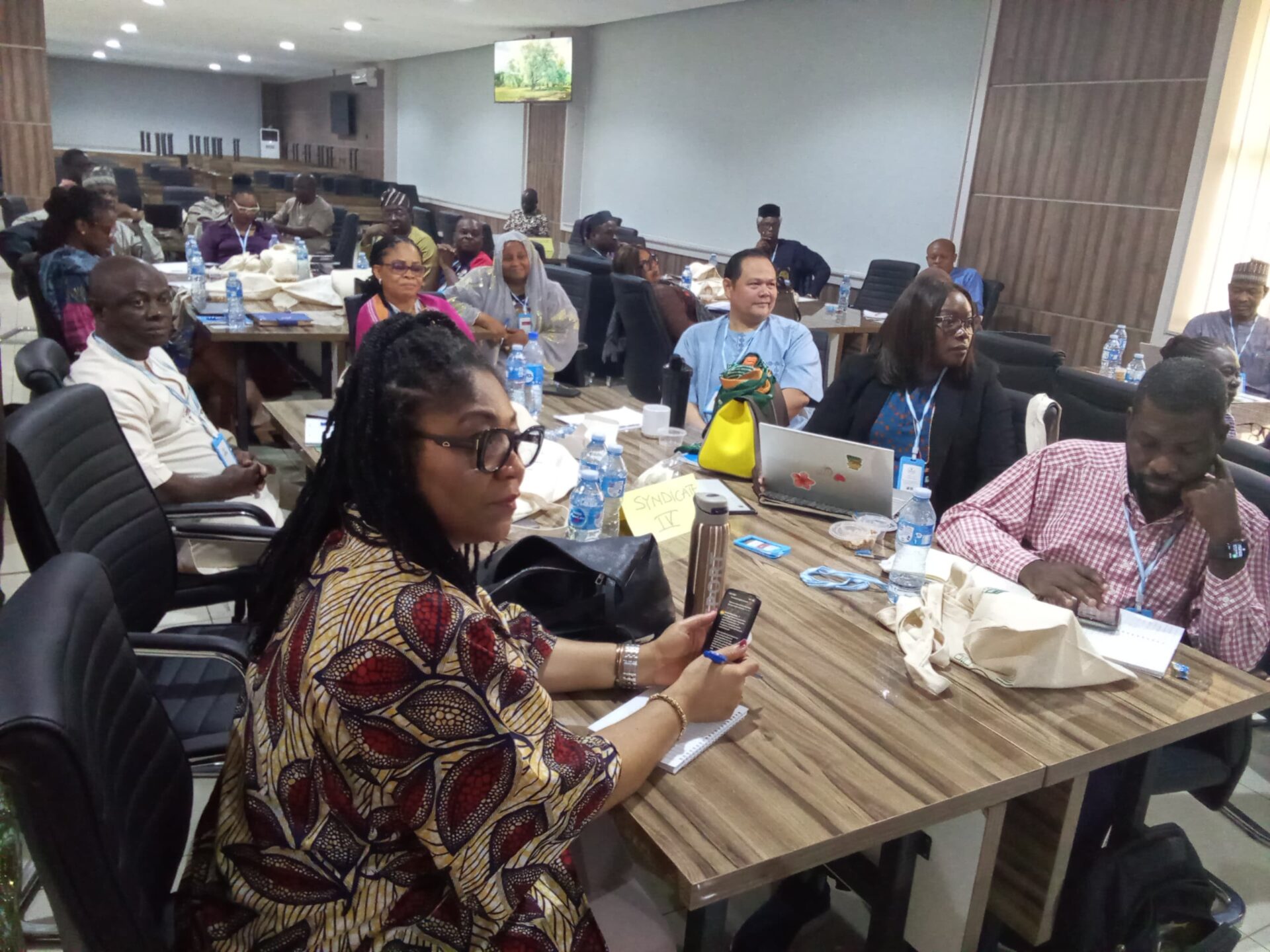
Cross-section of participants at the event
By Felix Khanoba
The United Nations Children’s Fund (UNICEF) and the Federal Government have begun developing a long-term roadmap aimed at shaping policies that will secure a better future for Nigerian children by 2050, with a strong emphasis on ensuring that children themselves play a central role in designing the country’s future.
Speaking at the opening ceremony of the Child Foresight Analysis Roadmap Validation Exercise at Zuma Resort on Thursday, the Chief of Planning and Monitoring at UNICEF Nigeria, Wayne Amago Bacale, said the initiative is designed to move beyond theoretical discussions by translating future-focused research into concrete government actions.
“The Child Foresight Analysis is an analytical work with relevant stakeholders, children and youth, to identify what are the possible situations of children and youth in Nigeria by 2050,” Bacale said.
He explained that after months of consultations involving government institutions, development partners, civil society organisations, children and young people, the workshop was convened to validate findings and develop practical strategies for implementation.
“So based on the insights that we gather from this Child Foresight Analysis, how can we translate this into action—not just conceptual future—but really what can we do now in order to have a positive situation of children and youth in Nigeria by 2050,” he said.
Bacale stressed that implementation would be driven by government ownership, noting that the initiative is being led by the Office for Strategic Preparedness and Resilience (OSPRE) under the Office of the Vice President, with UNICEF providing technical support.
“The most important aspect is to ensure that the relevant stakeholders are part of the whole process from the conceptualisation of the action, not just during the action,” he said.
According to him, follow-up advocacy meetings with ministries, departments and agencies (MDAs) would ensure that recommendations from the foresight analysis are integrated into future government programmes and policies.
On Nigeria’s education challenges, particularly the large population of out-of-school children, Bacale described education as one of the strongest messages emerging from the nationwide consultations.
“Education is really a very key issue for Nigeria, and we need to seriously think about how we can respond to it now so that we’ll have a positive situation of children in Nigeria by 2050,” he said.
He added that one of the most remarkable aspects of the initiative was the direct participation of children in generating the recommendations.
“As adults, we usually assume that we know what they need. But the most powerful insight that we gathered is that children and youth themselves can actually describe and explain what they need,” Bacale said.
He praised Nigerian children for their contributions, saying, “Nigerian children are really brilliant people. We need to ensure that they have the right platforms and support to maximise their full potential.”
On his part, Director-General of the Office for Strategic Preparedness and Resilience (OSPRE), Chris Ngwodo, described the roadmap as the first national policy process focused specifically on Nigeria’s children up to the year 2050.
“It’s a policy process that integrates the voices of children, their perspectives and their perceptions in shaping policy scenarios leading up to 2050,” Ngwodo said.
Responding to concerns that the initiative could become another policy document without impact, he insisted it was unique.
“It is not a duplication because we have never done any programme centred on 2050,” he said. “The fact that the Office of the Vice President is involved is a signal of the commitment of the Federal Government.”
Ngwodo explained that the policies were largely co-created by Nigerian children through extensive consultations.
“This consultative process in its entirety has been driven largely by Nigerian children. So this is very much a product of the Nigerian child,” he said.
He added that recommendations from the workshop would be embedded across ministries, departments and agencies to guide long-term planning.
Also speaking, Special Assistant to the President in the Office of the Vice President, Mohammed Ahmed, said governance must evolve to reflect changing global realities and include children in decision-making processes.
“We live in unprecedented times. The world is shifting and we’re experiencing new realities,” Ahmed said.
“For this study in particular, it recognises that the child’s voice in policymaking and governance is a critical stakeholder that we must engage, especially as we aim to make decisions that will affect their lives and outcomes over the long term.”
While noting that OSPRE would serve as the institutional anchor for implementing the programme across MDAs, Ahmed expressed delight that the administration of President Bola Tinubu has continued to churn out reforms and policies that would positively affect children and every other citizens of the country.
“In line with the Renewed Hope agenda, we have seen that His Excellency, the Commander in Chief of the Federal Republic (President Tinubu), has already demonstrated the direction that the administration wants to go in. We have policies that we have long-term benefits to the citizenry. So it makes it easier to advance this sort of thinking.
“And with the Office of the Vice President, His Excellency, the Vice President has given support to the program. There is the Office for Strategic Preparedness and Resilience, which has the mandate to drive this sort of long-term thinking,” he said.
One of the participants from the Federal Ministry of Budget and Economic Planning, Dr Brenda Max-Nduaguibe described the workshop as enlightening and capable of transforming policymaking across sectors.
“For some of us who haven’t had this experience, introducing us to foresight analysis and using it for policy has been eye-opening,” she said.
“I expect that there will be a lot of changes, and we’re all supposed to make impacts when we go back to implement what we have learned in our different ministries. It’s a win for Nigeria.”
The Child Foresight Analysis Roadmap Validation Exercise is part of a broader anticipatory governance programme designed to strengthen Nigeria’s ability to prepare for emerging opportunities and challenges affecting children through evidence-based, future-oriented policymaking.