By Mercy Aikoye
The House of Representatives has recorded its highest legislative output since Nigeria’s return to democratic rule in 1999, introducing 2,747 bills and passing 363 within the first three years of the 10th National Assembly.
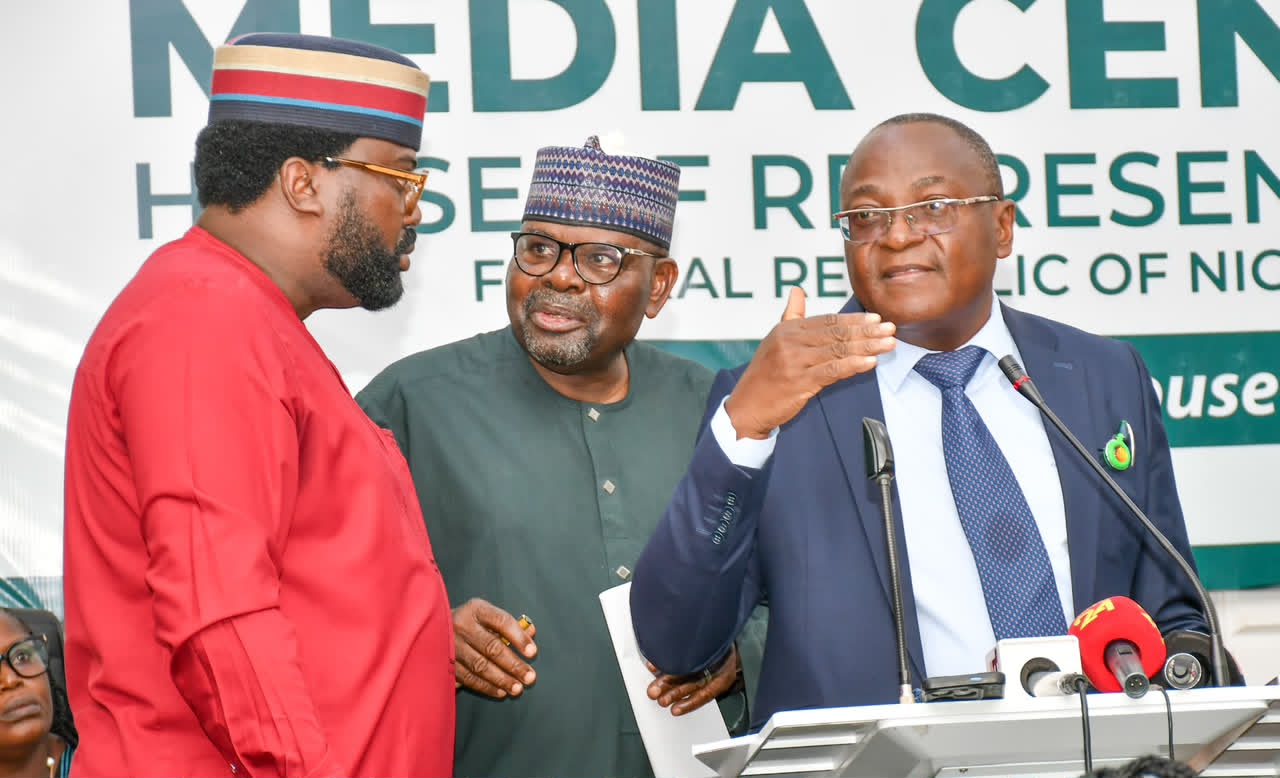
The figures were unveiled on Monday as the House presented its three-year legislative scorecard ahead of the commencement of the fourth legislative session and the National Assembly Open Week.
Addressing journalists, Chairman of the House Committee on Rules and Business, Francis Ejiroghene Waive, and House Spokesman, Akin Rotimi Jr., said the record reflected the House’s commitment to delivering people-oriented legislation and strengthening democratic governance.
A breakdown of the legislative activities showed that the House introduced 1,351 bills during its first session, comprising 12 Executive Bills, 1,336 Private Members’ Bills and three Senate Bills, with 89 eventually passed.
In the second session, lawmakers sponsored 912 bills, including 14 Executive Bills, 868 Private Members’ Bills and 30 Senate Bills, while 148 bills were passed.
The third session witnessed the introduction of 484 bills, made up of 31 Executive Bills, 391 Private Members’ Bills and 62 Senate Bills. The House passed 126 bills during the period.
The House further disclosed that of the 2,747 bills introduced since June 2023, 1,782 are awaiting second reading, 323 have been referred to standing committees, 185 are awaiting further consideration, while five were negatived. It added that 89 bills were consolidated before consideration.
Waive described the scorecard as evidence of the House’s determination to sustain an active and productive legislature.
“We are working, and this is our scorecard for this session,” he said.
He identified the 2026 Appropriation Act, the constitutional amendment bill seeking the establishment of state police and the Electoral Act 2026 among the landmark legislations passed during the third legislative session.
He also listed the Student Loan (NELFUND) Act and the Minimum Wage Act among major laws enacted by the 10th House since its inauguration in June 2023.
Responding to allegations that lawmakers pay to have bills listed for consideration, Waive dismissed the claims, explaining that the legislative process requires extensive consultations and consensus-building rather than financial inducement.
He also clarified that the constitutional amendment on state police is distinct from proposed amendments to the Police Act, noting that the latter would provide the operational framework after constitutional approval. According to him, the House will consider the Senate’s version of the proposal during the fourth legislative session.
Earlier, House Spokesman Akin Rotimi Jr. said the briefing formed part of activities ahead of the National Assembly Open Week and underscored the House’s commitment to transparency and accountability.
Rotimi disclosed that more than 1.6 million Nigerians had benefited from the student loan scheme, with over ₦303 billion disbursed under the programme.
He also commended the House Committee on Public Accounts for facilitating the recovery of over $61.5 billion in unremitted oil revenues and more than ₦520 billion in outstanding Value Added Tax (VAT) liabilities as of the end of 2025.
According to him, the House will prioritise key constitutional amendment proposals during the fourth session, including bills on independent candidacy, single-day elections and broader electoral reforms.
On oversight activities, the House revealed that it considered 220 motions between June 2025 and June 2026, with 192 referred to standing committees and 28 to ad hoc committees. It added that 121 motions were raised as matters of urgent public importance.
The House also adopted 48 public petitions during the third legislative session, reinforcing its oversight and public engagement mandate.
Rotimi said the 10th House remained committed to implementing its legislative agenda and delivering reforms that would improve the lives of Nigerians.
“The total number of bills introduced and passed by this Assembly is the highest since 1999. We still have more work to do, but we have covered significant ground in advancing legislation that impacts the lives of Nigerians,” he said.