By Stella Odueme
The National Agricultural Land Development Authority (NALDA) has launched its flagship Green Hope Project, an ambitious initiative aimed at increasing year-round vegetable production, improving food security, reducing post-harvest losses, and empowering women farmers across Nigeria.
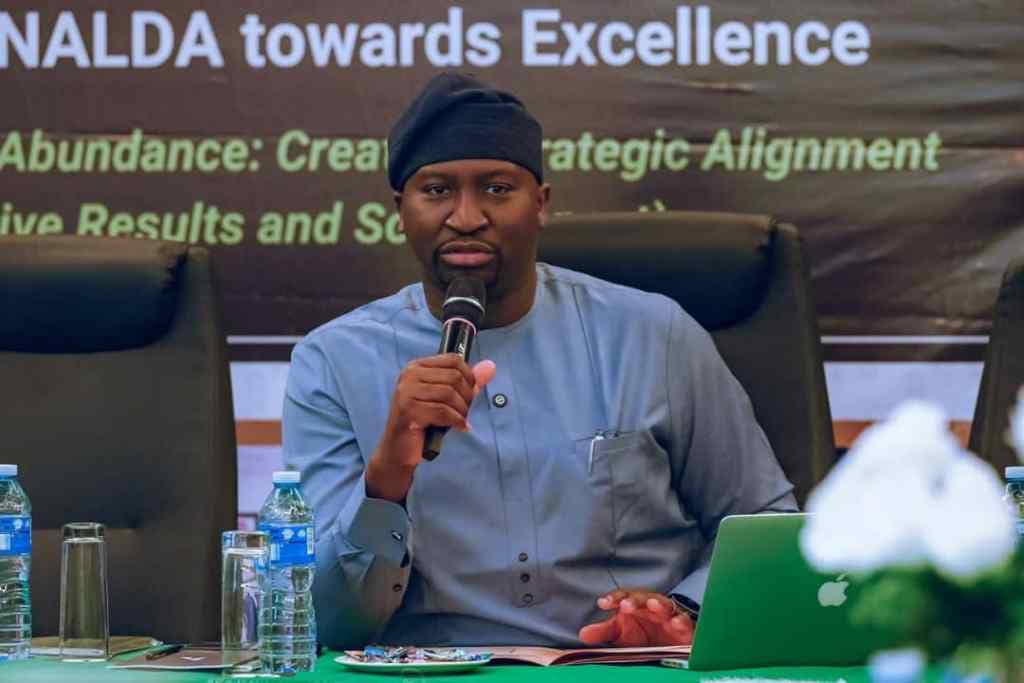
Speaking during a media briefing in Abuja, the Executive Secretary and Chief Executive Officer of NALDA, Engr. Cornelius Adebayo, said the first phase of the programme is expected to benefit about 4,000 Nigerians, with women taking centre stage as the primary beneficiaries.
Adebayo explained that the Green Hope Project is a comprehensive, three-layer agricultural model designed to decentralise vegetable production and ensure fresh produce is cultivated closer to consumers.
“The Greenhouse Project is not solely green. It’s called the Green Hope Project. It is three-layered. You have the open field, greenhouses, normal regular greenhouses, and you have the high-tech, temperature-controlled, high-tech greenhouses,” he said.
According to him, implementation of the initiative has already commenced in several locations, including Ogun State and the Federal Capital Territory (FCT), while the Giri Greenhouse project in Abuja has reached an advanced stage and is expected to be commissioned soon.
He disclosed that NALDA plans to replicate the Green Hope model across every federal constituency in the country as the project expands.
“We believe that we need to decentralise production of vegetables. We need to reduce how we transport vegetables. Vegetables are something we eat fresh, and not something that is spent days in transit,” Adebayo stated.
The NALDA boss noted that the open-field component of the project has already been established in 38 locations nationwide, with each site covering at least 500 hectares.
The initiative combines open-field horticulture with greenhouse farming to guarantee continuous vegetable production throughout the year, irrespective of seasonal changes.
Beyond increasing food production, Adebayo said the project is designed to create sustainable livelihoods, particularly for rural women, who will manage and cultivate the farms.
“The target is women, and the idea is to make sure that women are supported so that they can support the men also,” he said.
He explained that each participating woman will be allocated approximately 1,000 square metres of farmland under the open-field component, providing them with the opportunity to cultivate vegetables on a commercial scale.
To improve productivity and create a conducive working environment, Adebayo said every project site is being equipped with essential infrastructure, including 24-hour solar-powered irrigation systems, rest areas, changing rooms, kitchens with clean cooking facilities, restrooms, and shower facilities.
According to him, these amenities are intended to minimise the time farmers spend travelling, improve their welfare, and encourage environmentally sustainable agricultural practices.
The project also incorporates agroforestry by using trees as natural fencing around farms, a strategy NALDA says will enhance climate resilience while promoting environmental sustainability.
On partnerships, Adebayo stressed that NALDA is collaborating with key agricultural institutions to provide technical support, training, research, and improved farming practices.
He identified the Agricultural and Rural Management Training Institute (ARMTI), the National Horticultural Research Institute (NIHORT), and other relevant agencies as strategic partners driving the initiative.
Speaking on NALDA’s cocoa development programme, he said collaboration remains critical to achieving sustainable results.
“We have brought in the Cocoa Research Institute of Nigeria (CRIN), because we cannot do this work alone. Our own is to facilitate and make it easier,” he said.
The Green Hope Project is expected to strengthen Nigeria’s food security drive by increasing the availability of fresh vegetables throughout the year, reducing reliance on long-distance transportation, improving farmers’ incomes, and creating a more resilient and climate-smart agricultural system.