
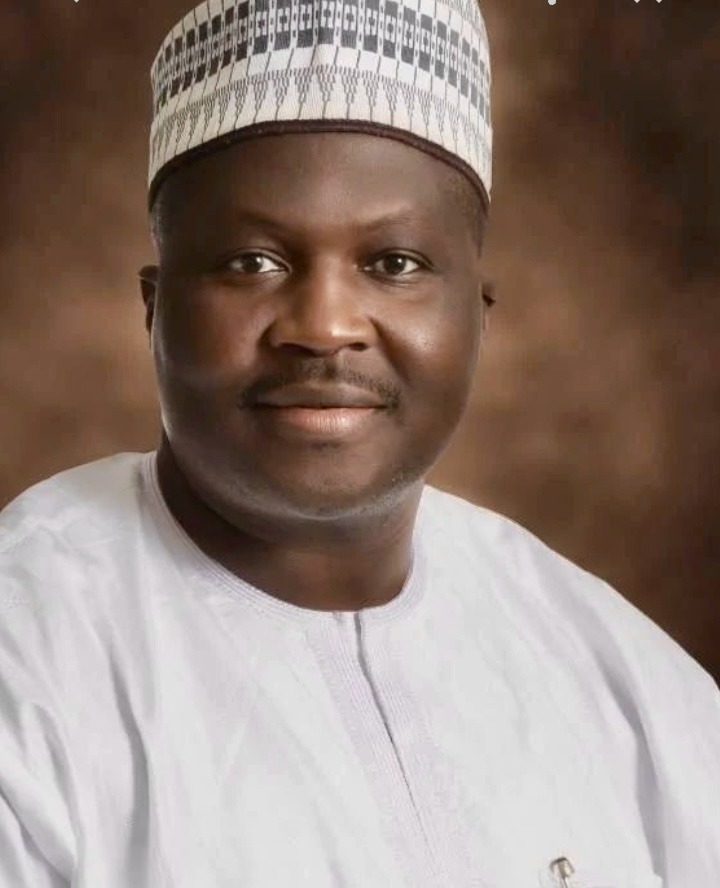
Mr. Shuaibu Abubakar Idris, a governorship aspirant of the African Democratic Congress (ADC) in Kaduna State for the 2027 election, speaks with The Authority South-West Editor, John Silas, on the controversy surrounding the party’s governorship primary, why he believes he is the authentic candidate, the state of the party, and his plans for Kaduna if elected. Excerpts:
Question:
There are claims that the ADC in Kaduna State currently has no governorship candidate. With the electoral timetable progressing, what is the fate of the party?
Shuaibu Idris: I don’t think it is correct to say the ADC in Kaduna has no governorship candidate. The party has a candidate, but the issue is determining who that candidate is under the party’s constitution and guidelines.
The nomination process was clearly outlined. Aspirants purchased and submitted nomination forms, after which they were screened by a screening committee. Those dissatisfied with the outcome had the opportunity to appeal before the party constituted a primary election committee. Following the primary, another appeal committee was set up to review complaints arising from the exercise.
These procedures are clearly stated in the party’s guidelines, which every aspirant received.
During the primary, Hon. Isa Ashiru was declared winner with about 86,000 votes. I immediately rejected the exercise because I believed it was poorly organised and riddled with irregularities. I petitioned the appeal committee, presenting evidence that the process was fundamentally flawed.
After reviewing all submissions, the appeal committee concluded that based on valid votes cast, I actually won the primary and consequently declared me the party’s governorship candidate.
So, legally speaking, Shuaibu Abubakar Idris, popularly known as Mikati, is the authentic ADC governorship candidate for Kaduna State in the 2027 election.
Question:
Has the National Working Committee (NWC) acted on the appeal committee’s report?
Idris: I’m not a member of the National Working Committee, but as a committed stakeholder in the party, I can say that, to the best of my knowledge, the NWC has not yet met to consider reports from appeal committees across the country.
Remember, Kaduna is not the only state with post-primary disputes. Several states have appeal committee reports awaiting consideration.
However, I have personally engaged with over 80 per cent of NWC members individually. Their consistent response has been that they are awaiting legal advice before taking a final decision.
Most of them have acknowledged that, based on the reports available, I appear to have secured the mandate. I believe it is only a matter of time before the truth prevails.
Question:
Meanwhile, Hon. Isa Ashiru has continued to present himself as the party’s flagbearer. What is your reaction?
Idris: I find it unfortunate. He has been holding meetings, engaging party officials and has even announced a running mate.
Personally, I believe that is premature. I have not received a Certificate of Return, and despite believing I am the rightful candidate, I have not announced a deputy because I respect due process.
Why should anyone declare a running mate before the National Working Committee certifies the party’s candidate? To me, that is building legitimacy on an unresolved process.
Question:
Isn’t the delay hurting the party’s chances ahead of the election?
Idris: Certainly, the uncertainty is affecting the party. Politics thrives on leadership and direction.
One of the governorship aspirants, Prof. Mohammed Sani Bello, has already resigned from the party, and naturally, he has supporters. Such developments weaken the party.
However, under the Electoral Act, there is still sufficient time for the party to finalise its candidates.
As for me, I believe I am relatively well known. I first contested for governor in 2007 and have remained active in public discourse. I regularly analyse economic and political issues on Channels Television, NTA, the BBC, SABC, Radio France Internationale and several Hausa-language platforms.
If I eventually emerge as the candidate, I believe I can effectively market myself to the people of Kaduna.
Question:
A governorship election is a team effort. If the decision comes late, will there be enough time to reconcile aggrieved members?
Idris: That is a very important question.
Even a councillorship election requires teamwork. We are already engaging stakeholders behind the scenes.
I have held discussions with two other strong governorship aspirants, and we all agree that whoever emerges among us should receive the support of the others.
Even Hon. Isa Ashiru remains my brother. We may disagree politically, but we are not enemies. Kaduna belongs to all of us.
If the National Working Committee eventually decides in his favour, I will carefully evaluate my options. Likewise, I expect others to respect due process if I emerge.
My campaign is built around what I call the WIPER Agenda—Work Creation, Infrastructure, Peace through Equity and Justice, Empowerment, and Resource Mobilisation.
With the right candidate, adequate logistics and a compelling message, I believe victory is achievable.
Question:
If you eventually contest against the incumbent governor, who many believe has performed well, what are your chances?
Idris: No government enjoys 100 per cent approval or total rejection.
Governor Uba Sani has done some commendable work, particularly in pension payments, and I acknowledge that.
However, there are areas that require much greater attention.
Many primary schools remain in poor condition, lacking classrooms, furniture, teachers and learning materials. Children are still learning while sitting on bare ground.
Personally, I have renovated between 15 and 17 schools and donated furniture from my personal resources.
I believe governance should be judged fairly. Where government performs well, it deserves commendation. Where improvement is needed, constructive criticism should follow.
Question:
Some people believe ADC candidates are riding on the popularity of former Vice President Atiku Abubakar. What is your relationship with him?
Idris: I respectfully disagree with that assumption.
Yes, I have an excellent relationship with His Excellency Atiku Abubakar. I respect him greatly as a former Vice President, a senior statesman and someone who has mentored me.
In fact, during my 2011 governorship campaign, he supported me financially.
So yes, if people describe me as one of Atiku’s political protégés, I won’t deny our relationship.
But I am not campaigning on Atiku’s name. I am my own man.
Question:
What about your relationship with former Kaduna governor Nasir El-Rufai?
Idris: I also respect Mallam Nasir El-Rufai for his contributions to Kaduna’s development.
However, I am not anyone’s political stooge.
I admire both Atiku and El-Rufai, but I operate independently.
Politics teaches us that overdependence on political godfathers can become a liability. We have seen such relationships break down in other states.
I support principles, not personalities.
Question:
Do you believe El-Rufai’s current legal challenges are politically motivated?
Idris: I do not want to speculate.
However, I believe the law should be applied fairly and equally to everyone.
Where allegations have not been proven, due process must prevail.
That is my position.
Question:
If you become governor, what will you do differently on security? And how confident are you in INEC ahead of the election?
Idris: Security remains one of the biggest challenges facing Kaduna.
Although governors are constitutionally recognised as Chief Security Officers of their states, they do not command the military or other federal security agencies directly.
The first step is to maintain excellent working relationships with the President and security chiefs so that responses to security challenges are swift and coordinated.
Secondly, we must address the root causes of insecurity.
There is a strong relationship between poverty, unemployment and crime.
Many pastoral communities have lost their traditional means of livelihood due to desertification and the shrinking of Lake Chad.
Government should consider carefully designed rehabilitation and reintegration programmes for repentant bandits, similar to aspects of the Niger Delta Amnesty Programme, while also intensifying efforts against drug trafficking because many violent criminals operate under the influence of narcotics.
On INEC, I believe it is still too early to pass judgment.
The commission’s performance will depend largely on adequate funding, logistics, security support and faithful implementation of the Electoral Act.
Question:
Opposition parties appear to be facing several legal hurdles. Do you think they can overcome them before the election?
Idris: Democracy thrives on credible opposition.
Governments must be careful not to create unnecessary obstacles for opposition parties.
If the political environment becomes excessively restrictive, democracy itself suffers.
President Bola Ahmed Tinubu should recognise that a competitive political environment ultimately strengthens the legitimacy of whoever wins.
Opposition is not a crime; it is an essential ingredient of democracy.
Question:
What message do you have for the people of Kaduna ahead of the 2027 election?
Idris: My appeal is simple.
People should vote according to their conscience.
If someone gives you ₦5,000 to buy your vote, remember that the money will be spent within days, but the person you elect will govern for four years.
Choose leaders based on competence, integrity and vision—not immediate financial inducements.
God has blessed every one of us with wisdom and conscience. We must use them wisely because, ultimately, we will all be accountable for the choices we make.
My advice to Kaduna people—and Nigerians generally—is to reject vote-buying, vote responsibly and place the future of our children above temporary gains.
