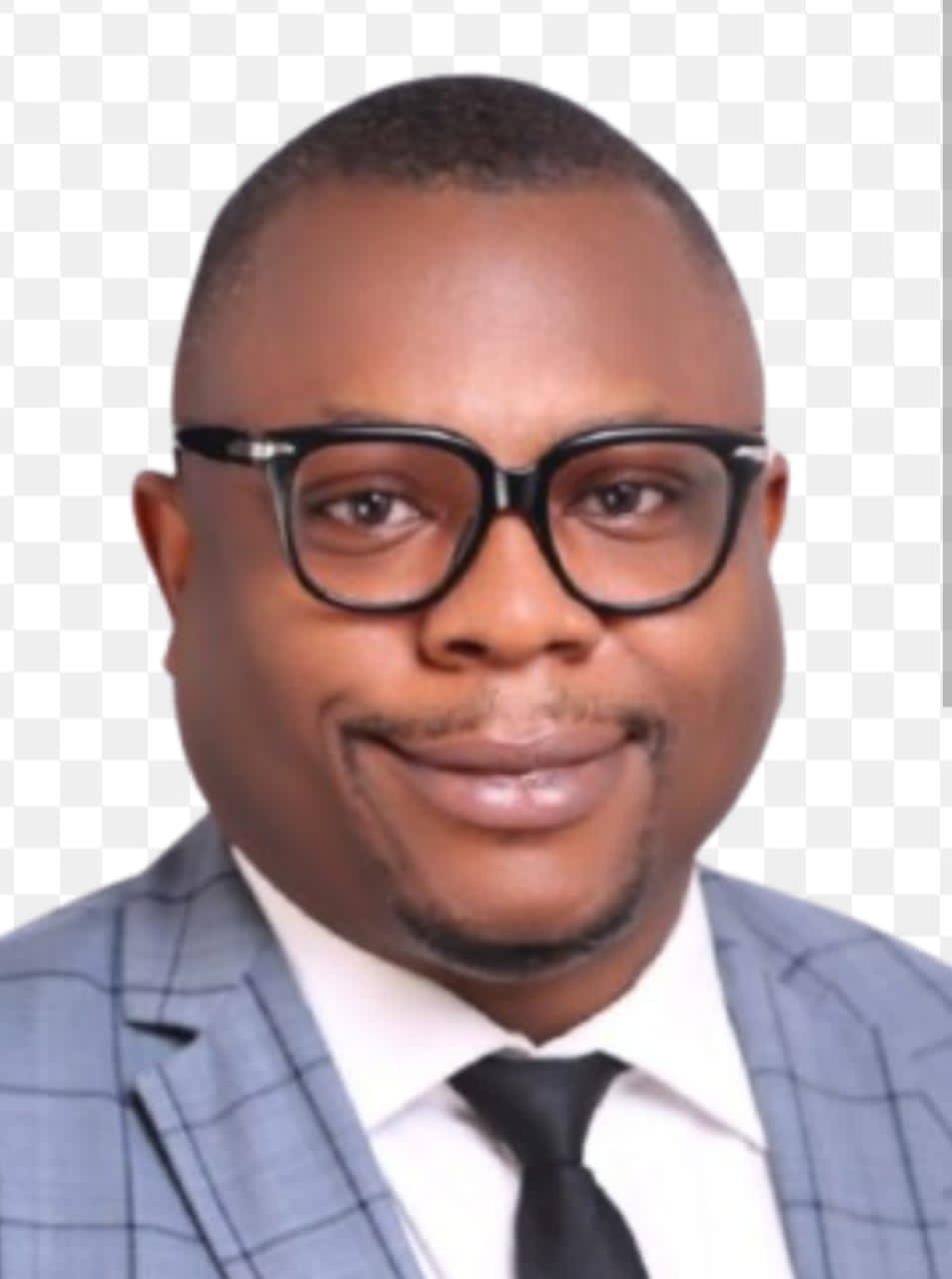
By Lemmy Ughegbe, Ph.D
Markets fear many things. They fear inflation, high taxation and insecurity. Yet there is one thing they fear even more: uncertainty.
Investors can adapt to difficult conditions. Businesses can survive high operating costs. Entrepreneurs can even navigate complex regulations. What none of them welcomes is unpredictability.
Uncertainty makes planning impossible. It compels investors to postpone decisions, businesses to delay expansion, banks to price loans more cautiously and consumers to spend more conservatively. In the end, it imposes a hidden tax on economic growth.
That, perhaps, is the most important lesson arising from the recent visit of Germany’s Foreign Minister, Johann Wadephul, to Nigeria. Public attention understandably focused on bilateral relations, security cooperation and trade. Yet beneath the diplomatic courtesies lay a message that deserves closer reflection. Germany did not speak only about investment; it spoke about security, stability and partnership in the same breath. That was no coincidence. The message was unmistakable: investment follows confidence, and confidence flourishes only where certainty exists. This is a lesson Nigeria cannot afford to ignore.
For years, successive governments have sought to attract foreign direct investment through fiscal incentives, tax reforms, infrastructure development and investment promotion initiatives. These are all important, yet they address only part of the equation. Before investors ask about tax holidays, they ask whether government policies are predictable. Before they inquire about incentives, they ask whether contracts will be honoured. Before they examine market opportunities, they ask whether the regulatory environment is stable. And before they commit billions of dollars, they ask the simplest question of all: can we confidently plan for the future in this country? That question lies at the heart of every investment decision.
Contrary to popular belief, investors are not necessarily frightened by difficult environments. Around the world, businesses continue to invest in countries facing economic challenges. What they struggle to accommodate is uncertainty. A company can adjust to a tax rate. It can factor inflation into its projections. It can insure against certain risks. But it cannot confidently invest where policies change without warning, regulations are inconsistently applied, contracts become uncertain or institutions appear unpredictable.
Uncertainty raises the cost of doing business. It also raises the cost of borrowing. Banks price it into interest rates, insurance companies price it into premiums, and international investors price it into country risk. Ultimately, citizens pay through fewer jobs, slower economic growth and a higher cost of living. This is why certainty is itself an economic asset. Countries do not compete for investment solely on the strength of natural resources or market size; they compete on predictability.
History offers compelling illustrations. Singapore possesses few natural resources, yet it has transformed itself into one of the world’s foremost investment destinations because businesses trust the consistency of its institutions. Investors know that contracts will be enforced, regulations applied predictably and public administration run efficiently. Over time, that certainty has become one of Singapore’s greatest economic assets.
Vietnam tells a similarly instructive story. Emerging from decades of conflict, it deliberately repositioned itself through stable economic reforms, export-oriented industrialisation and a predictable investment framework. Today, many multinational manufacturers continue to expand their operations there not because Vietnam is free of challenges, but because they believe the rules of engagement are stable enough to support long-term planning.
The United Arab Emirates offers yet another example. While its impressive infrastructure often attracts attention, equally important is the confidence investors place in its regulatory environment, administrative efficiency and commercial certainty. Businesses are drawn not simply by tax incentives but by the assurance that government policies are generally implemented consistently and that commercial disputes are addressed within a dependable legal framework.
These countries differ in geography, history and political systems. What unites them is not perfection; it is predictability. They have recognised that investors can often tolerate risk far more readily than they can tolerate uncertainty.
Against that backdrop, Nigeria possesses extraordinary advantages that many countries would gladly exchange for: Africa’s largest population, one of the continent’s biggest consumer markets, an energetic entrepreneurial class, abundant natural resources and a strategic geographic location. These are strengths that should naturally position the country among the world’s most attractive investment destinations. Yet every one of these advantages is diminished whenever uncertainty overshadows them. Security uncertainty discourages investment. Policy uncertainty delays decisions. Regulatory uncertainty complicates business planning. Judicial uncertainty weakens contract enforcement. Administrative uncertainty frustrates enterprise. Together, they create an environment where investors hesitate rather than commit.
This is why security and economic development should never be viewed as competing priorities. Security is itself an economic policy. Every highway made safer reduces transport costs. Every farming community protected from criminal violence improves agricultural productivity. Every successful intelligence operation strengthens investor confidence. Every court that resolves commercial disputes efficiently reassures businesses that the rule of law remains dependable. Likewise, every policy consistently applied tells investors that Nigeria is a country where tomorrow can be planned with reasonable confidence.
Perhaps this is the deeper significance of Germany’s engagement with Nigeria. It was not simply a diplomatic visit; it was a reminder that economic partnerships are built on confidence, and confidence cannot flourish in an atmosphere of uncertainty.
The challenge before Nigeria is therefore larger than attracting investment. It is about creating an environment in which investment feels secure. That requires consistency in policy, professionalism in regulation, efficiency in administration, respect for contracts, confidence in institutions and, above all, predictability in governance. This is not merely an economic challenge; it is fundamentally a governance challenge.
Investors are ultimately placing their confidence not in roads, airports or investment brochures, but in institutions. They invest where governments are predictable, where regulators are professional, where courts are dependable and where public policy inspires confidence rather than apprehension. These are not abstract ideals. They are practical economic necessities.
Prosperity is not built on opportunity alone. It is built on confidence, and confidence, in turn, is built on certainty. For Nigeria, reducing uncertainty may well prove to be one of the most important economic reforms of all.
Because nations do not merely attract investment. They earn it, and they earn it by becoming places where businesses, citizens and the international community alike can look to tomorrow with confidence rather than apprehension.
Dr Lemmy Ughegbe, FIMC, CMC
Email: lemmyughegbeofficial@gmail.com
WhatsApp ONLY: +2348069716645