By Louis Achi
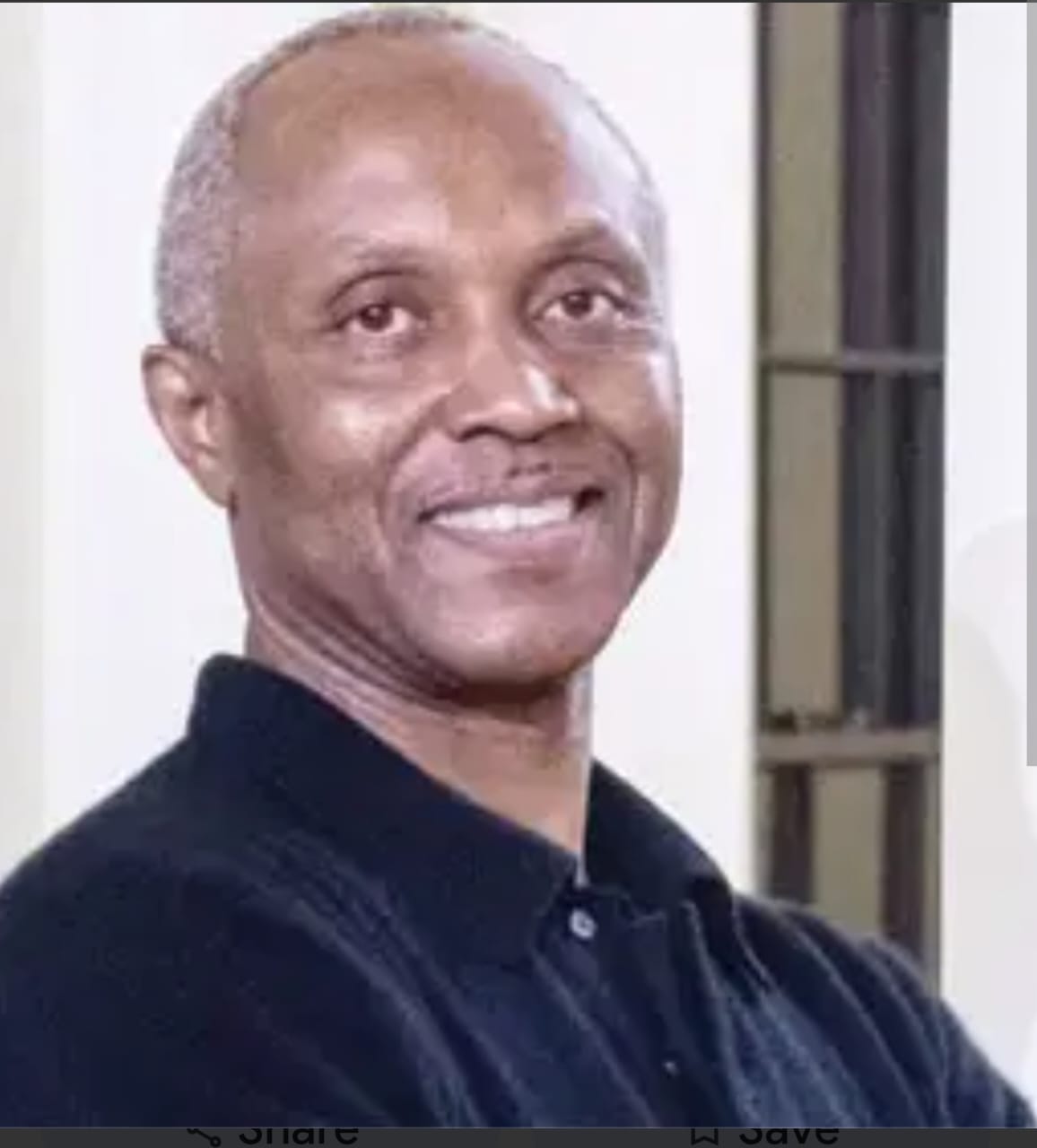
On Monday, June 1, 2026, the Department of State Services (DSS), interfaced with visiting United States-based Prof.essor, Okey Ndibe, a distinguished writer and public intellectual, at the Murtala Muhammed International Airport, MMIA, Lagos.
This encounter triggered a media feeding frenzy painting the agency in gaudy colours perhaps on account of the personality involved and more significantly, because of possible misperception of the underlying raison d’etre for DSS’ intervention – an action within its statutory purview to execute when individuals on security watchlist enter its territorial jurisdiction.
Watchlists are tracking tools curated by governments, financial authorities, or institutions to monitor individuals who pose specific risks. People are watchlisted primarily for security, financial compliance, law enforcement, or public safety, aiming to protect systems from illicit activities.
Watchlists can also be used to flag Politically Exposed Persons (PEPs) or individuals under international sanctions to ensure close observation of their financial and business dealings. Cut to the bone, the consequence of being security watchlisted was what played out at MMIA, Lagos, on Monday, when Prof. Ndibe breezed into Nigeria and was met with heightened airport screening or scrutiny by the relevant government agency. Sometimes, even travel or entry denial are on the cards.
It could be recalled that Prof. Ndibe was placed on the Nigerian security watchlist on January 29, 2013, which corresponds to the administration of former President Goodluck Jonathan – not under the current administration of President Bola Ahmed Tinubu.
The DSS made needful clarifications illuminating its interface with the respected academic to neutralize the impression of a cavalier, power-hungry demonstration of state authority which may have obtained in other governance eras.
In a statement on Tuesday, the Deputy Director of Public Relations and Strategic Communications at the Service’s National Headquarters, Favour Dozie, explained that the DSS interaction with the academic was part of an ongoing review of old Watch-List Actions (WLAs).
Further according to the Service, the current Director-General, on assuming office, directed a review of longstanding WLAs, some of which date back to the military era, to ensure that citizens are not unnecessarily inconvenienced or embarrassed by pre-existing watch-list records.
In specific words of the DSS: “In this regard, all those who had previously been watch-listed while on transit, are routinely interfaced with as a prerequisite for a review and possible downgrade of the Action.
“This, being a precursor to a final delisting in accordance with international best practices. It is pertinent to state that the foregoing process is aimed at ensuring that before the final delisting, that activities, travel histories as well as current activities of these individuals are not in furtherance of and do not still conform with the reasons for the initial WLA.
“Suffice to point out that since the inception of the current Management, many Nigerians, including journalists have benefited from this process.
“This is despite the fact that the Service conducts this clearance to take care of Watch List requests from other Agencies. A case in point is that of Mr. Lanre Arogundade, Executive Director of the International Press Centre, IPC, whose delisting was approved in May 2025, after over a decade on the Watchlist.
“In the same vein, Prof. Ndibe has been on Watchlist since January 29, 2013. Meanwhile, his case has been reviewed and downgraded. Thus, the interface with him at the airport, was geared towards the final delisting of his details from the Action. As part of the routine interface involved in the process, after barely an hour of his interaction with the Service, he was cleared and escorted.
“Note that, even on his Facebook post, he referenced the professional, courteous and decorous conduct of Service operatives, who continue to scale their respect for the rule of law and human rights under the new leadership.”
The DSS also reiterated the review process would continue to ensure that all Nigerians are treated fairly and in accordance with the law. “The DSS therefore urges citizens affected by the Service WLA, who wish, to formally report same to the National Headquarters to facilitate ongoing process. However, regardless of any formal request, the attempt at hygiene regarding the WLA, will be sustained,” the statement issued by the agency concluded.
It is noteworthy that the Nigerian-born academic and notable writer, Prof. Ndibe, while confirming he was questioned by operatives of the DSS after arriving in Nigeria from the US, stated the DSS operatives who interacted with him were courteous throughout the period of his questioning.
His words: “I am so grateful for the expressions of concern by many friends, acquaintances and others over my detention earlier today by the DSS at Murtala Muhammed International Airport. The two agents who interacted with me were quite courteous throughout the period of my detention. I’d like to confirm that I’ve been released.”
Prof. Ndibe, reputed for his unrelenting criticism of bad governance and corruption in Nigeria’s public service, announced his release in a post on his verified social media account.
Looking at the big picture, the DSS is Nigeria’s primary domestic intelligence agency, which plays a critical role in national security and intelligence gathering. Vested with discretionary statutory powers, its main responsibilities are within Nigeria and include counter-intelligence, medical intelligence, economic intelligence, internal security, counter-terrorism, and surveillance as well as investigating some other types of serious crimes against the state.
It is also charged with the protection of senior government officials, particularly the president, vice president, state governors and visiting heads of state and governments with their respective families.
Perhaps, not surprisingly, on assuming office as DG SSS on August 28, 2024, the new DG, DSS, delivered a subtle, cadenced message to the agency he has served with distinction for over 35 years, pledging to “refocus the service towards covertness and likelihood of studied silence over certain matters.”
The DG, DSS, has effectively introduced fresh perspectives and strategies, particularly in enhancing internal security and addressing both current and emerging threats – without being loud. From his assumption of office to date, The DSS boss has quietly implemented a robust strategy that combines intelligence-led operations, community engagement, and enhanced synergy with sister agencies. And this has yielded noteworthy positives in a challenging period.
By its operational mandate, the DSS could easily chose to cavalierly move against stakeholders who have wrongly opted to game the agency’s civility in engaging mischief and crises entrepreneurs. But instructively, the DSS, under its new management is towing a different engagement strategy with its detractors.
Away from its recent encounter with Prof. Ndibe which is a horse of a different colour, the tough call of the DSS to rein in disruptive, unsalutory plots in a challenging national period, provides a pertinent context to evaluate the agency’s brushes with some stakeholders.
It also throws up in sharp relief the new restrained footing of the secret police in nimbly engaging disruptive tendencies – deploying commendable civil options in its vast statutory ‘arsenal’ – instead of relapsing into the old monster mode.
The DSS’ recent legal victories over the Socio-Economic Rights and Accountability Project (SERAP), arguably a key ‘poster-boy’ of Nigeria’s non-governmental organizations’ vibrant ecosystem, and activist-politician, Omoyele Sowore, point to a different, more civil engagement modus by the secret police. This contrasts with that agency’s well-known bare-knuckle engagement modus in confronting perceived malfeasance.
As the contrived controversy spawned by recent encounter with Prof. Ndibe blows over, the question remains: did the DSS cross the line in carrying out its statutory duty. It certainly did not.
- Achi, public affairs analyst, is former Associate Editor, THISDAY newspaper.