By Chesa Chesa
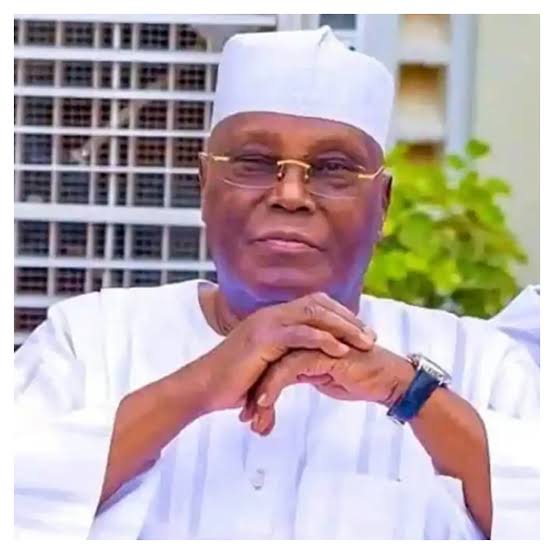
The Presidency has criticised former Vice President Atiku Abubakar’s proposal to restore petrol subsidy, describing it as a “retrogressive” policy driven by desperation for political power.
In a statement on Thursday titled “Restoring Petrol Subsidies: Atiku’s Volte-Face and Desperation for Power,” Special Adviser to the President on Information and Strategy, Bayo Onanuga, accused the former vice president of abandoning his previous position on fuel subsidy removal.
Onanuga said Atiku, who had previously canvassed the removal of petrol subsidy ahead of the 2023 presidential election, had now reversed his position for political reasons ahead of the 2027 election.
The presidential aide said the proposed return to subsidy would be fiscally unsustainable and incompatible with the reforms that have transformed Nigeria’s petroleum sector since 2023.
“We respect Alhaji Atiku Abubakar’s constitutional right to propose alternative policies, to seek the support of Nigerians and recant a major policy prescription,” Onanuga said.
“However, Nigerians also deserve to understand what the proposed restoration of subsidy would actually mean, how it would be funded, and whether it is compatible with the legal and structural changes that have taken place in the petroleum sector.”
According to him, the former subsidy regime involved the government absorbing the difference between the regulated pump price and the actual cost of supplying petrol, creating a huge financial burden for the country.
He argued that restoring the scheme would require a clear legal, fiscal and administrative framework, including identifying the source of funding.
Onanuga noted that the Petroleum Industry Act (PIA) established a new framework for the downstream petroleum sector and provided for the end of petrol subsidy by June 2023.
He said President Bola Tinubu only accelerated the implementation by a few weeks to halt further financial losses.
The presidential aide also argued that Nigeria’s petroleum industry had changed considerably since the removal of subsidy, particularly with the emergence of domestic refining capacity.
He cited the Dangote Refinery as a major development that has increased domestic production of petrol and reduced the country’s reliance on imported refined petroleum products.
“Indeed, the Dangote Refinery would not have kickstarted production for local consumption were the subsidy regime operative,” he said.
Onanuga said restoring subsidy could undermine the growth of local refineries, potentially leading to job losses and renewed pressure on Nigeria’s foreign exchange.
He contrasted the current situation with the period when Atiku served as vice president, when Nigeria depended heavily on imported refined petroleum products.
The presidential aide further claimed that funds previously required to finance petrol subsidies were now available to the three tiers of government, contributing to increased allocations and improved fiscal capacity.
He cited the approximately N3 trillion shared among the federal, state and local governments from the Federation Account in July as evidence of the fiscal benefits of the reforms.
Onanuga said Nigeria was gradually moving towards a model in which crude oil is processed domestically and refined products are supplied to the local market, creating opportunities for energy security, foreign-exchange conservation, industrial development and job creation.
He challenged Atiku to explain how his proposed subsidy regime would be financed.
“If the subsidy is restored, who pays for it? What will the new pump price be? N200 or N500?” he asked.
“If petrol is sold below its economic cost, which is about N1,200 to N1,300, someone must absorb the difference.”
According to him, the financial burden would ultimately fall on public finances through reduced funding for infrastructure and social services, lower allocations to states and the 774 local government areas, increased borrowing, higher public debt, or a combination of these.
Onanuga acknowledged the hardship caused by higher petrol, transportation and energy costs, but said the government was pursuing alternatives designed to provide sustainable relief.
He cited the administration’s promotion of compressed natural gas (CNG), which he said was about 70 per cent cheaper than petrol for taxis, cars and distribution trucks.
He also noted that major companies, including Dangote and BUA, had incorporated CNG-powered trucks into their fleets.
The presidential aide said the government’s objective was to reduce energy costs without returning to what he described as an opaque and fiscally burdensome subsidy regime.
He urged political actors to provide detailed fiscal and legal explanations for their economic proposals, particularly any plan to restore petrol subsidy.
“How much will the programme cost annually? What revenue source will finance it? Will the government borrow to fund it?” he asked.
“Will the National Assembly be asked to amend existing PIA legislation and petroleum-sector rules? How will subsidy payments be verified and protected from abuse, as witnessed some years ago?”
Onanuga also questioned what exactly a restored subsidy would subsidise, given Nigeria’s increased domestic refining capacity.
“And, now that Nigeria has substantially increased domestic petrol production, what precisely would the proposed subsidy be subsidising—the cost of local production, transportation and distribution, or some other component of the petroleum value chain?” he asked.
He said Nigerians deserved a robust debate on the cost of living and the country’s economic direction, but maintained that such a debate must reflect the realities of the current petroleum market.
“Political promises must be backed by fiscal arithmetic,” Onanuga said.
He urged Atiku and other political actors to present Nigerians with the full fiscal and legal implications of any proposal to restore petrol subsidy.
Presidency: Atiku’s subsidy promise retrogressive, driven by desperation