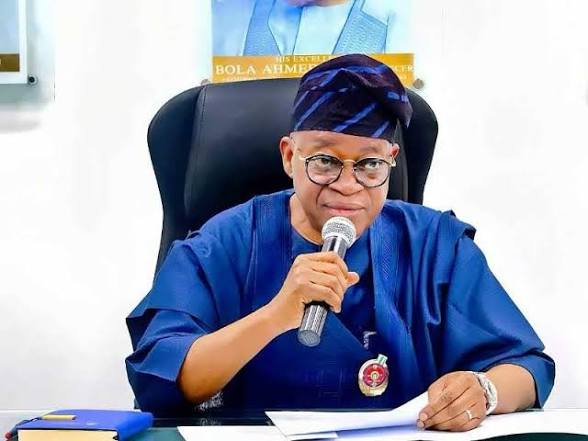
By Myke Uzendu
The Minister of Marine and Blue Economy, Dr Adegboyega Oyetola, has inaugurated a technical committee to accelerate fish production in Nigeria and reduce the country’s dependence on fish imports.
Oyetola inaugurated the Technical Committee on Accelerating Fish Production in Nigeria in Abuja on Thursday, charging members to move beyond policy recommendations and develop a practical roadmap for increasing sustainable fish production and strengthening the fisheries and aquaculture value chain.
The minister said fish remained a major source of animal protein for millions of Nigerians, while the sector supports livelihoods across production, processing, marketing, transportation and other related activities.
He, however, identified high production costs, particularly feed, inadequate access to quality fish seed and broodstock, weak fish-health and biosecurity systems, post-harvest losses and inadequate cold-chain and storage facilities as major constraints to the sector.
Other challenges, he said, included limited access to affordable finance, research and innovation gaps, weak data systems, inadequate standards and traceability, as well as poor market development.
According to Oyetola, the transfer of fisheries and aquaculture functions to the Ministry of Marine and Blue Economy had created a stronger institutional platform for addressing the challenges as part of the Federal Government’s broader blue-economy agenda.
He said the ministry was committed to increasing domestic fish production, strengthening the fisheries value chain and progressively reducing Nigeria’s reliance on imports.
The minister recalled that the ministry, in collaboration with the National Institute for Policy and Strategic Studies (NIPSS), held a strategic roundtable on accelerating fish production on October 29, 2025, which generated recommendations for addressing production and value-chain constraints.
He explained that the new committee was established to examine the recommendations and convert viable proposals into a prioritised implementation plan.
“Your assignment is not to develop another policy or establish a parallel programme,” Oyetola told the committee, urging members to assess the roundtable recommendations against existing national policies, laws, government programmes and the mandates of relevant institutions.
He charged the committee to determine which recommendations should be adopted, refined, incorporated into existing programmes, subjected to further study or discarded as unviable.
The committee is also expected to identify existing initiatives across the public, private and development sectors to strengthen successful interventions and avoid duplication.