From John Silas
Stakeholders in Nigeria’s public sector have called for stronger institutions, systems and accountability mechanisms capable of sustaining government performance beyond the tenure of individual leaders.
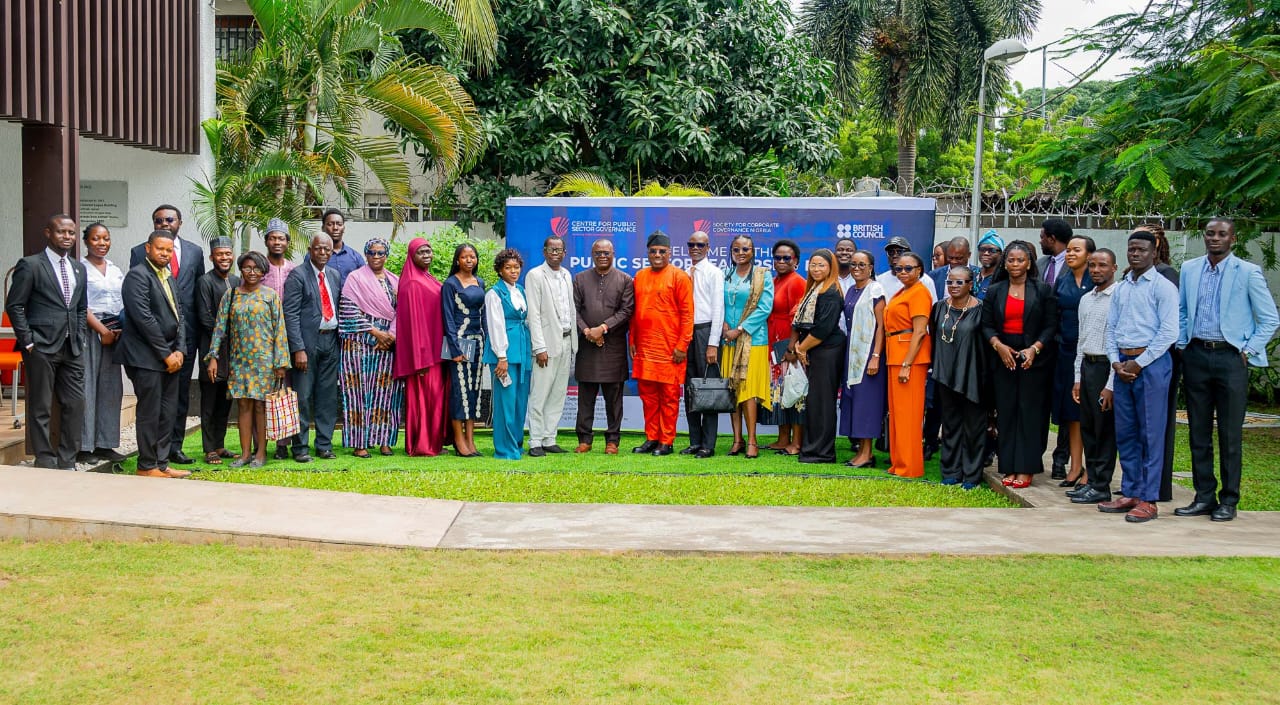
The call formed a major theme at the maiden physical forum of the Centre for Public Sector Governance (CPSG), a subdivision of the Society for Corporate Governance Nigeria (SCGN), which brought together public sector practitioners, regulators, governance professionals, private sector stakeholders and researchers to examine how effective governance can improve institutional performance and deliver sustainable public value.
Opening the forum, the Chief Operating Officer of CPSG, Dr Oyebisi Taiwo, welcomed participants before inviting the Chief Executive Officer of the Centre, Ms Chioma Mordi, to deliver the opening address.
Mordi explained that CPSG was established to extend the principles and practices of corporate governance into Nigeria’s public sector, stressing that effective governance is critical to strengthening public institutions and improving economic development, particularly at a time when governments are under increasing pressure to deliver better outcomes with limited resources.
A major focus of the discussions was the persistent gap between government policies and their impact on citizens.
Speaking during an interview session, the Permanent Secretary, Federal Civil Service Commission (FCSC), Dr Emeka Vitalis Obi, argued that government performance should be judged not by the quality of policies produced but by the extent to which such policies translate into measurable improvements in the lives of citizens.
Obi said effective public-sector delivery requires attention to the entire policy chain, from policy conception and design to budgeting, procurement, funding, implementation, and eventual service delivery. The discussion underscored the need to treat governance as an interconnected process rather than a series of isolated administrative functions.
The forum also examined the responsibility of those entrusted with public institutions and resources. The President and Chief Executive Officer, Governance Solutions Inc., Dr. Debra Brown, said leadership must be accompanied by stewardship if public institutions are to retain the trust of citizens.
According to her, people entrusted with public institutions and resources have a responsibility to protect public trust and promote the well-being of the citizens that those institutions were created to serve.
Her presentation reinforced the importance of integrity, accountability, institutional discipline, and a sustained focus on public outcomes.
However, the question of institutional continuity received more focus during the panel session, where the Chief Executive Officer and Managing Director of the Nigerian Railway Corporation (NRC), Dr Kayode Opeifa, stressed the need for systems that can preserve institutional effectiveness beyond the individual office holders.
Drawing from his experience in both the public and private sectors, Opeifa noted that institutions that rely excessively on the personalities of their leaders could struggle with continuity when leadership changes.
He advocated stronger systems, documented best practices and standard operating procedures to institutionalise knowledge and ensure that progress is not lost with leadership changes.
The panel, which featured Opeifa and Obi, was moderated by partner at KENNA, Nimma Mo-Madugu.
Beyond institutional continuity, participants discussed public infrastructure, citizen engagement, leadership accountability and the need to strengthen the systems through which government policies are translated into services for citizens.
Over 40 participants attended the forum physically, while about 100 others participated virtually, highlighting the growing interest in practical approaches to improving public-sector governance and performance.
For CPSG, the forum represents a step towards creating a sustained platform for evidence-informed dialogue on Nigeria’s governance challenges.
The centre said it would build on the discussions through research, capacity development, policy dialogue and stakeholder engagement aimed at strengthening public institutions and improving their ability to deliver sustainable public value.