From Cyriacus Nnaji, Lagos
The Lagos State Government has reiterated its commitment to practical, evidence-informed strategies in the ongoing review of the Safe Termination of Pregnancy (STOP) Guideline, stressing that implementation will be key to improving health outcomes for women and girls in the state.
The position was made known at an Institutional Dialogue convened to validate the operational plan and build supportive networks for sexual and reproductive health and rights.
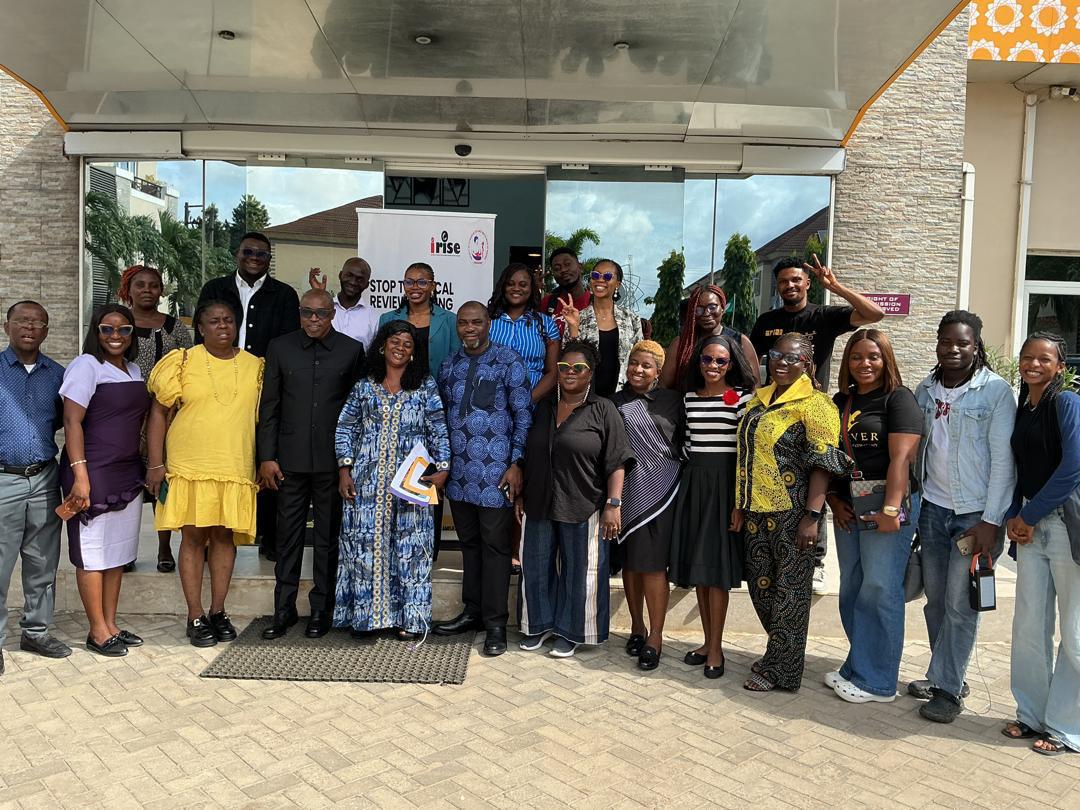
The meeting, held at Amber Residence, Ikeja GRA, on Thursday, September 17, 2026, with the theme ‘From Dialogue to Action, a Validation Workshop for the Revised Lagos State STOP Operational Guidelines, including Provider Protection and Administrative Clarity’, was organised by the Society of Obstetrics and Gynaecology of Nigeria (SOGON), IRISE, TMSI, Thread Initiative, Women’s Rights and Health Project (WETIN), VSI and YNCSD.
Representing the Senior Special Assistant to the Lagos State Governor on Health, Dr. Oluwatoni Adeyemi, was Dr. Aderinsola Anifowose, Consultant Public Health Physician at the Department of Community Health and Primary Health Care, LASUTH/LASUCOM.
In her address, Anifowose said achieving meaningful and sustainable health outcomes cannot be the responsibility of government alone.
Anifowose said it requires strong partnerships, effective coordination and active participation of communities, civil society, development partners, traditional and faith leaders, and other key stakeholders.
According to her, the objective of the meeting, to review and validate the operational plan for the STOP Guideline, strengthen institutional coordination, and build supportive networks for implementation, is both timely and important.
She said, “From the perspective of the Lagos State Ministry of Health, we are particularly interested in ensuring that the strategies developed are practical, evidence-informed, responsive to the realities of our communities, and aligned with existing health systems and priorities in the State.
“We also believe that beyond developing a good guideline or operational plan, implementation is where the real impact will be seen. This means we must collectively consider issues of ownership, coordination, accountability, capacity building, community engagement and sustainability,” she added.
Anifowose urged participants to bring their expertise to the table to validate the document, strengthen relationships and agree on practical actions that would translate the objectives of the STOP Guideline into improved outcomes for Lagosians.
The major focus of the dialogue was to critically examine outcomes and decisions from the March 2026 Technical Review Meeting and presentation of the roadmap developed at that meeting.
Speaking also was the Executive Director of Initiative to Resist Institutional Slavery and Exploitation (IRISE) and Country Coordinator of One Billion Rising, Omodele Ibitoye Ejeh, she said the validation meeting was a follow-up to a joint work plan developed by IRISE, SOGON, the Ministry of Health, Primary Health Care Board, Health Service Commission, African Women Lawyers Association and the Domestic and Sexual Violence Agency (DSVA).
Ejeh explained that the work plan emanated from a Technical Review Meeting organised by IRISE in February 2026, and the current dialogue was aimed at moving from discussion to action that would lead to the adoption and implementation of the STOP guideline by health service providers offering services to women and girls in Lagos State.
She described the impact of the meeting as enormous, noting that stakeholders had the opportunity to examine what is workable and tenable and how the guideline aligns with existing laws in Lagos State, including laws on domestic violence.
She noted that during the initial review, it was observed that the original document was bulky with bottlenecks that discouraged health providers from engaging with it. “During the technical review meeting there were recommendations made, so we built on such recommendations and drafted something that is simpler, more readable and not so bulky,” Ejeh said. “We are looking forward to Lagos State Government adopting the document we have worked on, but before then we need to make sure the ministries see what we are doing, agree on what we are doing and there is alignment.”
Also speaking, Dr. Kehinde Okunade, Director of Programmes, SOGON Lagos State Centre and Chairman of the Nigerian Medical Association (NMA), Lagos State, clarified that the STOP Guideline is specifically meant for healthcare providers to understand and work within the legally acceptable framework in accordance with the Lagos State Criminal Law of 2011.
He said the law provides for safe termination of pregnancy under conditions where it is required to preserve the life of a woman and to preserve her physical health, with many other clinical conditions falling under those broad provisions.
Okunade stressed that nothing new was added to the document during the review. “We didn’t add anything, it is just to make the document much more simpler, concise and highlight certain components that require attention,” he said. “We reduced the length, abridged some components to make it easier for users.”
He said many healthcare providers are unaware of conditions under which safe termination can be provided in the state, hence the revised guideline emphasizes provider protection, provider awareness and administrative clarity.
According to him, four conditions must be certified: that it is done in good faith to save the life of the woman and preserve her physical health, that there is duty of care and skill, that clinical and legal indications are acceptable under the law, and that there is proper documentation and communication. “What we are trying to achieve in that document is to ensure provider protection and administrative clarity,” Okunade added.