By Chesa Chesa
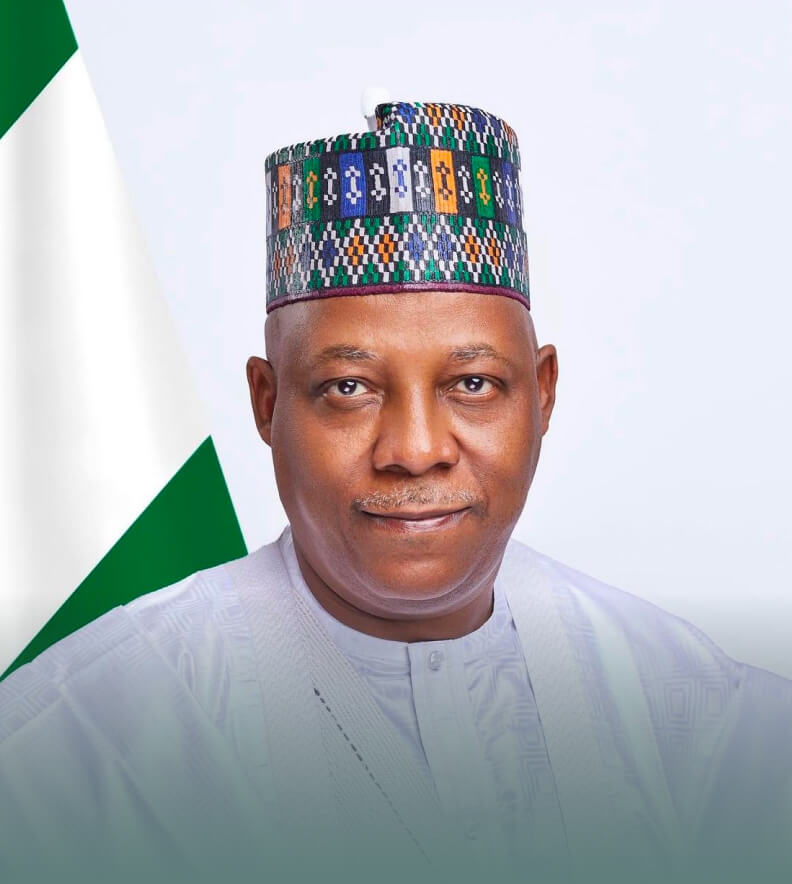
Vice-President Kashim Shettima has said that Africa’s continued exclusion from permanent membership of the United Nations Security Council undermines the fairness, credibility and legitimacy of the global governance system.
Shettima reaffirmed Nigeria’s support for urgent reform of the United Nations, saying the country would remain a dependable partner in efforts to rebuild trust among nations, uphold international law and confront hunger, violence and exclusion.
The Vice-President spoke when he met with the United Nations Deputy Secretary-General, Amina Mohammed, on the sidelines of the 81st session of the UN General Assembly in New York.
Shettima commended UN Secretary-General António Guterres for his consistent advocacy for a more representative Security Council, particularly his position that a 21st-century council without permanent African representation was “unjust and indefensible.”
“A continent cannot be summoned to bear the burdens of the international order and then denied an equal hand in directing it,” Shettima said.
He said Nigeria would continue to support reforms aimed at making international institutions more representative, responsive and credible, arguing that global decisions should reflect contemporary geopolitical and demographic realities.
The Vice President also praised Guterres for defending international law and human dignity amid widening conflicts and rising geopolitical tensions.
“You have remained a voice of reason as individual states drift from the obligations they assumed under the United Nations Charter and the rules of international law,” he said.
Shettima said the UN chief had consistently stressed that sovereignty carried responsibilities and that military or political power could not justify violations of human rights.
The Vice President warned that diplomacy must not lose sight of the human cost of war and instability.
“The mother searching for her child, the family driven from home and the hungry child awaiting food must never become abstractions in the language of states,” he said.
He also commended Mohammed for her contributions to multilateral diplomacy and sustainable development, describing her service at the UN as a source of pride to Nigeria.
“Nigeria will remain a willing ally in the work of restoring trust among nations and dignity to lives diminished by hunger, violence and exclusion. We owe our children a world in which conscience has authority and the law has meaning,” Shettima said.
He added that the credibility of the international system would ultimately depend on its capacity to respond fairly to human suffering and give all regions a meaningful voice in global decision-making.
“Civilisation endures only when the suffering of a stranger becomes a claim on our conscience,” he said.
Responding, Mohammed expressed gratitude to Nigeria and the administration of President Bola Tinubu for their support for the United Nations and her office as Deputy Secretary-General.
She described Shettima’s visit as a “deep honour,” thanking the Vice President for leading the Nigerian delegation to meet with her.
“I want to thank through you, the President of the Federal Republic of Nigeria, President Bola Ahmed Tinubu, and you for embracing me wholeheartedly, not just as the DSG but as a daughter of the soil,” she said.
Mohammed said Tinubu had been “an incredible support” to her and had also demonstrated support for the United Nations as an institution.
The meeting came as Nigeria intensified its advocacy for reform of the UN Security Council, including greater representation for Africa in the body responsible for addressing threats to international peace and security.
The Vice President was accompanied by Governors Abdulrahman AbdulRazaq of Kwara State, Hyacinth Alia of Benue State, Siminalayi Fubara of Rivers State and Dauda Lawal of Zamfara State.
Others on the delegation were the Minister of Foreign Affairs, Ambassador Bianca Odumegwu-Ojukwu; Nigeria’s Permanent Representative to the UN, Ambassador Jimoh Ibrahim; and other senior government officials.