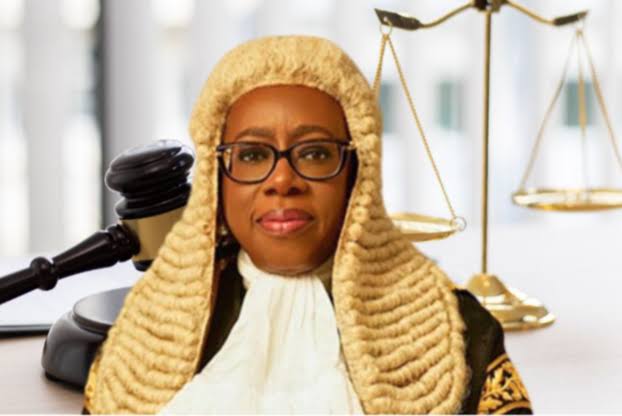
The Chief Justice of Nigeria (CJN) Justice Kudirat Kekere-Ekun has warned judges against romancing with political parties in the resolution of disputes that will arise in the conduct of the 2027 general elections.
Kekere-Ekun gave the adviceduring the opening of the 2026 legal year of the Supreme Court on Monday in Abuja.
She warned that on no account should any judge exhibit conduct or behaviour that jeopardises absolute impartiality expected of them.
“’Elections inevitably generates heightened political activity and strong emotions. They also bring before the courts disputes that may have significant consequences for individuals, political parties and the country.
“The judiciary must approach such matters with the same calmness, detachment and fidelity to the law that it brings to every other dispute.
“Judicial officers must remain conscious that every word they speak and every action they take during an electoral period will be subjected to scrutiny”.
She encouraged them to exercise restraint, avoid political association or conduct capable of creating an appearance of partiality and remain firmly within the boundaries imposed by their oath and the constitution.
“There is also a need for greater professional responsibility by lawyers in the institution of proceedings arising from political and electoral disputes.
“Forum shopping, whether by the deliberate choice of commencing an action in a court or division perceived to be more favourable to a particular party or by the institution of multiple proceedings seeking substantially similar reliefs, can result in conflicting orders, undermine orderly judicial process and expose the Judiciary to avoidable embarrassment.
“It can also create the unfortunate impression that parties are seeking not justice according to law but a particular outcome from a particular court.
“It does not augur well for our judicial system if the courts become so overwhelmed by political disputes that other cases in their dockets are consequently delayed or denied the timely attention they require.
“The judiciary must remain available to all litigants, and the urgency or public prominence of political litigation should not come at the expense of other legitimate claims awaiting determination,” she added.
She said counsel must exercise the professional judgment expected of members of the Bar before commencing proceedings, particularly where related proceedings are already pending before another court.
“The duty of counsel to the court requires full candour as to the existence of related proceedings and respect for the jurisdiction and processes of other courts.
“The responsibility of counsel extends beyond securing an immediate advantage for a client; it includes a duty to protect the integrity and orderly functioning of the judicial process”.
The CJN also canvassed for adequate protection of processes leading to the appointment of judicial officers for the judiciary of Nigeria.
According to her the appointment of judicial officers is one of the most consequential responsibilities entrusted to the National Judicial Council and the Federal Judicial Service Commission.
“A Judge does not merely occupy an office; he or she carries the authority of the Constitution and the confidence of the people.
“For that reason, the processes through which judicial officers are selected must command public confidence”.
She said that the recent appointments have reflected a deliberate effort to strengthen the evaluation of candidates through structured assessment, professional and peer feedback, background checks.