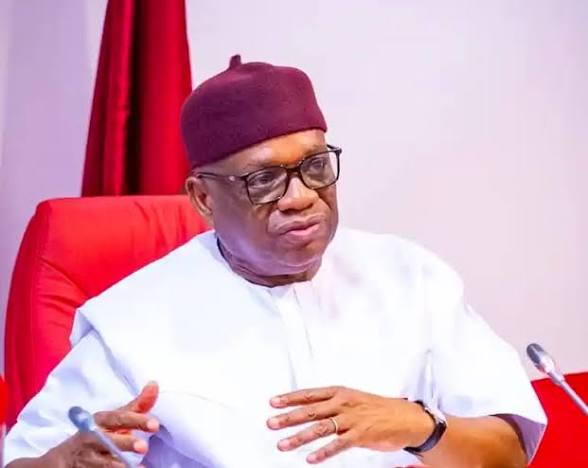
Former Abia State Governor and Senator representing Abia North, Orji Uzor Kalu, has defended President Bola Tinubu’s economic policies, even as he predicted victory for the President in 2027 and explained his political differences with former President Olusegun Obasanjo. In this interview with journalists on Arise News Television’s PrimeTime programme, anchored by Charles Aniagolu, Kalu also speaks on Igbo political interests, his international connections, media ownership, Senate presidency ambition and plans to groom younger Nigerians for leadership, and our senate correspondent, Abbanobi-Eku Onyeka captured it all . Excerpts.
You have defended President Bola Tinubu’s economic reforms despite the hardship Nigerians are experiencing. Do you genuinely believe the economy is improving?
President Tinubu has stabilised the economy at the macroeconomic level. What we are battling now is the microeconomic level. The challenge is how to translate macroeconomic stability into tangible improvements in people’s lives. We need to improve agricultural production, security, manufacturing and industrial capacity. No serious reform can take place without temporary difficulties. Nigerians should also recognise that businesses can now make more predictable plans because of improvements in foreign exchange and fuel-price stability.
Some Nigerians believe the economic reforms have brought more hardship than relief. What is your response?
There is no reform on earth that does not come with difficulties. I witnessed Brazil’s experience under President Lula da Silva when he embarked on reforms. The important thing is to look at the long-term benefits. However, government must now concentrate on agriculture, manufacturing, employment and security to ensure that ordinary Nigerians feel the impact of the reforms.
Do you think President Tinubu can win the 2027 presidential election, considering the opposition’s growing criticism of his administration?
President Tinubu will win. He has no competition. What we see on social media is not necessarily what is happening on the ground. Our party is very big, with a large number of supporters across the country. APC members and legislators are already working towards consolidating the party’s electoral strength. I believe the President will secure another mandate.
You have called for political stability and compared Tinubu’s tenure with that of former President Muhammadu Buhari. Are you suggesting that Nigerians should not question the President’s performance?
The unity of this country is very important. We allowed President Buhari to complete his eight years and leave office. We should also allow President Tinubu to complete his eight years. The country needs stability, and our political disagreements should not undermine national unity.
Your relationship with former President Olusegun Obasanjo was once cordial. What actually caused the disagreement between both of you?
One of the issues was an understanding we reached in Ota, Ogun State, involving myself, former President Obasanjo and General Ibrahim Babangida. We discussed that Obasanjo would serve one four-year term and hand over to the North. That was the understanding. I cannot confirm the issue of the vice presidency, but I can confirm that the discussion about serving one term and returning power to the North took place.
Was General Ibrahim Babangida expected to succeed Obasanjo in 2003, with you possibly becoming his running mate?
I cannot be certain about the vice-presidential arrangement. What I can tell you is that the discussion in Ota was that Obasanjo would leave after four years and give power back to the North. There were people present during that meeting, including an aide of Obasanjo from Benue State whom I identified as Adobeye.
Some Igbo political leaders believe your continued membership of APC and support for Tinubu amount to a betrayal of Igbo political interests. What is your reaction?
I am an Igbo man by birth. I have served the Igbo people and fought for their interests. But I am also a Nigerian. I cannot abandon my political party simply because another Igbo person is contesting an election on a different platform. If another Igbo person wants to support an Igbo candidate, that is his business. My responsibility is to support my party. Party loyalty is number one.
Does your position mean ethnic loyalty is no longer important to you?
Ethnic identity is important, but it should not prevent us from working together as Nigerians. When I am in my village, I am an Igbo man. When I am in Abia, I identify with Abia. But when I am in Lagos or anywhere else in Nigeria, I must behave as a Nigerian and relate with other Nigerians. We must promote national integration rather than allow ethnic considerations to divide us.
There are speculations that you are interested in becoming the next President of the Senate. Are you lobbying for the position?
I am not lobbying for the Senate presidency. My immediate priority is to continue doing the work I am doing. First is God, second is the leadership of our party, particularly President Bola Ahmed Tinubu. I have no ambition for any particular office. If something is given to me, I will accept it.
If President Tinubu offers you the Senate presidency, will you accept?
If I am given the position, I will take it. That is the truth. But I have never gone to the President to ask him to give me the position. I am comfortable with my responsibilities and remain committed to my legislative duties.
You have spoken about grooming younger Nigerians for leadership. What exactly do you intend to do?
In the near future, I want to groom younger people to take over from us. Leadership should not be seen as something reserved permanently for a particular set of people. Younger Nigerians must be prepared, encouraged and given opportunities to participate in governance.
You were already a successful businessman before venturing into politics. How did prominent businessmen such as Aliko Dangote react to your decision to contest the Abia governorship election?
The day I told Dangote I was going to run for governor, he felt I was a fool. He wondered why I would leave a successful business empire to venture into Nigerian politics. He told me I must be very strong to contemplate such a decision. But I was determined to contribute to the country’s democratic development.
You have claimed to have played a significant financial role in the formation of the PDP. What exactly were your contributions?
I was involved in financing meetings, providing aircraft, paying honorariums and supporting the logistics required for the formation of the party. I was not the only person who contributed. People such as Atiku Abubakar, Yomi Edu and General Theophilus Danjuma also played important roles. Our objective was to establish a strong political platform that would help end military rule. Unfortunately, some people later turned against me despite my contributions.
You have maintained relationships with influential international personalities. Have your connections with people associated with the CIA and Mossad ever involved intelligence activities?
I am not an agent of the CIA or Mossad. Three people taught me the importance of building relationships: General Ibrahim Babangida, the late Professor Jibril Aminu and Gilbert Chagoury. They taught me to relate with people regardless of their social standing. My relationship with international personalities, including Nelson Mandela and other influential leaders, helped me develop business and diplomatic connections. But I am not an agent of any foreign intelligence organisation.
As a former Forbes-recognised billionaire and media proprietor, how do you reconcile your business interests with your political responsibilities, particularly regarding editorial independence at The Sun and Telegraph newspapers?
My involvement in politics has affected my visibility in business rankings. If I leave politics and return fully to business, I believe Forbes may recognise me again. Regarding the media, I have never instructed any journalist to write for or against anybody. Journalists in my organisations enjoy editorial independence. Even when stories critical of influential people, including Babangida, were published, I did not interfere with their editorial decisions.
What lessons did your prison experience teach you, and what should Nigerians expect from your Senate committee investigating the Safe Schools Initiative?
My six months in prison made me more humble and changed my understanding of life. I learned a lot and became more reflective. On the Safe Schools Initiative, our committee is making progress. However, I cannot disclose our findings until we formally submit the report to the Senate and the Senate President who gave us the assignment. My immediate responsibility remains to serve my constituents, contribute to national development and prepare younger people for leadership.