By Mercy Aikoye
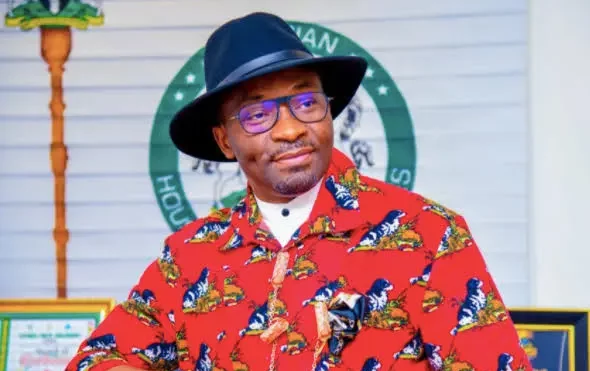
The Deputy Speaker of the House of Representatives, Benjamin Kalu, has reaffirmed his support for the creation of an additional state in Nigeria’s South-East, proposing a unified “Animoma” model to harmonise competing interests.
Kalu made the call while addressing stakeholders, suggesting a merger of existing proposals for Anioma and Anim states into a single entity. According to him, such a fusion would foster unity and strengthen the push for state creation in the region.
“If you ask me between having Anioma State and Anim State, I would prefer a fusion—Animoma—so that the two brothers can come together as one,” he said.
The Deputy Speaker stressed the importance of broad-based consultation, noting that the involvement of governors and key stakeholders across both the South-East and South-South regions is critical to the success of the proposal.
“You can’t do this without the governors of the South-East and South-South,” Kalu stated, urging proponents to embrace compromise in the collective interest of the people.
He further explained that decisions regarding the location of the proposed state capital would be determined through negotiation and democratic consensus among stakeholders.
Kalu outlined key considerations for the proposed state, including geographical balance, historical and cultural identity, economic viability, political dynamics, and regional alignment.
Meanwhile, Senator Ned Nwoko, a leading advocate of the Anioma State movement, said the delegation’s visit was to express appreciation to the Deputy Speaker for his support.
Traditional and community leaders also lent their voices to the agitation. The King of Ubulu-Uno, HRM Henry Kikachukwu, alongside the President of Izu Anioma, Evangelist Dr. RCD Nwadavid, reiterated the longstanding demand for the creation of Anioma State.
Nwadavid noted that the struggle for Anioma State has spanned several decades, emphasizing the people’s desire for full cultural and political identification within the Igbo ethnic group.
“We are here to let you know that the quest for Anioma has been so long. So many decades. We are Igbos and we want to fully identify as Ndi Igbo,” he said.