*decries politicisation of military efforts for selfish reasons
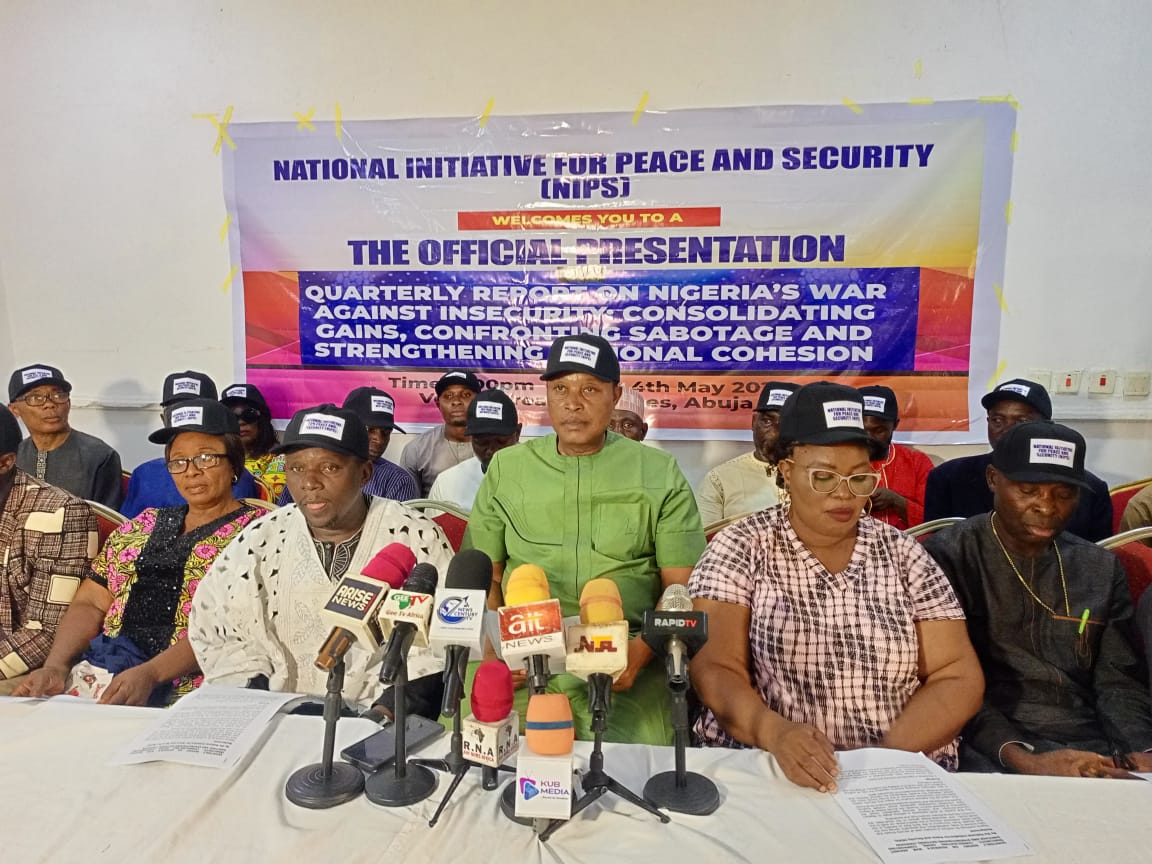
The National Initiative for Peace and Security (NIPS) has commended the Armed Forces of Nigeria for significant operational successes recorded across multiple theatres in the first quarter of 2026.
Under the leadership of General Olufemi Oluyede, the group led by Dr Adams Kings, its Executive Director said the military intensified coordinated operations, resulting in the neutralisation of over 200 terrorists, the arrest of nearly 300 suspects, and the rescue of approximately 188 kidnapped civilians in April alone.
In its quarterly report on the war against insecurity, the NIPS noted that these gains were spread across the North-East, North-West, North-Central, South-South, and South-East regions, reflecting improved logistical capacity, better inter-service coordination, and a strategic shift from mere firefights to dismantling the support ecosystems of criminal networks.
NIPS described the period as a defining phase in Nigeria’s counter-insurgency and internal security efforts.
“The Armed Forces have demonstrated a significant increase in operational tempo across the country. These outcomes reflect a more aggressive and coordinated approach that targets both the combat and support structures of criminal networks,” the NIPS report stated.
NIPS further noted that operations were not limited to one region but executed nationwide, indicating enhanced strategic planning.
“In the North-East, sustained offensives have continued to degrade insurgent strongholds with the killing of over 130 terrorists. Similar disruptions were recorded in the North-West through bandit neutralisation and victim rescues,” it added.
The report highlighted a deeper strategic focus on systemic disruption, including the destruction of camps, illegal arms production facilities, and logistics networks.
This approach, the group said, aims at long-term degradation of criminal groups’ regeneration capacity in asymmetric warfare.
“Rescues of women, children, farmers, and other civilians have restored dignity to affected communities and reinforced public trust in state institutions,” the report added.
“Operations also adhered to rules of engagement and international humanitarian standards, helping to maintain legitimacy.
“While democratic systems thrive on debate and dissent, NIPS notes with concern that certain political actors have adopted narratives that undermine the morale of security forces and distort public perception of ongoing efforts,” the organisation said.
“Some elements within the political space have engaged in conduct that inadvertently strengthens the propaganda of terrorist and criminal groups.
“This includes dismissing verifiable military gains, amplifying fear without context, and framing national security challenges solely as tools for political contestation,” NIPS added.
Such politicisation of security efforts poses serious risks, as intelligence assessments sometimes link these narratives to boosted confidence among criminal elements.
NIPS stressed that when national security becomes a casualty of political rivalry, ordinary citizens and frontline personnel bear the brunt.
Despite the gains, the NIPS said challenges persist as criminal groups adapt to difficult terrains and exploit local grievances.
The group, therefore, recommended sustained offensive operations to maintain momentum, deeper investment in intelligence networks, and stronger civil-military relations.
It also called for prioritised funding and timely release of resources to the Armed Forces to ensure operational continuity.
“National security should not be trivialised or weaponised for political gain. All actors must recognise that their words carry consequences beyond political advantage,” the report emphasised.
NIPS urged political leaders to exercise restraint and responsibility in public statements while calling for enhanced socio-economic interventions to address root causes of instability.
Abel Kings further advocated for a unified national narrative that promotes collective responsibility and resilience against extremist propaganda.
The organisation concluded that the first quarter of 2026 shows Nigeria’s security forces growing more effective under General Olufemi Oluyede’s leadership.
However, it warned that military successes must be supported by national cohesion rather than undermined by internal sabotage.