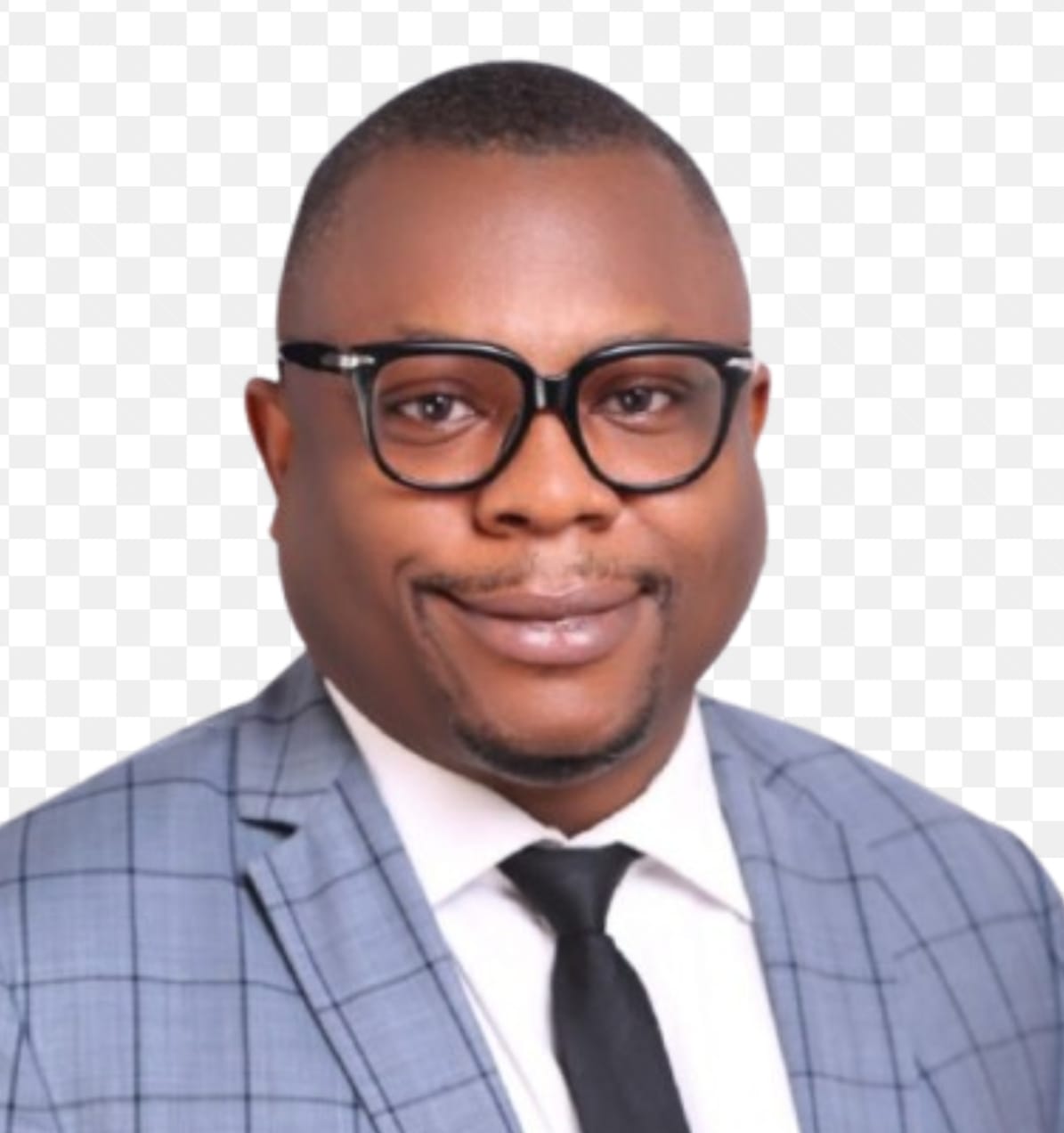
By Lemmy Ughegbe, Ph.D
There is something profoundly unsettling about discovering that the dead may still be financially active in Nigeria. More disturbing still is the reason.
The Nigeria Financial Intelligence Unit (NFIU) has disclosed that terrorist financiers are exploiting increasingly sophisticated methods to raise, move and conceal funds, including crowdfunding networks, proxy bank accounts and identities linked to deceased persons. It would be disturbing enough if this were merely another story about financial fraud. It is not. We are talking about money that can finance terrorism: money that buys weapons, purchases ammunition, funds logistics and sustains the networks responsible for killing, kidnapping and terrorising Nigerians.
The NFIU disclosure therefore raises a question that should concern every institution responsible for Nigeria’s financial and national security. How does a dead Nigerian remain useful to the financial system?
Nigeria has spent years building an elaborate identity and financial verification architecture. We have the Bank Verification Number (BVN). We have the National Identification Number (NIN). Banks operate Know Your Customer requirements. SIM cards are supposed to be linked to identifiable subscribers. Financial institutions are required to report suspicious transactions. And Nigeria has a specialised financial intelligence agency established precisely to detect illicit flows. Yet terrorists have apparently found ways to exploit the gaps between these systems.
According to the NFIU, foreign based facilitators use social media to solicit donations disguised as humanitarian relief or educational assistance. Payment links and bank details then circulate through encrypted messaging platforms, while relatively small contributions are structured in ways that make automatic detection more difficult. The sophistication does not end there. The NFIU identified the use of bank accounts opened in women’s names but allegedly controlled by male terrorist commanders or logistics managers. Telephone numbers used for mobile banking and transaction alerts may not belong to the actual account holders, and SIM cards and identities linked to deceased persons further complicate the audit trail.
This is not merely money laundering. It is identity laundering, and it exposes a dangerous weakness in Nigeria’s counterterrorism architecture.
For years, the visible face of our war against terrorism has been military: soldiers entering forests, aircraft bombing terrorist positions, troops raiding camps, weapons recovered, commanders killed. These operations are necessary, but terrorism does not survive on ideology and guns alone. It requires money. A terrorist needs food, fuel, motorcycles, vehicles, communication equipment, weapons, ammunition, informants, safe houses and sometimes payments to collaborators. Someone finances these things, which is why following terrorist money can be as important as following terrorists themselves. The soldier confronts the gunman; financial intelligence should confront the person paying for the gun.
The NFIU revelation therefore provides an opportunity to ask whether Nigeria’s databases are sufficiently interconnected. When a citizen dies and that death is officially registered, what happens to his or her financial identity? Does the information automatically reach banks? Does it reach telecommunications companies? Does it update the NIN database? Can a SIM registered to a deceased person remain operational? Can an account continue conducting suspicious transactions without generating an alert that its registered owner is dead?
If the answer to any of these questions is yes, then we have built several impressive databases without building an effective system. A database is only as useful as the institutions capable of interrogating and connecting it, and Nigeria does not necessarily suffer from a lack of information. We frequently suffer from information sitting in separate government silos. One agency knows that a citizen has died. Another maintains the person’s identity. A bank holds the person’s account. A telecommunications company maintains the SIM. A security agency investigates terrorism. The critical question is whether these institutions talk to one another quickly enough for intelligence to emerge from the information they collectively possess.
There is another dimension that demands caution. The reported use of women’s accounts must not become an excuse for indiscriminate profiling of women or relatives of suspected terrorists. Neither should legitimate crowdfunding, particularly for humanitarian, medical, educational or charitable purposes, suddenly become presumptively suspicious. Criminals exploit legitimate systems precisely because legitimate people use them, so the answer is not blanket suspicion. It is better intelligence.
Banks and fintech companies must strengthen transaction monitoring. Telecommunications companies must ensure that SIM registration is not merely a regulatory ritual. Identity authorities must continuously improve verification, and security agencies must become better at analysing relationships among seemingly insignificant transactions. The amounts themselves can be deceptive. A terrorist network does not necessarily need one dramatic multimillion naira transfer that immediately attracts attention; hundreds of relatively small transactions can ultimately finance something deadly. That is precisely why financial intelligence matters. Patterns can reveal what individual transactions conceal.
Nigeria has recently intensified attention on terrorist financing, and the Inspector General of Police has directed that cases involving terrorism financing, banditry and related financial crimes be channelled to specialised units. That is welcome. But Nigerians should ultimately judge the system by disruption and prosecution. How many financiers are identified? How many networks are dismantled? How many illicit accounts are frozen? How many collaborators are prosecuted? How much terrorist money is intercepted before it becomes ammunition? Those are the outcomes that matter.
The NFIU deserves credit for identifying these emerging methods, but discovery should be the beginning, not the achievement. Every terrorist organisation has two battlefields: one is where it fights, the other is where it finances the fight. Nigeria has concentrated enormous resources on the first. The latest revelations remind us why we must become equally formidable on the second, because when an account belonging to someone who has died can somehow contribute to an enterprise that kills the living, something within the system requires urgent repair. The dead should have no business financing the death of the living.
Lemmy Ughegbe, Ph.D, FIMC, CMC
Email: lemmyughegbeofficial@gmail.com
WhatsApp ONLY: +2348069716645